Results by title
11 books match the query 'Murder in literature'
Anatomy of Murder
Mystery, Detective, and Crime FictionCarl D. Malmgren
University of Wisconsin Press, 2001
Artful Assassins
Murder as Art in Modern MexicoFernando Fabio Sanchez
Vanderbilt University Press, 2010
Sanchez argues that the seemingly hopeless cycle of violence experienced by Mexico in the 20th century, as reflected in its "crime genre," reveals a broader intrinsic cultural and political failure that suggests grave implications for the current state of crisis. Tracing the development of a national Mexican identity from the 1910 Mexican Revolution onward, Sanchez focuses on the indelible presence of violence and crime underlying the major works that contributed to a larger communal narrative.
Artful Assassins ultimately offers a panoramic overview of the evolution of Mexican arts and letters, as well as nationalism, by claiming murder and assassination as literary and cinematic motifs. The collapse of post-revolutionary political unity was presaged all along in Mexican culture, Sanchez argues. It need only to have been sought in the art of the nation.
Border Killers
Neoliberalism, Necropolitics, and Mexican MasculinityElizabeth Villalobos
University of Arizona Press, 2024
Villalobos focuses on representations of “border killers” in literature, film, and theater. The author develops a metaphor of “maquilization” to describe the mass-production of masculine violence as a result of neoliberalism. The author demonstrates that the killer is an interchangeable cog in a societal factory of violence whose work is to produce dead bodies. By turning to cultural narratives, Villalobos seeks to counter the sensationalistic and stereotyped media depictions of border residents as criminals. The cultural works she examines instead indict the Mexican state and the global economic system for producing agents of violence.
Focusing on both Mexico’s northern and southern borders, Border Killers uses Achille Mbembe’s concept of necropolitics and various theories of masculinity to argue that contemporary Mexico is home to a form of necropolitical masculinity that has flourished in the neoliberal era and made the exercise of death both profitable and necessary for the functioning of Mexico’s state-cartel-corporate governance matrix.
Chemical Crimes
Science and Poison in Victorian Crime FictionCheryl Blake Price
The Ohio State University Press, 2019
From the Newgate and Silver Fork novels of the 1830s to the emergent genres of science and detective fiction of the 1890s, Price advocates for the classification of a new type of poisoner, one who combined crime with methodical scientific know-how: the chemical criminal. Chemical Crimes shows how authors used the subversiveness of chemical crimes to challenge the supposed disciplinary force of forensic detection and suggests that generic developments were inspired as much by criminal scientific innovation as they were by the rise of the detective–scientist. By focusing on chemical crime’s appearance at significant moments, this book traces how reactions to Victorian science inspired change in nineteenth-century crime fiction.
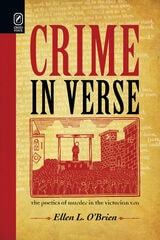
Crime in Verse
The Poetics of Murder in the Victorian EraEllen L. O’Brien
The Ohio State University Press, 2008
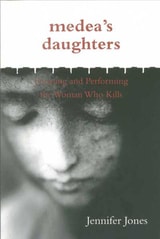
Medea’s Daughters
Forming and Performing the Woman Who KillsJennifer Jones
The Ohio State University Press, 2003
In Medea's Daughters, Jennifer Jones explores the legal, cultural, and dramatic representations of six accused murderesses to look at how English-speaking society responded to and controlled anxiety over female transgressions. The woman who kills—in particular, the woman who kills a member of her own family—has not only broken the law, she has also violated gender expectations. Jones argues that dramatic representations of criminal women, especially women who kill, proliferate during times of heightened feminist activity and that theatrical narratives, as evidenced in plays, television, and film, serve to contain women and deflect attention away from issues of women’s systematic repression.
Medea’s Daughters focuses on six women (of whom Lizzie Borden, Susan Smith, and Louise Woodward are the best known) whose murder trials caught the attention of their respective cultures. This broad spectrum allows an examination of how women’s legal status has evolved over five centuries.
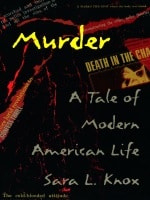
Murder
A Tale of Modern American LifeSara L. Knox
Duke University Press, 1998
In her approach to the telling of this cultural phenomenon, Knox draws on historical analysis and original research. She discusses such subjects as the continuing existence of capital punishment, the “sensational” American murderers Martha Beck and Ray Fernandez (aka the Honeymoon Killers), the connection between true crime books and romance narratives, and pulp murder novels of the 1930s and 1940s. Analyzing widespread interest in forensic psychiatry, sexuality, mortality, and the relation of gender to society’s reactions to murder, Knox refers to the early work of David Brion Davis, Bill Ellis, and Joel Black. While demonstrating how society’s focus has shifted from the act itself to the psychology of the murderer to the broader social forces at work, she discusses the writings of Willard Motley, William March, Curtis Bok, James Baldwin, and Kate Millett, among others.
Full of anecdotes and insights, Murder is a lively meditation on American culture that includes not only close critical readings of individual texts but also everyday matters of murder’s meaning. It will interest those involved with American studies, cultural studies, and true crime accounts.
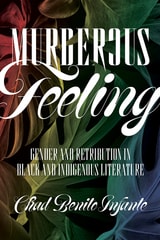
Murderous Feeling
Gender and Retribution in Black and Indigenous LiteratureChad Benito Infante
University of Minnesota Press, 2026
Examining revenge narratives as a feminist response to slavery and settler colonialism
From Octavia Butler’s Kindred to The Round House by Louise Erdrich, themes of retribution resound throughout the work of renowned Black and Indigenous women and queer authors. Revealing how the Black Power Movement and the American Indian Movement influenced literature from the 1960s onward, Murderous Feeling explores how these writers have employed revenge narratives as a response to white supremacy and colonialism.
Chad Benito Infante shows how, rather than using retributive violence to cultivate a heroic, masculine ideal, Black and Native women and queer writers use revenge as a way to raise philosophical questions about justice and the reclamation of power in the face of white supremacy. Pairing canonical texts—including work by James Baldwin, Leslie Marmon Silko, Craig Womack, Toni Morrison, and others—he demonstrates how this uniquely queer and feminist literary tradition, the “grammar of interrogation,” allows for generative ambivalence and curiosity about the possibilities and failures of violence.
In highlighting these narratives’ potential to steer anticolonial efforts, Murderous Feeling reconceptualizes literary violence not as an individualized act of cleansing but as a tool for revolutionary inquiry.
Retail e-book files for this title are screen-reader friendly.
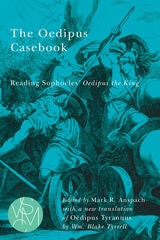
The Oedipus Casebook
Reading Sophocles' Oedipus the KingMark R. Anspach
Michigan State University Press, 2019
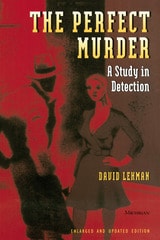
The Perfect Murder
A Study in DetectionDavid Lehman
University of Michigan Press, 2000
As Lehman shows, the detective story draws deeply from ancient storytelling traditions. The mystery's conventions--the locked room, the clue "hidden" in plain sight, the diabolical double, the villainous least likely subject--work on us as childhood fairy tales do; they prey upon our darkest fears, taking us to the brink of the unbearable before restoring a comforting sense of order. The myth of Oedipus, for example, contains the essential elements of a whodunit, with the twist that the murderer the detective pursues is himself.
With their wisecracking gumshoe heroes, Dashiell Hammett and Raymond Chandler fashioned an existential romance out of the detective novel. More recent writers such as Ross MacDonald, P. D. James, and Ruth Rendell have raised the genre to a new level of psychological sophistication. Yet the form evolves still, and Lehman guides us to the epistemological riddles of Jorge Luis Borges and Umberto Eco, who challenge the notion of a knowable truth. Originally published in 1989, this new edition features an additional chapter on the mystery novels of the 1990s.
"A lively study of the development and varieties of the detective story since Poe, its relations with other forms high and low, and the latter-day appropriation of its techniques by such writers as Borges and Eco. . . . A thoroughly intelligent and readable book." --Richard Wilbur, Pulitzer-Prize winning poet
David Lehman is the series editor of both the The Best American Poetry, published by Scribner, and the Poets on Poetry series published by the University of Michigan Press. He is a former Guggenheim Fellow in poetry, a vice president of the National Book Critics Circle, and the author of several books of criticism and collections of poems.
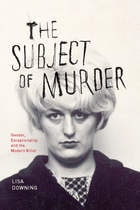
The Subject of Murder
Gender, Exceptionality, and the Modern KillerLisa Downing
University of Chicago Press, 2013