Results by title
14 books match the query 'Museum'
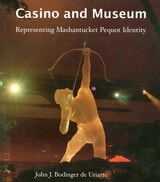
Casino and Museum
Representing Mashantucket Pequot IdentityJohn J. Bodinger de Uriarte
University of Arizona Press, 2007
To some degree, both institutions offer Native representations yet create different strategies for attracting and engaging visitors. While the casino is crucial as an economic generator, the museum has an important role as the space for authentic Mashantucket Pequot images and narratives. The book’s focus is on how the casino and the museum successfully deploy different strategies to take control of the tribe’s identity, image, and cultural agency.
Photographs in the book provide a view of Mashantucket, allowing the reader to study the spaces of the book’s central arguments. They are a key methodology of the project and offer a non-textual opportunity to navigate the sites as well as one finely focused way to work through the representation and formation of the Native American photographic subject—the powerful popular imagining of Native Americans. Casino and Museum presents a unique understanding of the prodigious role that representation plays in the contemporary poetics and politics of Native America. It is essential reading for scholars of Native American studies, museum studies, cultural studies, and photography.

Conscience and Memory
Meditations in a Museum of the HolocaustHarold Kaplan
University of Chicago Press, 1994
Kaplan simulates the response to a long visit to the new Holocaust museum in Washington, D.C., which, crucially for Kaplan, is sited in direct view of the Jefferson and Lincoln monuments, powerful symbols of humanist democracy. He insists the Holocaust be viewed not only in terms of personal ethics but modern political ethics as well: for Kaplan the affirmative legacy of the Holocaust is its focus on the dangers of nationalism, racism, and all forms of separatist group identities. It challenges the historicism, cults of power, and scientistic politics of modernity. And it challenges the moral passivity and relativism of mass politics in Western and Eastern societies.
The opening of the Holocaust museum has sparked a debate that reflects a larger debate over the Holocaust's "meaning," its translatability for ordinary understanding. Some deny any possible response except that of overwhelming grief and horror. For others, the "lesson" of the Holocaust implies, in the words of Robert Nozick, that "mankind has fallen. . . . Humanity has lost its claim to continue." The moral life and political institutions will remain endlessly tormented by the Holocaust. That, Kaplan tells us, is the ultimate content of its "meaning," and is what makes the discussion of "meaning" much more than a mourner's symposium.
The Museum itself, according to Kaplan, has become an impressive memorial to the principle of humanism, instructing the collective memory of this democracy and that of nations everywhere which aspire to civil existence. Out of its awful darkness the Holocaust throws the light of conscience for those capable of receiving it.
Contributions from the Museum of Geology
Containing Papers Published between July 10, 1924, and August 3, 1927Edited by Eugene S. McCartney
University of Michigan Press, 1928
Contributions from the Museum of Paleontology
Containing Papers Published between July 31, 1936, and July 1, 1939Edited by Eugene S. McCartney
University of Michigan Press, 1939
Contributions from the Museum of Paleontology
Containing Papers Published between November 10, 1928, and April 9, 1932Edited by Eugene S. McCartney
University of Michigan Press, 1932
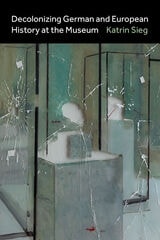
Decolonizing German and European History at the Museum
Katrin Sieg
University of Michigan Press, 2021
Decolonizing German and European History at the Museum examines efforts by European museums to investigate colonialism as part of an unprocessed past, confront its presence, and urge repair. A flurry of exhibitions and the overhaul of numerous large museums in the last decade signal that an emergent colonial memory culture is now reaching broader publics. Exhibitions pose the question of what Europeans owe to those they colonized.
Decolonizing German and European History at the Museum shows how museums can help visitors mourn historic violence and identify the contemporary agents, beneficiaries, victims, survivors, and resisters of colonial presence. At the same time, the book treats the museum as part of the racialized power relations that activists, academics, and artists have long protested against. This book asks whether museums have made the dream of activists, academics, and artists to build equitable futures more acceptable and more durable—or whether in packaging that dream for general audiences they curtail it. Confronting colonial violence, this book argues, pushes Europeans to face the histories of racism and urges them to envision antiracism at the global scale.
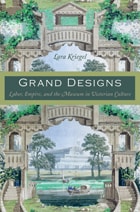
Grand Designs
Labor, Empire, and the Museum in Victorian CultureLara Kriegel
Duke University Press, 2007
Drawing on a wide range of sources, including museum guidebooks, design manuals, illustrated newspapers, pattern books, and government reports, Kriegel brings to life the many Victorians who claimed a stake in aesthetic reform during the middle years of the nineteenth century. The aspiring artists who attended the Government School of Design, the embattled provincial printers who sought a strengthened industrial copyright, the exhibition-going millions who visited the Crystal Palace, the lower-middle-class consumers who learned new principles of taste in metropolitan museums, and the working men of London who critiqued the city’s art and design collections—all are cast by Kriegel as leading cultural actors of their day. Grand Designs shows how these Victorians vied to upend aesthetic hierarchies in an imperial age and, in the process, to refashion London’s public culture.
Irina Nakhova
Museum on the EdgeJane A. Sharp
Rutgers University Press, 2019
Released in conjunction with Nakhova’s first museum retrospective exhibition in the United States, this book includes many full-color illustrations of her work, spanning the entirety of her forty-year career and demonstrating her facility with a variety of media. It also includes essays by a variety of world-renowned curators and art historians, each cataloging Nakhova’s artistic innovations and exploring how she deals with themes of everyday life, memory, viewer engagement, and moral responsibility. It concludes with a new interview with Nakhova herself, giving new insight into her creative process and artistic goals. Irina Nakhova: Museum on the Edge provides a vivid look at the work of a visionary artist. Published in partnership with the Zimmerli Museum.
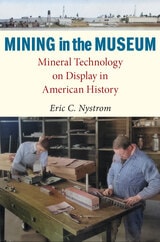
Mining in the Museum
Mineral Technology on Display in American HistoryEric C. Nystrom
University of Massachusetts Press, 2027
Examining 150 years of mining and mineral technology exhibits at the Smithsonian
Buried deep underground or cut into remote landscapes, mines are often dirty, dark, and dangerous places, located far from the everyday urban spaces that most Americans call home. Yet mining is foundational to the making of the United States, supplying the raw materials that built its infrastructure, powered its industries, and shaped its scientific institutions, even as the work itself has remained physically removed, technically complex, and culturally overlooked. Mining in the Museum reveals how Americans have encountered this vital industry not at the distant mine face, but in museum galleries. Tracing more than 150 years of mining and mineral technology exhibits at the Smithsonian Institution in Washington, DC, Eric C. Nystrom shows how curators transformed ore, instruments, models, and machinery into stories about progress, innovation, and national development, and how those interpretive choices shaped what the nation remembers—and forgets—about mining.
Using mining collections as a lens into institutional change, Nystrom offers a new history of the Smithsonian and its United States National Museum, examining how curators, administrators, and policymakers debated what museums were for, which kinds of knowledge they should produce, and what objects deserved display. He follows the shifting fortunes of mineral and mining exhibits across world’s fairs, scientific surveys, and changing exhibition philosophies, showing how display strategies evolved alongside professional science and public education. As mining’s place in the national imagination changed, so too did its presence in the federal museum, moving from a central scientific and technological showcase to a subject increasingly preserved by regional and local institutions closer to mining communities themselves. Grounded in extensive archival research, Mining in the Museum illuminates the evolving relationship among technology, public history, and the politics of display, demonstrating how museums help define which industries, and which kinds of work, become part of the American story.
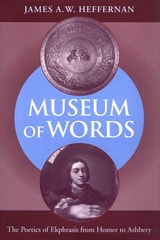
Museum of Words
The Poetics of Ekphrasis from Homer to AshberyJames A. W. Heffernan
University of Chicago Press, 1993
In the first book ever to explore this museum, James Heffernan argues that ekphrasis stages a battle for mastery between the image and the word. Moving from the epics of Homer, Virgil, and Dante to contemporary American poetry, this book treats the history of struggle between rival systems of representation. Readable and well illustrated, this study of how poets have represented painting and sculpture is a major contribution to our understanding of the relation between the arts.
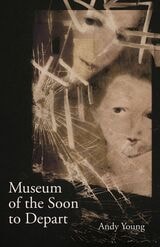
Museum of the Soon to Depart
Andy Young
Carnegie Mellon University Press, 2024
In Museum of the Soon to Depart, poet Andy Young searches for her place in history as it unfolds around her through revolution, plague, and natural disaster. As curator of her museum, she navigates her own and others’ suffering through intense observation, from the inner mechanisms of grief and illness to the solace of distance provided by photography. The material of the poet’s own life and events on the world stage intertwine, resulting in poems with a staggering range, inhabiting language in ways that ultimately point to its limits.
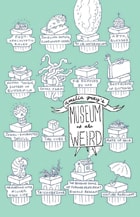
Museum of the Weird
Amelia Gray
University of Alabama Press, 2010
WINNER OF FC2’s AMERICAN BOOK REVIEW/RONALD SUKENICK INNOVATE FICTION PRIZE
Step inside a gallery where the strange feels familiar.
A monogrammed cube appears in your town. Your landlord cheats you out of first place in the annual Christmas decorating contest. You need to learn how to love and care for your mate—a paring knife. These situations and more reveal the wondrous play and surreal humor that make up the stories in Amelia Gray’s stunning collection of stories: Museum of the Weird.
Acerbic wit and luminous prose mark these shorts, while sickness and death lurk amidst the humor. Characters find their footing in these bizarre scenarios and manage to fall into redemption and rebirth. Museum of the Weird invites you into its hallways, then beguiles, bewitches, and reveals a writer who has discovered a manner of storytelling all her own.
The Museum in the Cultural Sciences
Collecting, Displaying, and Interpreting Material Culture in the Twentieth CenturyEdited by Peter N. Miller
Bard Graduate Center, 2021
The Museum in the Cultural Sciences offers the first full English translations of these articles, which remain influential in conversations about the implications of art, historical, and ethnographic museums. They show how sophisticated the discussion of museums and museum display was in the early twentieth century and how much could be gained from revisiting these reflections today. Accompanied by short commentaries from museum professionals, these articles offer an intervention into and intensification of the current debate about the function and purpose of museums.
The Museum on the Roof of the World
Art, Politics, and the Representation of TibetClare E. Harris
University of Chicago Press, 2012