Results by title
16 books match the query 'Museum Administration & Museology'
A History of the Smithsonian American Art Museum
The Intersection of Art, Science, and BureaucracyLois Marie Fink
University of Massachusetts Press, 2007
Dedicated to the art of the United States, the Smithsonian American Art Museum contains works by more than 7,000 artists and is widely regarded as an invaluable resource for the study and preservation of the nation's cultural heritage. But as Lois Marie Fink shows in this probing narrative, the history of the museum is hardly one of steady progress. Instead, it reads like a nineteenth-century melodrama, replete with villains and heroes, destruction by fire, dashed hopes, and periods of subsistence survival—all leading eventually to a happy ending.
Originating as the art gallery stipulated in the 1846 founding legislation of the Smithsonian, the museum developed within an institution that was essentially controlled by scientists. In its early years, the museum's holdings included a diverse selection of art and artifacts, mostly donated from private collections. Government support varied in response to shifting attitudes of officials and the public toward American art, ranging from avid admiration at the turn of the twentieth century to a tepid response and an almost total withdrawal of funding a generation later in favor of European masterworks. For decades the museum followed scientific organizational principles in exhibitions and collection strategies. Far into the twentieth century, accessions remained tied to nineteenth-century figurative art, reflecting the strength and influence of anthropology and biological sciences at the Smithsonian. A key breakthrough for modern art came in 1964 with the appointment of Smithsonian secretary Dillon Ripley, a scientist who strongly promoted the art side of the institution. With renewed support for expanding the collection and programs, the museum moved in 1968 to its present location in the Patent Office Building.
In recounting the history of the museum from 1846 to 1980, Fink unravels the various levels of institutional authority, power, governance, and bureaucracy and shows how people at each level influenced the fortunes of the collection. She also places changing concepts of art and museum practice in the context of national ideals and Washington realities.
Arab American Public History
Edited by Edward E. Curtis IV
Temple University Press, 2026
Arab American Public History is an invitation to engage more deeply with Arab American communities. Chapters examine Arab Americans’ origins, ethnic identities, and efforts to belong in America through case studies of the community’s food cultures, genealogy research, cultural production, and neighborhood enclaves.
The first formal study of Arab American public history, this exciting volume charts various ways Arab Americans have interpreted their past as a source of defiant humanity, cultural enfranchisement, social solidarity, and political power.
Contributors: Reem Awad-Rashmawi, Chloe Bordewich, Richard M. Breaux, Maria F. Curtis, Lydia Harrington, Randa A. Kayyali, Matthew Jaber Stiffler, Rebecca K. Shrum, and the editor
In the series History and the Public
Building for the Arts
The Strategic Design of Cultural FacilitiesPeter Frumkin and Ana Kolendo
University of Chicago Press, 2014
With Building for the Arts, Peter Frumkin and Ana Kolendo explore how artistic vision, funding partnerships, and institutional culture work together—or fail to—throughout the process of major cultural construction projects. Drawing on detailed case studies and in-depth interviews at museums and other cultural institutions varying in size and funding arrangements, including the Art Institute of Chicago, Atlanta Opera, and AT&T Performing Arts Center in Dallas, Frumkin and Kolendo analyze the decision-making considerations and challenges and identify four factors whose alignment characterizes the most successful and sustainable of the projects discussed: institutional requirements, capacity of the institution to manage the project while maintaining ongoing operations, community interest and support, and sufficient sources of funding. How and whether these factors are strategically aligned in the design and execution of a building initiative, the authors argue, can lead an organization to either thrive or fail. The book closes with an analysis of specific tactics that can enhance the chances of a project’s success.
A practical guide grounded in the latest scholarship on nonprofit strategy and governance, Building for the Arts will be an invaluable resource for professional arts staff and management, trustees of arts organizations, development professionals, and donors, as well as those who study and seek to understand them.
Casino and Museum
Representing Mashantucket Pequot IdentityJohn J. Bodinger de Uriarte
University of Arizona Press, 2007
To some degree, both institutions offer Native representations yet create different strategies for attracting and engaging visitors. While the casino is crucial as an economic generator, the museum has an important role as the space for authentic Mashantucket Pequot images and narratives. The book’s focus is on how the casino and the museum successfully deploy different strategies to take control of the tribe’s identity, image, and cultural agency.
Photographs in the book provide a view of Mashantucket, allowing the reader to study the spaces of the book’s central arguments. They are a key methodology of the project and offer a non-textual opportunity to navigate the sites as well as one finely focused way to work through the representation and formation of the Native American photographic subject—the powerful popular imagining of Native Americans. Casino and Museum presents a unique understanding of the prodigious role that representation plays in the contemporary poetics and politics of Native America. It is essential reading for scholars of Native American studies, museum studies, cultural studies, and photography.
Curating the American Past
A Memoir of a Quarter Century at the Smithsonian National Museum of American HistoryPete Daniel
University of Arkansas Press, 2022
“As is well known, Pete is an outstanding storyteller, and this book is no exception."
—Claire Strom, Journal of Southern History
In addition to chronicling significant exhibit work at the Smithsonian National Museum of American History, Curating the American Past, captures the excitement inherent in researching and writing history and Pete Daniel’s efforts to prevent diluted celebratory stories from replacing the red meat of the American past.
In Curating the American Past, Pete Daniel reveals how curators collect objects, plan exhibits, and bring alive the country’s complex and exciting history. In vivid detail, Daniel recounts the exhilaration of innovative research, the joys of collaboration, and the rewards of mentoring new generations of historians. In a career distinguished by prize-winning publications and pathbreaking exhibitions, Daniel also confronted the challenges of serving as a public historian tasked with protecting a definitive American museum from the erosion of scholarly standards. Curating the American Past offers a wealth of museum wisdom, illuminating the crucial role that dedicated historians and curators serve within our most important repositories of cultural memory.
Entering Cultural Communities
Diversity and Change in the Nonprofit ArtsGrams, Diane
Rutgers University Press, 2008
The chapters in this book draw on interviews with leaders, staff, volunteers, and audience members from eighty-five nonprofit cultural organizations to explore how they are trying to increase participation and the extent to which they have been successful. The insiders' accounts point to the opportunities and challenges involved in such efforts, from the reinvention of programs and creation of new activities, to the addition of new departments and staff dynamics, to partnerships with new groups. The authors differentiate between "relational" and "transactional" practices, the former term describing efforts to build connections with local communities and the latter describing efforts to create new consumer markets for cultural products. In both cases, arts leaders report that, although positive results are difficult to measure conclusively, long-term efforts bring better outcomes than short-term activities.
The organizations discussed include large, medium, and small nonprofits located in urban, suburban, and rural areas—from large institutions such as the Smithsonian, the Walker Art Center, the Museum of Fine Arts Houston, and the San Francisco Symphony to many cultural organizations that are smaller, but often known nationally for their innovative work, such as AS220, The Loft Literary Center, Armory Center for the Arts, Appalshop, and the Western Folklife Center.
Essential Economics for Heritage
Peter G. Gould
University College London, 2025
Essential Economics for Heritage provides tools from economics that will aid scholars, professionals, and students in heritage-related fields, such as archaeology, museum and site management, research, presentation, and conservation. With a wealth of practical examples ranging from wealthier countries in the Global North to nations that depend on heritage as a key economic resource, this guide applies relevant economic theory and business analysis to issues regularly faced in the field, from heritage tourism and sustainability to the role of heritage in economic development, investment decision making, and financing for heritage organizations.
Heritage and Nationalism
Understanding Populism through Big DataChiara Bonacchi
University College London, 2021
How was the Roman Empire invoked in Brexit Britain and in the United States during Donald Trump’s presidency, and to what purpose? And why is it critical to answer these kinds of questions? Heritage and Nationalism explores how people’s perceptions and experiences of the ancient past shape political identities in the digital age. It examines the multiple ways in which politicians, parties, and private citizens mobilize aspects of the Iron Age, Roman, and Medieval past of Britain and Europe to include or exclude others based on culture, religion, class, race, and ethnicity.
The book uses quantitative and qualitative methods to investigate how premodern periods are leveraged to support or oppose populist-nationalist arguments as part of social media discussions concerning Brexit, the Italian Election of 2018, and the US-Mexican border debate in the United States. Analyzing millions of tweets and Facebook posts, comments, and replies, this book is the first to use big data to answer questions about public engagement with the past and identity politics. The findings and conclusions revise and reframe the meaning of populist nationalism today and help to build a shared basis for the democratic engagement of citizens in public life in the future. The book offers a fascinating and unmissable read for anyone interested in how the past and its contemporary legacy, or heritage, influence our political thinking and feeling in a time of hyper-connectivity.
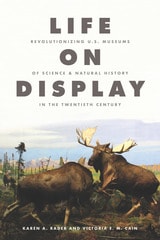
Life on Display
Revolutionizing U.S. Museums of Science and Natural History in the Twentieth CenturyKaren A. Rader and Victoria E. M. Cain
University of Chicago Press, 2014
Rader and Cain explain why science and natural history museums began to welcome new audiences between the 1900s and the 1920s and chronicle the turmoil that resulted from the introduction of new kinds of biological displays. They describe how these displays of life changed dramatically once again in the 1930s and 1940s, as museums negotiated changing, often conflicting interests of scientists, educators, and visitors. The authors then reveal how museum staffs, facing intense public and scientific scrutiny, experimented with wildly different definitions of life science and life science education from the 1950s through the 1980s. The book concludes with a discussion of the influence that corporate sponsorship and blockbuster economics wielded over science and natural history museums in the century’s last decades.
A vivid, entertaining study of the ways science and natural history museums shaped and were shaped by understandings of science and public education in the twentieth-century United States, Life on Display will appeal to historians, sociologists, and ethnographers of American science and culture, as well as museum practitioners and general readers.
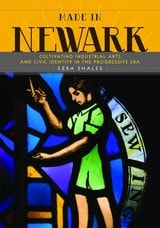
Made in Newark
Cultivating Industrial Arts and Civic Identity in the Progressive EraShales, Ezra
Rutgers University Press, 2010
This is the story of experimental exhibitions in the library and the founding of the Newark Museum Associationùa project in which cultural literacy was intertwined with civics and consumption. Local artisans demonstrated crafts, connecting the cultural institution to the department store, school, and factory, all of which invoked the ideal of municipal patriotism. Today, as cultural institutions reappraise their relevance, Made in Newark explores precedents for contemporary debates over the ways the library and museum engage communities, define heritage in a multicultural era, and add value to the economy.
Mobile Museums
Collections in CirculationEdited by Felix Driver, Mark Nesbitt, and Caroline Cornish
University College London, 2021
How did the process of the circulation re-examine, inform, and unsettle common assumptions about the way museum collections have evolved over time and space? Mobile Museums presents an argument for the importance of circulation in the study of museum collections, both past and present. It brings together a diverse array of international scholars and curators from a variety of disciplines to consider the mobility of collections, especially in the context of Indigenous community engagement. By foregrounding the question of circulation, the book represents a paradigm shift in the understanding of the history and future uses of museum collections. Taking on a global perspective and addressing a variety of types of collection, including the botanical, ethnographic, economic, and archaeological, the book helps us to understand why the mobility of museum collections was a fundamental aspect of their history—and why it continues to matter today.
Posterity Is Now
Practicing Museum Anthropology, Collections Care, and Collaborative Research with Indigenous PeoplesJennifer A. Shannon
University of Wyoming Press, 2025
In this handbook based on over twenty years of teaching and practice at the intersection of museums, anthropology, and Indigenous peoples, Jennifer A. Shannon covers both the theoretical (i.e., exploring the idea of objects as kin) and the pragmatic (i.e., guidelines for how to design and budget collaborative projects). She advocates for fundamental change in how anthropological research design and practice are done within and beyond the museum and how leadership and staff view the very purpose of the museum. She also demonstrates how collaborative museum anthropology can be a model for the fields of anthropology, public scholarship, and social science research more broadly.
Posterity Is Now is a starting point, a “companion to practice,” written in accessible language and equally relevant for use in university classrooms, by qualitative researchers, and by practitioners in museums and cultural centers.
Tarnished Promises
Indian Peace Medals in North AmericaSamuel J. Redman
University Press of Colorado, 2026
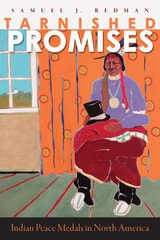
Using a collection of medals held at the Denver Museum of Nature & Science, Tarnished Promises presents an updated overview of the history and story of peace medals through an examination of their legacy in the modern world. Accompanying the history and analysis are images of thirteen exemplar peace medals from the DMNS collections and their accompanying object biographies.
Peace medals paradoxically worked as tools of colonialism and also Native American agency, sovereignty, power, resistance, and change in response to growing challenges. Their widespread adoption by Native people in North America both prefigured and coincided with the many ways in which Native Americans and First Nations peoples worked to adapt to the unwelcome and undesirable changes wrought by expanding western colonialism. The unique individual histories behind the medals and the larger peace medal story suggest how material objects can hold several, sometimes contradictory, meanings and be influenced by varied strands of culture and historical memory. Tarnished Promises tells this complex story in two parts, with the first detailing the history of Indian peace medals from 1670 to the present day and the second part exploring their meaning at different points in time and to different peoples.
The first book-length treatment of peace medals using an anticolonialist perspective, Tarnished Promises is significant to scholars and the general public interested in numismatics, American history, Indigenous studies, and museum collections.

The India Museum Revisited
Arthur MacGregor
University College London, 2023
The museum of the East India Company formed, for a large part of the nineteenth century, one of the sights of London. In recent years, little has been remembered of it beyond its mere existence, while an assumed negative role has been widely attributed to it on the basis of its position at the heart of one of Britain’s arch-colonialist enterprises.
Extensively illustrated, The India Museum Revisited surveys the contents of its multi-faceted collections—with respect to materials, their manufacture, and original functions on the Indian sub-continent—as well as the collectors who gathered them and the manner in which they were mobilized to various ends within the museum.
From this integrated treatment of documentary and material sources, a more accurate, rounded, and nuanced picture emerges of an institution that contributed in major ways, over a period of eighty years, to the representation of India for a European audience, not only in Britain but through the museum’s involvement in the international exposition movement to audiences on the continent and beyond.
Under Discussion
The Encyclopedic MuseumDonatien Grau
J. Paul Getty Trust, The, 2021
Over the last two decades, the encyclopedic museum has been criticized and praised, constantly discussed, and often in the news. Encyclopedic museums are a phenomenon of Europe and the United States, and their locations and mostly Eurocentric collections have in more recent years drawn attention to what many see as bias. Debates on provenance in general, cultural origins, and restitutions of African heritage have exerted pressure on encyclopedic museums, and indeed on all manner of museums. Is there still a place for an institution dedicated to gathering, preserving, and showcasing all the world’s cultures?
Donatien Grau’s conversations with international arts officials, museum leaders, artists, architects, and journalists go beyond the history of the encyclopedic format and the last decades’ issues that have burdened existing institutions. Are encyclopedic museums still relevant? What can they contribute when the Internet now seems to offer the greater encyclopedia? How important is it for us to have in-person access to objects from all over the world that can directly articulate something to us about humanity? The fresh ideas and nuances of new voices on the core principles important to museums in Dakar, Abu Dhabi, and Mumbai complement some of the world’s arts leaders from European and American institutions—resulting in some revealing and unexpected answers. Every interviewee offers differing views, making for exciting, stimulating reading.
Includes interviews with George Abungu, National Museums of Kenya; Kwame Anthony Appiah, New York University; Homi K. Bhabha, Harvard University; Hamady Bocoum, Musée des Civilisationes Noires, Dakar; Irina Bokova, UNESCO; Partha Chatterjee, Columbia University; Thomas Campbell, Fine Arts Museum of San Francisco; James Cuno, J. Paul Getty Trust; Philippe de Montebello, New York University; Bachir Souleymane Diagne, Columbia University; Kaywin Feldman, National Gallery of Art; Marc Fumaroli, Collège de France; Massimiliano Gioni, New Museum; Michael Govan, Los Angeles County Museum of Art; Camille Henrot, artist; Max Hollein, Metropolitan Museum of Art; Henri Loyrette, Musée du Louvre; Jean Nouvel, architect; Zaki Nusseibeh, United Arab Emirates; Mikhail Piotrovsky, State Hermitage Museum; Grayson Perry, artist; Krzysztof Pomian, École des Hautes Études en Sciences Sociales; Mari Carmen Ramírez, Museum of Fine Arts, Houston; Fiammetta Rocco, The Economist; Sabyasachi Mukherjee, CSMVS Mumbai; Bénédicte Savoy; Collège de France; Kavita Singh, Jawaharlal Nehru University, New Delhi; Amit Sood, Google Arts & Culture.
Understanding the Arts and Creative Sector in the United States
Cherbo, Joni Maya
Rutgers University Press, 2008
Illuminating key issues and reflecting the rapid growth of the field of arts and cultural policy, this book will be of interest to students at both the undergraduate and graduate levels, to arts educators and management professionals, government agency and foundation officials, and researchers and academics in the cultural policy field.