Results by title
6 books match the query 'Naming'
Indiscretion
Finitude and the Naming of GodThomas A. Carlson
University of Chicago Press, 1998
Combining both historical research in theology (from Pseudo-Dionysius to Aquinas to Eckhart) and contemporary philosophical analysis (from Hegel and Nietzsche to Heidegger, Derrida, and Marion), Indiscretion will interest philosophers, theologians, and other scholars concerned with the possibilities and limits of language surrounding both God and human subjectivity.

Naming the Dawn
Abdourahman A. Waberi
Seagull Books, 2018

Naming the Wind
Steven Rood
Omnidawn, 2022
Wind moves through this collection, opening the poems to the dying beauty of the natural world, to the weathers inside the psyche and without, and to the connections between a family and between the speaker his mentor, the great poet Jack Gilbert. The collection navigates the intimacies of human relationships with others, the challenges of working as a lawyer trying to maintain integrity as others fall prey to corporate greed, and the complexity of holding a Jewish identity while being awake to tradition’s hold on the mind and its cost. Steven Rood offers a powerful account of how to be a human in dynamic relationships while also holding respect for the non-human beings that comprise most of the life on our planet.
Rood employs structures and forms that directly relate to the content of the poems themselves. Spontaneous breaks and starts reflect the writer’s turns of mind, offering readers insight into the meaning and measure of the work.
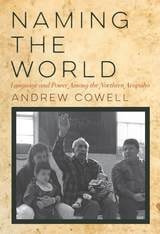
Naming the World
Language and Power Among the Northern ArapahoAndrew Cowell
University of Arizona Press, 2018
As the Arapaho people resist Euro-American assimilation or domination, the Arapaho language and the idea that the language is sacred are key rallying points—but also key points of contestation. Cowell finds that while many at Wind River see the language as crucial for maintaining access to more-than-human power, others primarily view the language in terms of peer-oriented identities as Arapaho, Indian, or non-White. These different views lead to quite different language usage and attitudes in relation to place naming, personal naming, cultural metaphors, new word formation, and the understudied practice of folk etymology.
Cowell presents data from conversations and other natural discourse to show the diversity of everyday speech and attitudes, and he links these data to broader debates at Wind River and globally about the future organization of indigenous societies and the nature of Arapaho and indigenous identity.

The Secret Powers of Naming
Sara Littlecrow-Russell; Introduction by Joy Harjo
University of Arizona Press, 2006
As Littlecrow-Russell explores how names imposed by outsiders both collide and merge with the identities that Natives create for themselves, these poems decisively counter the images of Indians as colorful dancers, stoic saints, and defeated warriors. These verses are not constructed of beautiful images, nor are they stories of redemption. Instead, Littlecrow-Russell offers stark and honest witness to urban and reservation life at the beginning of the twenty-first century. In short snaps of honed lyric and voice, she tackles topics ranging from family, love, and spirituality, to welfare, addiction, and the thorny politics of tribal identity. Her work displays tremendous bitterness and anger, but there is also dignity, humor, and plenty of irony.
Candid and compelling, this collection brings fluent verse and human face to the commonly misrepresented experiences of Native Americans.
Violence and Naming
On Mexico and the Promise of LiteratureBy David E. Johnson
University of Texas Press, 2019
Reclaiming the notion of literature as an institution essential for reflecting on the violence of culture, history, and politics, Violence and Naming exposes the tension between the irreducible, constitutive violence of language and the reducible, empirical violation of others. Focusing on an array of literary artifacts, from works by journalists such as Elena Poniatowska and Sergio González Rodríguez to the Zapatista communiqués to Roberto Bolaño's The Savage Detectives and 2666, this examination demonstrates that Mexican culture takes place as a struggle over naming—with severe implications for the rights and lives of women and indigenous persons.
Through rereadings of the Conquest of Mexico, the northern Mexican feminicide, the Zapatista uprising in Chiapas, the disappearance of the forty-three students at Iguala in 2014, and the 1999 abortion-rights scandal centering on “Paulina,” which revealed the tenuousness of women’s constitutionally protected reproductive rights in Mexico, Violence and Naming asks how societies can respond to violence without violating the other. This essential question is relevant not only to contemporary Mexico but to all struggles for democracy that promise equality but instead perpetuate incessant cycles of repression.