Results by title

5 books match the query 'Nanoscience'
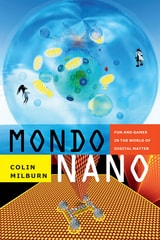
cover of Mondo Nano: Fun and Games in the World of Digital Matter

Mondo Nano

Fun and Games in the World of Digital Matter

Colin Milburn

Duke University Press, 2015

In Mondo Nano Colin Milburn takes his readers on a playful expedition through the emerging landscape of nanotechnology, offering a light-hearted yet critical account of our high-tech world of fun and games. This expedition ventures into discussions of the first nanocars, the popular video games Second Life, Crysis, and BioShock, international nanosoccer tournaments, and utopian nano cities. Along the way, Milburn shows how the methods, dispositions, and goals of nanotechnology research converge with video game culture. With an emphasis on play, scientists and gamers alike are building a new world atom by atom, transforming scientific speculations and video game fantasies into reality. Milburn suggests that the closing of the gap between bits and atoms entices scientists, geeks, and gamers to dream of a completely programmable future. Welcome to the wild world of Mondo Nano.
[more]
cover of NanoCulture: Implications of the New Technoscience

NanoCulture

Implications of the New Technoscience

Edited by N. Katherine Hayles

Intellect Books, 2004

"Nano" denotes a billionth; a nanometer is a billionth of a meter. New instrumentation and techniques have for the first time made possible materials research and engineering at this level, the scale of individual molecules and atoms.
Extraordinary visions of material abundance, unprecedented materials, and powerful engineering capabilities have marked the arrival of nanotechnology, as well as dystopian scenarios of self-replicating devices running amok and causing global catastrophe. Largely a future possibility rather than present actuality, nanotechnology has become a potent cultural signifier.

NanoCulture explores the ways in which nanotechnology interacts with, and itself becomes, a cultural construction. Topics include the co-construction of nanoscience and science fiction; the influence of risk assessment and nanotechnology on the shapes of narratives; intersections between nanoscience as a writing practice and experimental literature at the limits of fabrication; the Alice-in-Wonderland metaphor for nanotechnology; and the effects of mediation on nanotechnology and electronic literature.

NanoCulture is produced in collaboration with the nano art exhibit at the Los Angeles County Museum of Art (December 2003-September 2004), created by an interdisciplinary team led by media artist Victoria Vesna and nanoscientist James Gimzewski. NanoCulture is richly illustrated with images from the nano exhibit, which also provides the basis for an ethnographic analysis of collaborative process and an exploration of changing concepts of museum space.

The dynamic uniting these diverse perspectives is boundary crossing: between art, science, and literature; cultural imaginaries, scientific facts, and technological possibilities; actual. virtual, and hybrid spaces; the science of fictions and the fictions of science; and utopian dreams, material constraints, and dystopian nightmares.

The first book-length study focus on cultural implications of nanotechnology, NanoCulture breaks new ground in showing the importance of the new technoscience to contemporary culture and of culture to the development, interpretation, and future of this technoscience.
[more]
cover of Nanoart: The Immateriality of Art

Nanoart

The Immateriality of Art

Paul Thomas

Intellect Books, 2013

Examining art that intersects with science and seeks to make visible what cannot ordinarily be seen with the naked eye,  provides thorough insight into new understandings of materiality and life. It includes an extensive overview of the history of nanoart from the work of Umberto Boccioni right up to present-day artists. The author looks specifically at art inspired by nanotechnological research made possible by the Scanning Tunneling Microscope and Atomic Force Microscope in the 1980s, as well as the development of other instruments of nanotechnological experimentation. Nanoart is a sustained consideration of this fascinating artistic approach that challenge how we see and understand our world.
 
[more]
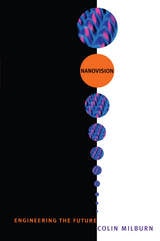
cover of Nanovision: Engineering the Future

Nanovision

Engineering the Future

Colin Milburn

Duke University Press, 2008

The dawning era of nanotechnology promises to transform life as we know it. Visionary scientists are engineering materials and devices at the molecular scale that will forever alter the way we think about our technologies, our societies, our bodies, and even reality itself. Colin Milburn argues that the rise of nanotechnology involves a way of seeing that he calls “nanovision.” Trekking across the technoscapes and the dreamscapes of nanotechnology, he elaborates a theory of nanovision, demonstrating that nanotechnology has depended throughout its history on a symbiotic relationship with science fiction. Nanotechnology’s scientific theories, laboratory instruments, and research programs are inextricable from speculative visions, hyperbolic rhetoric, and fictional narratives.

Milburn illuminates the practices of nanotechnology by examining an enormous range of cultural artifacts, including scientific research articles, engineering textbooks, laboratory images, popular science writings, novels, comic books, and blockbuster films. In so doing, he reveals connections between the technologies of visualization that have helped inaugurate nano research, such as the scanning tunneling microscope, and the prescient writings of Robert A. Heinlein, James Blish, and Theodore Sturgeon. He delves into fictive and scientific representations of “gray goo,” the nightmare scenario in which autonomous nanobots rise up in rebellion and wreak havoc on the world. He shows that nanoscience and “splatterpunk” novels share a violent aesthetic of disintegration: the biological body is breached and torn asunder only to be refabricated as an assemblage of self-organizing machines. Whether in high-tech laboratories or science fiction stories, nanovision deconstructs the human subject and galvanizes the invention of a posthuman future.

[more]
cover of Van der Waals Heterostructures and Twistronics: Advances in two-dimensional quantum materials

Van der Waals Heterostructures and Twistronics

Advances in two-dimensional quantum materials

Pramoda Kumar Nayak

The Institution of Engineering and Technology, 2026

Van der Waals Heterostructures and Twistronics: Advances in two-dimensional quantum materials offers an accessible and comprehensive exploration of one of the fastest-growing areas of modern materials science and quantum technology. As research into atomically thin materials continues to reshape the future of electronics and quantum devices, this book examines how atomically thin materials such as graphene, transition metal dichalcogenides, MXenes and related layered systems can be engineered to exhibit extraordinary quantum phenomena through interlayer coupling and twist-angle control.
[more]