Results by title
4 books match the query 'Naremore, James'
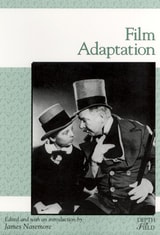
Film Adaptation
Naremore, James
Rutgers University Press, 2000
Some of the earliest feature films were derived from classic literature. Even today, most of the movies we see are adaptations of one kind or another. People who have never read Jane Austen can see her characters on the screen; but filmgoers can also see material taken from theater, television, comic books, and every other medium.
The essays in this volume, most of which have never before been published, raise fundamental questions about cinema and adaptation: what is the nature of the "literary" and the "cinematic"? Why do so many of the
films described as adaptions seem to derive from canonical literature rather than from other sources? How do the different media affect the ways stories are told?
Film Adaptation offers fresh approaches to the art, theory, and cultural politics of movie adaptations, even challenging what is meant by the term "adaptation" itself. Contributors examine the process of adaptation in both theory and practice, discussing a wide variety of films. James Naremore's introduction provides an accessible historical overview of the field and reveals the importance of adaptation study to the many different academic disciplines now attracted to the analysis of film as commodity, document, and cultural artifact.
(Contributors are André Bazin, Dudley Andrew, Robert B. Ray, Robert Stam, Richard Maltby, Guerric DeBona, O. M. B., Gilberto Perez, Michael Anderegg, Matthew Bernstein, Darlene J. Sadlier, Jonathan Rosenbaum, and Lesley Stern.)
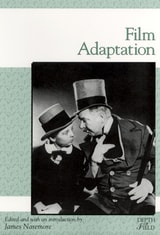
Film Adaptation
Naremore, James
Rutgers University Press, 2000
Some of the earliest feature films were derived from classic literature. Even today, most of the movies we see are adaptations of one kind or another. People who have never read Jane Austen can see her characters on the screen; but filmgoers can also see material taken from theater, television, comic books, and every other medium.
The essays in this volume, most of which have never before been published, raise fundamental questions about cinema and adaptation: what is the nature of the "literary" and the "cinematic"? Why do so many of the
films described as adaptions seem to derive from canonical literature rather than from other sources? How do the different media affect the ways stories are told?
Film Adaptation offers fresh approaches to the art, theory, and cultural politics of movie adaptations, even challenging what is meant by the term "adaptation" itself. Contributors examine the process of adaptation in both theory and practice, discussing a wide variety of films. James Naremore's introduction provides an accessible historical overview of the field and reveals the importance of adaptation study to the many different academic disciplines now attracted to the analysis of film as commodity, document, and cultural artifact.
(Contributors are André Bazin, Dudley Andrew, Robert B. Ray, Robert Stam, Richard Maltby, Guerric DeBona, O. M. B., Gilberto Perez, Michael Anderegg, Matthew Bernstein, Darlene J. Sadlier, Jonathan Rosenbaum, and Lesley Stern.)
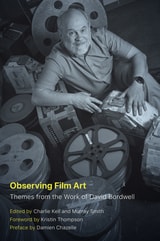
Observing Film Art
Themes from the Work of David BordwellCharlie Keil
Rutgers University Press, 2027
When David Bordwell died in 2024, he left behind a legacy of film scholarship and criticism whose influence is unmatched. Coauthor of a pair of textbooks adopted across the globe and the main force behind a blog read by thousands, Bordwell has influenced generations of film students, filmmakers, and film critics. Observing Film Art examines the breadth of Bordwell’s work through the perspectives of those who knew him best, collaborators, former students, and critics among them. This is the first collection devoted to the work of Bordwell, and it gives equal attention to each facet of his prodigious scholarship, structured to highlight his interest in theory, history, and analysis and criticism. The cornerstones of his approach to film study, including formalism, cognitivism, and historical poetics, are all examined in detail, as are key works, including The Classical Hollywood Cinema (coauthored with Kristin Thompson and Janet Staiger) and Narration in the Fiction Film.
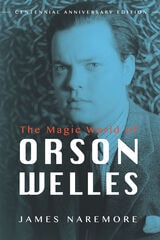
The Magic World of Orson Welles
James Naremore
University of Illinois Press, 2015