Results by title
5 books match the query 'National characteristics, British, in literature'
After Empire
Scott, Naipaul, RushdieMichael Gorra
University of Chicago Press, 1997
Arguing against a model of cultural identity based on race, Gorra begins with Scott's portrait, in The Raj Quartet, of the character Hari Kumar—a seeming oxymoron, an "English boy with a dark brown skin," whose very existence undercuts the belief in an absolute distinction between England and India. He then turns to the opposed figures of Naipaul and Rushdie, the two great novelists of the Indian diaspora. Whereas Naipaul's long and controversial career maps the "deep disorder" spread by both imperialism and its passing, Rushdie demonstrates that certain consequences of that disorder, such as migrancy and mimicry, have themselves become creative forces.
After Empire provides engaging and enlightening readings of postcolonial fiction, showing how imperialism helped shape British national identity—and how, after the end of empire, that identity must now be reconfigured.
Consuming Anxieties
Alcohol, Tobacco, and Trade in British Satire, 1660-1751Dayne C. Riley
Bucknell University Press, 2024
Smollett's Britain
Jeremy Black
St. Augustine's Press, 2022

The Crisis of Action in Nineteenth-Century English Literature
Stefanie Markovits
The Ohio State University Press, 2006
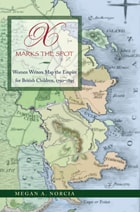
X Marks the Spot
Women Writers Map the Empire for British Children, 1790–1895Megan A. Norcia
Ohio University Press, 2010
During the nineteenth century, geography primers shaped the worldviews of Britain’s ruling classes and laid the foundation for an increasingly globalized world. Written by middle-class women who mapped the world that they had neither funds nor freedom to traverse, the primers employed rhetorical tropes such as the Family of Man or discussions of food and customs in order to plot other cultures along an imperial hierarchy.
Cross-disciplinary in nature, X Marks the Spot is an analysis of previously unknown material that examines the interplay between gender, imperial duty, and pedagogy.
Megan A. Norcia offers an alternative map for traversing the landscape of nineteenth-century female history by reintroducing the primers into the dominant historical record. This is the first full-length study of the genre as a distinct tradition of writing produced on the fringes of professional geographic discourse before the high imperial period.