Results by title
78 books match the query 'National security' and 9 start with a
A Century of Repression
The Espionage Act and Freedom of the PressRalph Engelman and Carey Shenkman
University of Illinois Press, 2022
A Curriculum of Fear
Homeland Security in U.S. Public SchoolsNicole Nguyen
University of Minnesota Press, 2016
Welcome to Milton High School, where fear is a teacher’s best tool and every student is a soldier in the war on terror. A struggling public school outside the nation’s capital, Milton sat squarely at the center of two trends: growing fear of resurgent terrorism and mounting pressure to run schools as job training sites. In response, the school established a specialized Homeland Security program.
A Curriculum of Fear takes us into Milton for a day-to-day look at how such a program works, what it means to students and staff, and what it says about the militarization of U.S. public schools and, more broadly, the state of public education in this country. Nicole Nguyen guides us through a curriculum of national security–themed classes, electives, and internships designed through public-private partnerships with major defense contractors like Northrop Grumman and federal agencies like the NSA. She introduces us to students in the process of becoming a corps of “diverse workers” for the national security industry, learning to be “vigilant” citizens; and she shows us the everyday realities of a program intended to improve the school, revitalize the community, and eliminate the achievement gap.
With reference to critical work on school militarization, neoliberal school reform, the impact of the global war on terror on everyday life, and the political uses of fear, A Curriculum of Fear maps the contexts that gave rise to Milton’s Homeland Security program and its popularity. Ultimately, as the first ethnography of such a program, the book provides a disturbing close encounter with the new normal imposed by the global war on terror—a school at once under siege and actively preparing for the siege itself.

A Suitable Enemy
Racism, Migration and Islamophobia in EuropeLiz Fekete
Pluto Press, 2009
Liz Fekete is a leading authority on issues of racism, Islamophobia and national security legislation. A Suitable Enemy draws on sixteen years of research to present a comprehensive overview of EU immigration, asylum, race and security policies.
Fekete argues that at the same time as the EU introduces selective migration policies, it closes its borders against asylum seekers who were the first victims of the growth of the security state which now embraces Muslims. She explores the way in which anti-terrorist legislation has been used to evict undesirable migrants, how deportation policies commodify and de-humanise the most vulnerable and how these go hand in hand with evolving forms of racism, particularly Islamophobia.
At the heart of the book is an examination of xeno-racism -- a non-colour coded form of institutionalised racism -- where migrants who do not assimilate, or who are believed to be incapable of assimilation, are excluded.
A War on Terror
Afghanistan and AfterPaul Rogers
Pluto Press, 2004
Paul Rogers is one of the world's leading security experts. Since the 11 September attacks, he has been a regular guest on TV news channels throughout America and Britain, where he has offered expert advice on the real implications of 9/11 and Bush's 'war on terror'. His articles in newspapers around the world, and in the web journal Open Democracy, have become essential reading for many thousands of people, including government officials, senior military, heads of UN agencies, opinion formers, journalists and peace activists.
A War on Terror is Paul Roger's radical assessment of Bush's new policy, the way it has affected world security and the grave implications that it holds for future peace, not only in the Middle East but throughout the world. Moving from the war in Afghanistan and its aftermath to the Israeli/Palestinian conflict, the continuing development of al-Qaida and its associates through to the war on Iraq, Rogers presents a uniquely cogent analysis of these rapid and traumatic events.
In a world in which the US and other states of the Atlantic community are increasingly speaking a different language to that of the majority of the world, Paul Rogers offers a vital critical assessment of the language of dominance and control as 'the New American Century' unfolds.
For the US, in particular, the post-9/11 world is one in which it is essential to maintain firm control of international security, extending to pre-emptive military action. In this book, Rogers demonstrates how futile, mistaken and deeply counter-productive that belief is, and points the way to more effective routes to a more just and secure world.
African Security
Local Issues and Global ConnectionsAbu Bakarr Bah
Ohio University Press, 2024
After Bipolarity
The Vanishing Threat, Theories of Cooperation and the Future of the Atlantic AllianceFred Chernoff, Editor
University of Michigan Press, 1995

Allies In Adversity
The Frontline States In SouthernGilbert M. Khadiagala
Ohio University Press, 1994
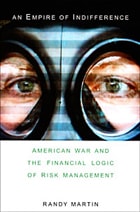
An Empire of Indifference
American War and the Financial Logic of Risk ManagementRandy Martin
Duke University Press, 2007
Drawing on theorists including Michel Foucault, Giorgio Agamben, Michael Hardt, Antonio Negri, and Achille Mbembe, Martin illuminates a frightening financial logic that must be understood in order to be countered. Martin maintains that finance divides the world between those able to avail themselves of wealth opportunities through risk taking (investors) and those who cannot do so, who are considered “at risk.” He contends that modern-day American imperialism differs from previous models of imperialism, in which the occupiers engaged with the occupied to “civilize” them, siphon off wealth, or both. American imperialism, by contrast, is an empire of indifference: a massive flight from engagement. The United States urges an embrace of risk and self-management on the occupied and then ignores or dispossesses those who cannot make the grade.
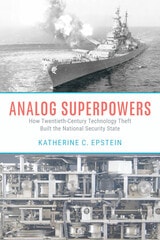
Analog Superpowers
How Twentieth-Century Technology Theft Built the National Security StateKatherine C. Epstein
University of Chicago Press, 2024
At the beginning of the twentieth century, two British inventors, Arthur Pollen and Harold Isherwood, became fascinated by a major military question: how to aim the big guns of battleships. These warships—of enormous geopolitical import before the advent of intercontinental missiles or drones—had to shoot in poor light and choppy seas at distant moving targets, conditions that impeded accurate gunfire. Seeing the need to account for a plethora of variables, Pollen and Isherwood built an integrated system for gathering data, calculating predictions, and transmitting the results to the gunners. At the heart of their invention was the most advanced analog computer of the day, a technological breakthrough that anticipated the famous Norden bombsight of World War II, the inertial guidance systems of nuclear missiles, and the networked “smart” systems that dominate combat today. Recognizing the value of Pollen and Isherwood’s invention, the British Royal Navy and the United States Navy pirated it, one after the other. When the inventors sued, both the British and US governments invoked secrecy, citing national security concerns.
Drawing on a wealth of archival evidence, Analog Superpowers analyzes these and related legal battles over naval technology, exploring how national defense tested the two countries’ commitment to individual rights and the free market. Katherine C. Epstein deftly sets out Pollen’s and Isherwood’s pioneering achievements, the patent questions raised, the geopolitical rivalry between Britain and the United States, and the legal precedents each country developed to control military tools built by private contractors.
Epstein’s account reveals that long before the US national security state sought to restrict information about atomic energy, it was already embroiled in another contest between innovation and secrecy. The America portrayed in this sweeping and accessible history isn’t yet a global hegemon but a rising superpower ready to acquire foreign technology by fair means or foul—much as it accuses China of doing today.