Results by title
163 books match the query 'Nationalism & Patriotism' and 12 start with a

A Certain Amount of Madness
The Life Politics and Legacies of Thomas SankaraAmber Murrey
Pluto Press, 2018
This book looks at Sankara's political philosophies and legacies and their relevance today. Analyses of his synthesis of Pan-Africanism and humanist Marxist politics, as well as his approach to gender, development, ecology and decolonisation offer new insights to Sankarist political philosophies. Critical evaluations of the limitations of the revolution examine his relationship with labour unions and other aspects of his leadership style. His legacy is revealed by looking at contemporary activists, artists and politicians who draw inspiration from Sankarist thought in social movement struggles today, from South Africa to Burkina Faso.
In the 30th anniversary of his assassination, this book illustrates how Sankara's political praxis continues to provide lessons and hope for decolonisation struggles today.
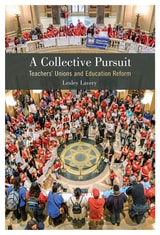
A Collective Pursuit
Teachers' Unions and Education ReformLesley Lavery
Temple University Press, 2020
Teachers’ unions are the organizations responsible for safeguarding the conditions of teachers’ employment. Union supporters claim strong synergies between teachers’ interests and students’ interests, but critics of unions insist that the stance of teachers in collective bargaining may disadvantage students as unions reduce the power of administrators to manage, remove, reward or retain excellent teachers.
In A Collective Pursuit, Lesley Laveryunpacks how teachers’ unions today are fighting for contracts that allow them to earn a decent living and build “schools all students deserve.” She explains the form and function of the nation’s largest teachers’ unions. Lavery then explores unionization campaigns in the Twin Cities charter schools. A Collective Pursuit also examines teacher strikes and contract negotiations, school finance and finance reform, and district and union attempts to address racial achievement gaps, to provide a context for understanding the economic, political, and demographic forces that inspire teachers to improve conditions for students.
A Collective Pursuit emphasizes that while teachers’ unions serve a traditional, economic role, they also provide a vast array of valuable services to students, educators, parents, and community members.
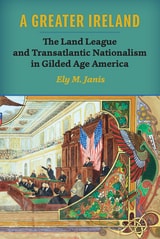
A Greater Ireland
The Land League and Transatlantic Nationalism in Gilded Age AmericaEly M. Janis
University of Wisconsin Press, 2014
As this "Greater Ireland" flourished, new opportunities arose for women and working-class men to contribute within Irish-American society. Exploring the complex interplay of ethnicity, class, and gender, Janis demonstrates the broad range of ideological, social, and political opinion held by Irish Americans in the 1880s. Participation in the Land League deeply influenced a generation that replaced their old county and class allegiances with a common cause, shaping the future of Irish-American nationalism.

A Nation of Politicians
Gender, Patriotism, and Political Culture in Late Eighteenth-Century IrelandPadhraig Higgins
University of Wisconsin Press, 2009
In A Nation of Politicians, Padhraig Higgins argues that the development of Volunteer-initiated activities—associating, petitioning, subscribing, shopping, and attending celebrations—expanded the scope of political participation. Using a wide range of literary, archival, and visual sources, Higgins examines how ubiquitous forms of communication—sermons, songs and ballads, handbills, toasts, graffiti, theater, rumors, and gossip—encouraged ordinary Irish citizens to engage in the politics of a more inclusive society and consider the broader questions of civil liberties and the British Empire. A Nation of Politicians presents a fascinating tale of the beginnings of Ireland’s richly vocal political tradition at this important intersection of cultural, intellectual, social, and public history.
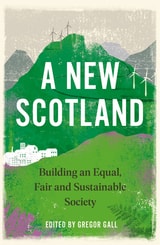
A New Scotland
Building an Equal, Fair and Sustainable SocietyGregor Gall
Pluto Press, 2022
In A New Scotland, leading activists and academics lay out the blueprints for radical reform, showing how society can be transformed by embedding values of democracy, social justice and environmental sustainability into a coherent set of policy ideas.
Structured in two parts, the book takes to task the challenges to affect radical change, before exploring new approaches to key questions such as healthcare, education, public ownership, race, gender and human rights.
A Pragmatic Alliance
Jewish-Lithuanian political cooperation at the beginning of the 20th centuryVladas Sirutavicius
Central European University Press, 2011

A Suburb of Europe
Nineteenth-Century Polish Approaches to Western CivilizationJerzy Jedlicki
Central European University Press, 2000
In this lively and original book, the distinguished Polish historian Jerzy Jedlicki tells the story of a century-long Polish dispute over the merits and demerits of the Western model of liberal progress and industrial civilization.
As in several countries of Europe, also in Poland, intellectuals--conservatives, liberals, and (later) socialists--quarrelled about whether such a model would suit and benefit their nation, or whether it would spell the ruin of its distinctive cultural features.
This heated debate revolved around several pairs of opposing ideas: native cultures v. cosmopolitan civilization; natural v. artificial ways of economic development; Christian morals v. capitalist laissez-faire; traditional customs v. mobile society; romanticism v. scientism, and so on. It is these various aspects of the main issue which the author analyzes and links together here. He describes how difficult and painful the process of modernization was in a nation deprived of its political independence and cultural autonomy.
After Independence
Making and Protecting the Nation in Postcolonial and Postcommunist StatesLowell W. Barrington, Ed.
University of Michigan Press, 2006
"Where do nationalists go once they get what they want? We know rather little about how nationalist movements transform themselves into the governments of new states, or how they can become opponents of new regimes that, in their view, have not taken the self-determination drive far enough. This stellar collection contributes not only to comparative theorizing on nationalist movements, but also deepens our understanding of the contentious politics of nationalism's ultimate product--new countries."
--Charles King, Chair of the Faculty and Ion Ratiu Associate Professor, Georgetown University School of Foreign Service
"This well-integrated volume analyzes two important variants of nationalism-postcolonial and postcommunist-in a sober, lucid way and will benefit students and scholars alike."
--Zvi Gitelman, University of Michigan
Lowell W. Barrington is Associate Professor of Political Science, Marquette University.

After the Imperial Turn
Thinking with and through the NationAntoinette Burton, ed.
Duke University Press, 2003
While most of the contributors discuss British imperialism and its repercussions, the volume also includes, as counterpoints, essays on the history and historiography of France, Germany, Spain, and the United States. Whether looking at the history of the passport or the teaching of history from a postnational perspective, this collection explores such vexed issues as how historians might resist the seduction of national narratives, what—if anything—might replace the nation’s hegemony, and how even history-writing that interrogates the idea of the nation remains ideologically and methodologically indebted to national narratives. Placing nation-based studies in international and interdisciplinary contexts, After the Imperial Turn points toward ways of writing history and analyzing culture attentive both to the inadequacies and endurance of the nation as an organizing rubric.
Contributors. Tony Ballantyne, Antoinette Burton, Ann Curthoys, Augusto Espiritu, Karen Fang, Ian Christopher Fletcher, Robert Gregg, Terri Hasseler, Clement Hawes, Douglas M. Haynes, Kristin Hoganson, Paula Krebs, Lara Kriegel, Radhika Viyas Mongia, Susan Pennybacker, John Plotz, Christopher Schmidt-Nowara, Heather Streets, Hsu-Ming Teo, Stuart Ward, Lora Wildenthal, Gary Wilder
Afterimage of the Revolution
Cumann na nGaedheal and Irish Politics, 1922–1932Jason Knirck
University of Wisconsin Press, 2014
Alt-Right
From 4Chan to the White HouseMike Wendling
Pluto Press, 2018
Journalist Mike Wendling knows. He’s been following the Alt-Right closely for years, and with this book he shares the deep knowledge he’s gleaned. Media accounts to the contrary, the Alt-Right didn’t just burst out of nowhere in 2016—rather, they have been building their network quietly for years, using bulletin boards and social media to spread a toxic hybrid of technological utopianism, reactionary philosophy, and racial hatred. Wendling traces clearly the rise of the movement and the evolution of its ideas, and he introduces us to some of its key figures—many of whom he interviewed personally for the book. He explores links between Alt-Right rhetoric and hate crimes and terrorism, showing that the evidence connecting them is undeniable. Ultimately, however, he builds a strong case that the movement’s lack of a coherent base and its contradictory tendencies are already sapping its strength and will lead to its downfall.
A shocking exposé of a movement whose emergence stunned the world, Alt-Right presents a disturbing picture of our current political moment.
Anti-modernism
Radical Revisions of Collective IdentityAhmet Ersoy
Central European University Press, 2014