Results by title
2 books match the query 'Nationalism in art'
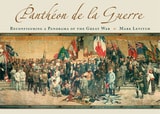
Panthéon De La Guerre
Reconfiguring a Panorama of the Great WarMark Levitch
University of Missouri Press, 2006
In its day it was, quite simply, the world’s largest painting.
The Panthéon de la Guerre was a cyclorama the size of a football field, featuring 5,000 full-length portraits of prominent figures from World War I—a painting that blatantly sought to arouse patriotic fervor in its viewers. This book traces that work’s shifting fortunes during its unlikely journey from Great War Paris to cold war Kansas City and examines the continuing journeys of its fragments in the world’s art markets.
Mark Levitch has written the first history and analysis of the Panthéon, capturing its social life in a story full of surprising twists and turns and as epic as the painting itself. Created in Paris as an artist-generated propaganda project while the war raged, the Panthéonwas celebrated there as a solemn and nostalgic work after the war, then was promoted as a circuslike spectacle on a postwar tour of the United States when it was “updated” to appeal to Americans’ more celebratory view of the conflict. Consigned to storage and all but forgotten after World War II, the Panthéon was eventually procured for Kansas City’s Liberty Memorial in 1956, where less than 7 percent of the work was reconfigured into a smaller U.S.-centric mural—some of the unused fragments eventually surfacing in Paris flea markets and on eBay.
Levitch looks at the Panthéon as both painting and artifact, combining cultural history, art history, and material culture studies to trace the changing reception of traditional art in the new age of mechanical media. He assesses the changing values attached to the Panthéon and argues that the panorama’s status and frequent reshaping have both informed and been informed by the experience and memory of the First World War in France and the United States—and also reflects on how it has promoted a politically and culturally conservative agenda.
Brimming with facts and insights that will amaze anyone who has known the painting in any of its incarnations, Levitch’s handsomely illustrated book provides a unique lens through which to view a conflict and its commemoration. And as people continue to place importance on commemorative projects, it is a powerful reminder of how ephemeral such grand undertakings can be.
[more]
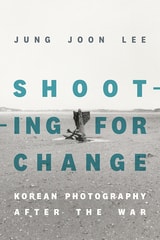
Shooting for Change
Korean Photography after the WarJung Joon Lee
Duke University Press, 2024
In Shooting for Change, Jung Joon Lee examines postwar Korean photography across multiple genres and practices, including vernacular, art, documentary, and archival photography. Tracing the history of Korean photography while considering what is disguised or lost by framing the history of photography through nationhood, Lee considers the role of photography in shaping memory of historical events, representing the ideal national family, and motivating social movements. Further, through an investigation of what it means to practice photography under the normalized conditions of militarism, Lee treats the transnational militarism of Korea as a lens through which to probe the officially and culturally sanctioned readings of images when returning to them at different times. Among other themes, Lee draws on photography of militarized sex work, political protest in the military era, war orphans, and mass protests. Ultimately, Lee treats the formative periods in nation building and transnational militarization as both backdrops and cultivators for photographic works.
[more]