Results by title
23 books match the query 'Nations'

A Violent Peace
Media, Truth, and Power at the League of NationsCarolyn N. Biltoft
University of Chicago Press, 2021
An exploration of instability in information systems, the allure of fascism, and the contradictions at the heart of a global modernity, A Violent Peace paints a rich portrait of the emergence of the age of information—and all its attendant problems.
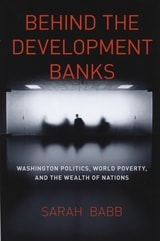
Behind the Development Banks
Washington Politics, World Poverty, and the Wealth of NationsSarah Babb
University of Chicago Press, 2009
The World Bank and other multilateral development banks (MDBs) carry out their mission to alleviate poverty and promote economic growth based on the advice of professional economists. But as Sarah Babb argues in Behind the Development Banks, these organizations have also been indelibly shaped by Washington politics—particularly by the legislative branch and its power of the purse.
Tracing American influence on MDBs over three decades, this volume assesses increased congressional activism and the perpetual “selling” of banks to Congress by the executive branch. Babb contends that congressional reluctance to fund the MDBs has enhanced the influence of the United States on them by making credible America’s threat to abandon the banks if its policy preferences are not followed. At a time when the United States’ role in world affairs is being closely scrutinized, Behind the Development Banks will be necessary reading for anyone interested in how American politics helps determine the fate of developing countries.
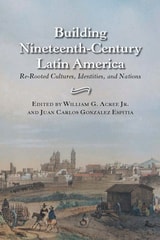
Building Nineteenth-Century Latin America
Re-Rooted Cultures, Identities, and NationsWilliam Garrett Acree
Vanderbilt University Press, 2009

Ecological Debt
Global Warming and the Wealth of NationsAndrew Simms
Pluto Press, 2009
This is the second edition of Andrew Simms's highly regarded guide to ecological debt.
Simms shows how millions of us in the West are running up huge ecological debts: from the amount of oil and coal that we burn to heat our houses and run our cars, to what we consume and the waste that we create, the impact of our lifestyles is felt worldwide. Whilst these debts go unpaid, millions more living in poverty in the majority world suffer the burden of paying dubious foreign financial debts.
The book explores a great paradox of our age: how the global wealth gap was built on ecological debts, which the world's poorest are now having to pay for. Highlighting how and why this has happened, he also shows what can be done differently in the future. Now updated throughout, this is a clear and passionate account of the steps we can take to stop pushing the planet to the point of environmental bankruptcy.

Empires to Nations
Expansion in America, 1713-1824Max Savelle
University of Minnesota Press, 1976
Empires to Nations was first published in 1974. Minnesota Archive Editions uses digital technology to make long-unavailable books once again accessible, and are published unaltered from the original University of Minnesota Press editions.
This history traces the growth of the Euroamerican societies in the Western Hemisphere during the eighteenth-century period of European expansion. Professor Savelle reviews the continuation and completion of the exploration of the American continent and describes the evolution of the New World empires of the English, French, Spanish, Portuguese, and Dutch, He devotes separate chapters to the development of the political structures of the colonies and the rivalries, wars, and diplomatic exchanges among the empires. He also reviews and analyzes the economic history of the colonial societies in their three-way relationships – with their mother countries, with each other, and within themselves as regional or local entities. Final chapters are devoted to the birth and growth of national self-consciousness among the new societies.
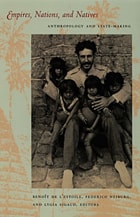
Empires, Nations, and Natives
Anthropology and State-MakingBenoît de L Estoile, Federico Neiburg and Lygia Sigaud, eds.
Duke University Press, 2005
The contributors—social and cultural anthropologists from the Americas and Europe—report on both historical and contemporary processes. Moving beyond controversies that cast the relationship between scholarship and politics in binary terms of complicity or autonomy, they bring into focus a dynamic process in which states, anthropological knowledge, and population groups themselves are mutually constructed. Such a reflexive endeavor is an essential contribution to a critical anthropological understanding of a changing world.
Contributors: Alban Bensa, Marcio Goldman, Adam Kuper, Benoît de L’Estoile, Claudio Lomnitz, David Mills, Federico Neiburg, João Pacheco de Oliveira, Jorge Pantaleón, Omar Ribeiro Thomaz, Lygia Sigaud, Antonio Carlos de Souza Lima, Florence Weber

Light for the Nations
The Scriptures on the Universal Mission of Israel and the ChurchLuis Sanchez-Navarro
Catholic University of America Press, 2024

Matthew within Judaism
Israel and the Nations in the First GospelAnders Runesson
SBL Press, 2020
In this collection of essays, leading New Testament scholars reassess the reciprocal relationship between Matthew and Second Temple Judaism. Some contributions focus on the relationship of the Matthean Jesus to torah, temple, and synagogue, while others explore theological issues of Jewish and gentile ethnicity and universalism within and behind the text.

Measuring the Subjective Well-Being of Nations
National Accounts of Time Use and Well-BeingEdited by Alan B. Krueger
University of Chicago Press, 2009
Surely everyone wants to know the source of happiness, and indeed, economists and social scientists are increasingly interested in the study and effects of subjective well-being. Putting forward a rigorous method and new data for measuring, comparing, and analyzing the relationship between well-being and the way people spend their time—across countries, demographic groups, and history—this book will help set the agenda of research and policy for decades to come.
It does so by introducing a system of National Time Accounting (NTA), which relies on individuals’ own evaluations of their emotional experiences during various uses of time, a distinct departure from subjective measures such as life satisfaction and objective measures such as the Gross Domestic Product. A distinguished group of contributors here summarize the NTA method, provide illustrative findings about well-being based on NTA, and subject the approach to a rigorous conceptual and methodological critique that advances the field. As subjective well-being is topical in economics, psychology, and other social sciences, this book should have cross-disciplinary appeal.
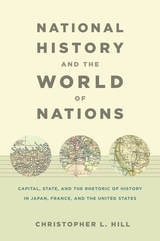
National History and the World of Nations
Capital, State, and the Rhetoric of History in Japan, France, and the United StatesChristopher L. Hill
Duke University Press, 2008
Delving into narrative histories, prose fiction, and social philosophy, Hill analyzes the rhetoric, narrative form, and intellectual genealogy of late-nineteenth-century texts that contributed to the creation of national history in each of the three countries. He discusses the global political economy of the era, the positions of the three countries in it, and the reasons that arguments about history loomed large in debates on political, economic, and social problems. Examining how the writing of national histories in the three countries addressed political transformations and the place of the nation in the world, Hill illuminates the ideological labor national history performed. Its production not only naturalized the division of the world by systems of states and markets, but also asserted the inevitability of the nationalization of human community; displaced dissent to pre-modern, pre-national pasts; and presented the subject’s acceptance of a national identity as an unavoidable part of the passage from youth to adulthood.

Nations and Nationalism
A ReaderSpencer, Philip
Rutgers University Press, 2005
Nationalism has become a topic of wide-ranging significance and heated debate over recent years, with a huge expansion in the amount of literature available. Bringing together the best and most representative of these writings, Nations and Nationalism is an essential reader for students of political theory and related fields.
Assembled by two influential scholars, the volume includes the core, basic texts required for any course on nationalism, along with a selection of less well-known contributions that illuminates the debates. Articles and chapters cover the origins, different types, and concepts of nationalism; its relationship with race, gender, and ethnicity; the impact of globalization, post-communism, and migration; and debates about citizenship and self-determination. Classic writers such as Ernest Gellner, Anthony Smith, Benedict Anderson, and John Breuilly are represented along with younger scholars who have played a critical role in reshaping contemporary attitudes toward the topic.
Selected writings by historians, sociologists, and anthropologists supplement contributions from political scientists so that students will be able to compare theories and debates across a range of disciplines and time periods. Taken together, the chapters provide a balanced and vivid overview of how nationalism has exploded as a topic of inquiry over the last two decades and how it has interacted with other political and social forces.
Nations, Identities, Cultures
V. Y. Mudimbe, ed.
Duke University Press, 1997
Examining the degree to which twentieth-century representations of colonization, revolution, and modernity are nineteenth-century constructs, Nations, Identities, Cultures locates contemporary political thought in an ethos of exile, nostalgic for bygone places and cultures of the nineteenth century. The contributors interrogate the significance of changes in the way the political is conceptualized and the impact of shifting representations of political society on our understanding of nation, identity, and culture. Approaches to these issues range from broad perspectives on global culture, civil society, liberalism, and dialectical identity to specific case studies on the politics of Quebec, the Russian muzhik, Israel’s borders, the ancient Greek origins of European culture, Kongo nationalism, the women of Lebanon, and the Danish/Swedish border.
Contributors. Martin Bernal, Dominique Colas, Miriam Cooke, Daphna Golan, Thomas Lahusen, Jocelyn Létourneau, Anders Linde-Laursen, Wyatt MacGaffey, John McCumber, V. Y. Mudimbe, Kenneth Surin, Immanuel Wallerstein
New Countries
Capitalism, Revolutions, and Nations in the Americas, 1750–1870John Tutino, editor
Duke University Press, 2016
Contributors. Alfredo Ávila, Roberto Breña, Sarah C. Chambers, Jordana Dym, Carolyn Fick, Erick Langer, Adam Rothman, David Sartorius, Kirsten Schultz, John Tutino
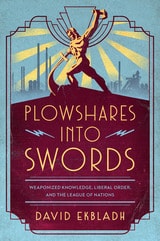
Plowshares into Swords
Weaponized Knowledge, Liberal Order, and the League of NationsDavid Ekbladh
University of Chicago Press, 2022
In Plowshares into Swords, David Ekbladh recaptures the power of knowledge and information developed between World War I and World War II by an international society of institutions and individuals committed to liberal international order and given focus by the League of Nations in Geneva. That information and analysis revolutionized critical debates in a world in crisis. In doing so, Ekbladh transforms conventional understandings of the United States’ postwar hegemony, showing that important elements of it were profoundly influenced by ideas that emerged from international exchanges. The League’s work was one part of a larger transnational movement that included the United States and which saw the emergence of concepts like national income, gross domestic product, and other attempts to define and improve the standards of living, as well as new approaches to old questions about the role of government. Forged as tools for peace these ideas were beaten into weapons as World War II threatened. Ekbladh recounts how, though the US had never been a member of the organization, vital parts of the League were rescued after the fall of France in 1940 and given asylum at the Institute for Advanced Study in Princeton. However, this presence in the US is just one reason its already well-regarded economic analyses and example were readily mobilized by influential American and international figures for an Allied “war of ideas,” plans for a postwar world, and even blueprints for the new United Nations. How did this body of information become so valuable? As Ekbladh makes clear, the answer is that information and analysis themselves became crucial currencies in global affairs: to sustain a modern, liberal global order, a steady stream of information about economics, politics, and society was, and remains, indispensable.
Plowshares into Swords
Weaponized Knowledge, Liberal Order, and the League of NationsDavid Ekbladh
University of Chicago Press, 2022
This is an Auto-narrated audiobook version of this book.
An in-depth look at how the ideas formulated by the interwar League of Nations shaped American thinking on the modern global order.
In Plowshares into Swords, David Ekbladh recaptures the power of knowledge and information developed between World War I and World War II by an international society of institutions and individuals committed to liberal international order and given focus by the League of Nations in Geneva. That information and analysis revolutionized critical debates in a world in crisis. In doing so, Ekbladh transforms conventional understandings of the United States’ postwar hegemony, showing that important elements of it were profoundly influenced by ideas that emerged from international exchanges. The League’s work was one part of a larger transnational movement that included the United States and which saw the emergence of concepts like national income, gross domestic product, and other attempts to define and improve the standards of living, as well as new approaches to old questions about the role of government. Forged as tools for peace these ideas were beaten into weapons as World War II threatened. Ekbladh recounts how, though the US had never been a member of the organization, vital parts of the League were rescued after the fall of France in 1940 and given asylum at the Institute for Advanced Study in Princeton. However, this presence in the US is just one reason its already well-regarded economic analyses and example were readily mobilized by influential American and international figures for an Allied “war of ideas,” plans for a postwar world, and even blueprints for the new United Nations. How did this body of information become so valuable? As Ekbladh makes clear, the answer is that information and analysis themselves became crucial currencies in global affairs: to sustain a modern, liberal global order, a steady stream of information about economics, politics, and society was, and remains, indispensable.
Proust among the Nations
From Dreyfus to the Middle EastJacqueline Rose
University of Chicago Press, 2011
Known for her far-reaching examinations of psychoanalysis, literature, and politics, Jacqueline Rose has in recent years turned her attention to the Israel-Palestine conflict, one of the most enduring and apparently intractable conflicts of our time. In Proust among the Nations, she takes the development of her thought on this crisis a stage further, revealing it as a distinctly Western problem.

The Dark Abyss of Time
The History of the Earth and the History of Nations from Hooke to VicoPaolo Rossi
University of Chicago Press, 1984
"This book, by a distinguished Italian historian of philosophy, is a worthy successor to the author's important works on Francis Bacon and on technology and the arts. First published in Italian (in 1979), it now makes available to English readers some subtly wrought arguments about the ways in which geology and anthropology challenged biblical chronology and forced changes in the philosophy of history in the early modern era. . . . [Rossi] shows that the search for new answers about human origins spanned many disciplines and involved many fascinating intellects—Bacon, Bayle, Buffon, Burnet, Descartes, Hobbes, Holbach, Hooke, Hume, Hutton, Leibniz, de Maillet, Newton, Pufendorf, Spinoza, Toland, and, most especially, Vico, whose works are impressively and freshly reevaluated here."—Nina Gelbart, American Scientist
The Hidden Wealth of Nations
The Scourge of Tax HavensGabriel Zucman
University of Chicago Press, 2015
In The Hidden Wealth of Nations, Zucman offers an inventive and sophisticated approach to quantifying how big the problem is, how tax havens work and are organized, and how we can begin to approach a solution. His research reveals that tax havens are a quickly growing danger to the world economy. In the past five years, the amount of wealth in tax havens has increased over 25%—there has never been as much money held offshore as there is today. This hidden wealth accounts for at least $7.6 trillion, equivalent to 8% of the global financial assets of households. Fighting the notion that any attempts to vanquish tax havens are futile, since some countries will always offer more advantageous tax rates than others, as well the counter-argument that since the financial crisis tax havens have disappeared, Zucman shows how both sides are actually very wrong. In The Hidden Wealth of Nations he offers an ambitious agenda for reform, focused on ways in which countries can change the incentives of tax havens. Only by first understanding the enormity of the secret wealth can we begin to estimate the kind of actions that would force tax havens to give up their practices.
Zucman’s work has quickly become the gold standard for quantifying the amount of the world’s assets held in havens. In this concise book, he lays out in approachable language how the international banking system works and the dangerous extent to which the large-scale evasion of taxes is undermining the global market as a whole. If we are to find a way to solve the problem of increasing inequality, The Hidden Wealth of Nations is essential reading.
The Judgment of the Nations
Christopher Dawson
Catholic University of America Press, 2011
The League of Nations
Ruth Henig
Haus Publishing, 2010
The Unity of the Nations
Joseph Ratzinger
Catholic University of America Press, 2015

Transforming Contagion
Risky Contacts among Bodies, Disciplines, and NationsFahs, Breanne
Rutgers University Press, 2018
Moving from viruses, vaccines, and copycat murder to gay panics, xenophobia, and psychopaths, Transforming Contagion energetically fuses critical humanities and social science perspectives into a boundary-smashing interdisciplinary collection on contagion. The contributors provocatively suggest contagion to be as full of possibilities for revolution and resistance as it is for the descent into madness, malice, and extensive state control. The infectious practices rooted in politics, film, psychological exchanges, social movements, the classroom, and the circulation of a literary text or meme on social media compellingly reveal patterns that emerge in those attempts to re-route, quarantine, define, or even exacerbate various contagions.
“Good Mothers”, Nations and Nationalisms
Cases from Lithuania, Russia and SwedenYulia Gradskova
Central European University Press, 2026