Results by title
2 books match the query 'Native California'
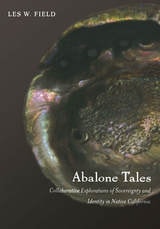
Abalone Tales
Collaborative Explorations of Sovereignty and Identity in Native CaliforniaLes W. Field
Duke University Press, 2008
Tales about abalone and their historical and contemporary meanings are related by Field and his coauthors, who include the chair and other members of the Muwekma Ohlone Tribe; a Point Arena Pomo elder; the chair of the Wiyot tribe and her sister; several Hupa Indians; and a Karuk scholar, artist, and performer. Reflecting the divergent perspectives of various Native groups and people, the stories and analyses belie any presumption of a single, unified indigenous understanding of abalone. At the same time, they shed light on abalone’s role in cultural revitalization, struggles over territory, tribal appeals for federal recognition, and connections among California’s Native groups. While California’s abalone are in danger of extinction, their symbolic power appears to surpass even the environmental crises affecting the state’s vulnerable coastline.
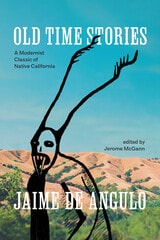
Old Time Stories
A Modernist Classic of Native CaliforniaJaime de Angulo
University of Chicago Press, 2026
Dismantled and scattered just before his death, Jaime de Angulo’s poetic masterpiece Old Time Stories is now reconstituted for the first time in this edition.
Jaime de Angulo’s Old Time Stories, a visual prose-poem drawing on his anthropological research among Indigenous communities in California, is a forgotten modernist treasure. Completed shortly before de Angulo’s death, the work has survived only in fragments, divided between an abridged 1953 publication and a limited edition from the 1970s. This new reconstituted edition gives contemporary readers—whether interested in experimental literature, linguistics, cultural anthropology, or Native American history—their first chance to engage with the complete work.
Structured around children’s stories inspired by the Indigenous tales and legends de Angulo encountered directly during his studies, Old Time Stories uses illustrations, different typefaces, and other experimental formatting techniques to translate rich oral and pictographic traditions into the condensed form of print. Beyond its significance as an innovative work of American literary modernism, it interrogates the colonialist foundations of Western modernity through this very reworking of Western literary conventions.