Results by title
3 books match the query 'Native Peoples'
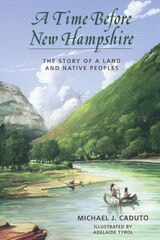
A Time Before New Hampshire
The Story of a Land and Native PeoplesMichael J. Caduto
University Press of New England, 2004
Native Peoples of the Gulf Coast of Mexico
Edited by Alan R. Sandstrom and E. Hugo García Valencia
University of Arizona Press, 2005
Native Peoples of the Gulf Coast of Mexico is the first book to argue that the people of this region constitute a culture area distinct from other parts of Mexico. A pioneering effort by a team of international scholars who summarize hundreds of years of history, this encyclopedic work chronicles the prehistory, ethnohistory, and contemporary issues surrounding the many and varied peoples of the Gulf Coast, bringing together research on cultural groups about which little or only scattered information has been published.
The volume includes discussions of the prehispanic period of the Gulf Coast, the ethnohistory of many of the neglected indigenous groups of Veracruz and the Huasteca, the settlement of the American Mediterranean, and the unique geographical and ecological context of the Chontal Maya of Tabasco. It provides descriptions of the Popoluca, Gulf Coast Nahua, Totonac, Tepehua, Sierra Ñähñu (Otomí), and Huastec Maya. Each chapter contains a discussion of each group’s language, subsistence and settlement patterns, social organization, belief systems, and history of acculturation, and also examines contemporary challenges to the future of each native people.
As these contributions reveal, Gulf Coast peoples share not only major cultural features but also historical experiences, such as domination by Hispanic elites beginning in the sixteenth century and subjection to forces of change in Mexico. Yet as contemporary people have been affected by factors such as economic development, increased emigration, and the spread of Protestantism, traditional cultures have become rallying points for ethnic identity.
Native Peoples of the Gulf Coast of Mexico highlights the significance of the Gulf Coast for anyone interested in the great encuentro between the Old and New Worlds and general processes of culture change. By revealing the degree to which these cultures have converged, it represents a major step toward achieving a broader understanding of the peoples of this region and will be an important reference work on these indigenous populations for years to come.
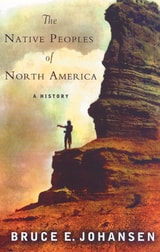
The Native Peoples of North America
A HistoryJohansen, Bruce
Rutgers University Press, 2007
From the earliest traces of first arrivals to the present, Native Americans represent a diverse and colorful array of cultures. Ranging North America and topics as diverse as archaeological discoveries from thousands of years ago and accounts of reservation life today, this study draws on traditional records as well as oral histories and biographical sketches to bring the history of these varied peoples to life.
Johansen’s account, now available for the first time in one comprehensive volume, tackles the various theories that date Native Americans’ first probable appearance perhaps 30,000 years before Columbus’s arrival. Chapters trace the explosion of westward expansion and include personal sketches of some of those famous for native resistance such as Tecumseh’s six-nation alliance, among many others. The book also explores the new wave of Native American activism that began in the 1960s, reservation life today, the repatriation of artifacts, and the current and widespread revival of native language studies.
Written in a compelling and accessible style, this book not only provides a comprehensive introduction to the history of North American Indians, but also offers an uncommonly rich description of the material and intellectual ways that Native American cultures have influenced the life and institutions of people across the globe.