Results by title
3 books match the query 'Nativistic movements'
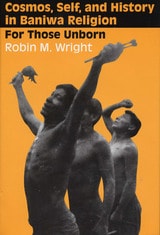
Cosmos, Self, and History in Baniwa Religion
For Those UnbornBy Robin M. Wright
University of Texas Press, 1998
The Baniwa Indians of the Northwest Amazon have engaged in millenarian movements since at least the middle of the nineteenth century. The defining characteristic of these movements is usually a prophecy of the end of this present world and the restoration of the primordial, utopian world of creation. This prophetic message, delivered by powerful shamans, has its roots in Baniwa myths of origin and creation.
In this ethnography of Baniwa religion, Robin M. Wright explores the myths of creation and how they have been embodied in religious movements and social action—particularly in a widespread conversion to evangelical Christianity. He opens with a discussion of cosmogony, cosmology, and shamanism, and then goes on to explain how Baniwa origin myths have played an active role in shaping both personal and community identity and history. He also explores the concepts of death and eschatology and shows how the mythology of destruction and renewal in Baniwa religion has made the Baniwa people receptive to both Catholic and Protestant missionaries.

Dangerous Migration
Mexican Labor and the Fight for Immigrant RightsEladio B. Bobadilla
University of Illinois Press, 2026
Beginning with Mexican American opposition to the Bracero Program, Eladio Bobadilla traces the movement’s fault lines that formed around the issue of undocumented workers. Bobadilla reveals how internationalist and human rights discourse influenced the rise of the Chicano movement and its defense of Mexican undocumented immigrants. As time passed, anti-Mexican social, political, and legislative forces produced a nativist backlash that put immigration at the center of the United States’ culture wars and created the fantasy of undocumented workers as an existential threat.
Engaging and vivid, Dangerous Migration illuminates the history of debates over Mexican labor, the emergence of the immigrant rights activism, and the nativist movements that united Latinos with right-wing white Americans.
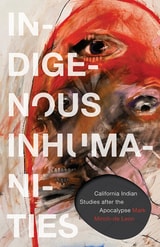
Indigenous Inhumanities
California Indian Studies after the ApocalypseMark Minch-de Leon
University of Minnesota Press, 2025
Reclaiming power and prophecy through California Indian intellectual resurgence and anticolonial resistance
Mark Minch-de Leon explores the anticolonial dimensions of California Indian intellectual and cultural resurgence in the aftermath of apocalypse in this compelling reexamination of Indigenous art, literature, and theory. Centering on a reinterpretation of the Ghost Dance, a ceremony first practiced in the nineteenth century, as a collective demonstration of prophecy and resilience, Indigenous Inhumanities envisions an expanded poetics of resistance through a reconfigured relationship to death and the dead. By dismantling the colonial frameworks of inclusion, recognition, and representation that reinforce settler-state power, Minch-de Leon shows how storytelling can be reclaimed as both research and as a tool for decolonization.
Taking up critical issues that the state has used to discipline California Indian relations to ancestors, such as the politics of human remains repatriation and the discourse around California Indian genocide, Minch-de Leon centers Indigenous knowledge and social systems while challenging legal and political definitions of violence, power, and the human. Rich case studies showcase the evocative art of Frank Day, the poetry of Tommy Pico, and the writings of Deborah Miranda, highlighting how these creators advance Indigenous theory and disrupt settler categories.
By refusing reconciliation and embracing Indigenous frameworks of radical relationality and the “inhuman” (what lies outside of human control), Minch-de Leon presents a bold vision of Indigenous antihumanist survival and resurgence. Indigenous Inhumanities illuminates the path toward decolonial futures by following the radical turn the ancestors made toward the powers of the dead to bring an end to the colonial world.
Retail e-book files for this title are screen-reader friendly with images accompanied by short alt text and/or extended descriptions.