Results by title
20 books match the query 'Natural'
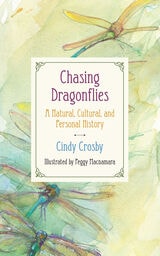
Chasing Dragonflies
A Natural, Cultural, and Personal HistoryCindy Crosby; Illustrations by Peggy Macnamara
Northwestern University Press, 2020
Chasing Dragonflies: A Natural, Cultural, and Personal History is an engaging, beautifully illustrated introduction to these remarkable insects. Drawing on her experiences as a natural history instructor, dragonfly monitor, cancer survivor, grandmother, and steward, Crosby tells the stories of dragonflies: their roles in poetry and art, their fascinating sex life—unique within the animal kingdom—and their evolution from dark-water dwellers to denizens of the air. We follow Crosby and other citizen-scientists into the prairies, wetlands, and woodlands of the Midwest, where they observe the environment and chronicle dragonfly populations and migration to decipher critical clues about our changing waterways and climate.
Woven throughout are personal stories: reflections on the author’s cancer diagnosis and recovery, change, loss, aging, family, joy, and discovering what it means to be at home in the natural world. Crosby draws an intimate portrait of a landscape teeming with variety and mystery, one that deserves our attention and conservation. As warm as it is informative, this book will interest gardeners, readers of literary nonfiction, and anyone intrigued by transformation, whether in nature or our personal lives.
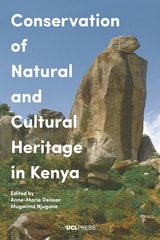
Conservation of Natural and Cultural Heritage in Kenya
Edited by Anne-Marie Deisser and Mugwima Njuguna
University College London, 2016
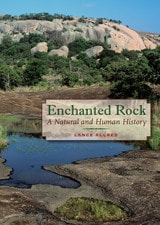
Enchanted Rock
A Natural and Human HistoryBy Lance Allred
University of Texas Press, 2009
With intriguing domes of pinkish granite surrounded by a sea of Hill Country limestone, Enchanted Rock State Natural Area attracts over 300,000 visitors every year who come to the park to hike, rock climb, spelunk, camp, picnic, and observe birds and wildflowers. Geologists from around the world come to Enchanted Rock to examine landforms that were shaped by forces on ancient continents of Earth more than one billion years ago! All of these visitors, however, are only the latest comers in a line of human history that stretches back 13,000 years to early Native Americans and includes Spanish explorers, Mexican and German settlers, and thirteen private and public owners up to the current owner, the state of Texas.
Surprisingly, given the area's wealth of unusual geology, native plants and animals, and human history, no comprehensive guide to Enchanted Rock has been published before now. In Enchanted Rock, you'll find everything you need to fully appreciate this unique place. Lance Allred draws on the work of specialists in many fields to offer a popular account of the park's history, geology, weather, flora, and fauna. Whether you want to know more about how Enchanted Rock was formed, identify a wildflower or butterfly, or learn more about plant communities along the hiking trails, you'll find accurate information here, presented in an inviting style. Over a thousand color photographs illustrate the enjoyable text.
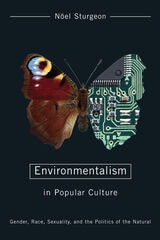
Environmentalism in Popular Culture
Gender, Race, Sexuality, and the Politics of the NaturalNoël Sturgeon
University of Arizona Press, 2009
Although there are other books that examine questions of culture and environment, this is the first book to employ a global feminist environmental justice analysis to focus on how racial inequality, gendered patterns of work, and heteronormative ideas about the family relate to environmental questions. Beginning in the late 1980s and moving to the present day, Sturgeon unpacks a variety of cultural tropes, including ideas about Mother Nature, the purity of the natural, and the allegedly close relationships of indigenous people with the natural world. She investigates the persistence of the “myth of the frontier” and its extension to the frontier of space exploration. She ponders the popularity (and occasional controversy) of penguins (and penguin family values) and questions assumptions about human warfare as “natural.”
The book is intended to provoke debates—among college students and graduate students, among their professors, among environmental activists, and among all citizens who are concerned with issues of environmental quality and social equality.
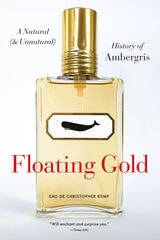
Floating Gold
A Natural (and Unnatural) History of AmbergrisChristopher Kemp
University of Chicago Press, 2012
A fascinating natural history of an incredibly curious substance.
“Preternaturally hardened whale dung” is not the first image that comes to mind when we think of perfume, otherwise a symbol of glamour and allure. But the key ingredient that makes the sophisticated scent linger on the skin is precisely this bizarre digestive by-product—ambergris. Despite being one of the world’s most expensive substances (its value is nearly that of gold and has at times in history been triple it), ambergris is also one of the world’s least known. But with this unusual and highly alluring book, Christopher Kemp promises to change that by uncovering the unique history of ambergris.
A rare secretion produced only by sperm whales, which have a fondness for squid but an inability to digest their beaks, ambergris is expelled at sea and floats on ocean currents for years, slowly transforming, before it sometimes washes ashore looking like a nondescript waxy pebble. It can appear almost anywhere but is found so rarely, it might as well appear nowhere. Kemp’s journey begins with an encounter on a New Zealand beach with a giant lump of faux ambergris—determined after much excitement to nothing more exotic than lard—that inspires a comprehensive quest to seek out ambergris and its story. He takes us from the wild, rocky New Zealand coastline to Stewart Island, a remote, windswept island in the southern seas, to Boston and Cape Cod, and back again. Along the way, he tracks down the secretive collectors and traders who populate the clandestine modern-day ambergris trade.
Floating Gold is an entertaining and lively history that covers not only these precious gray lumps and those who covet them, but presents a highly informative account of the natural history of whales, squid, ocean ecology, and even a history of the perfume industry. Kemp’s obsessive curiosity is infectious, and eager readers will feel as though they have stumbled upon a precious bounty of this intriguing substance.
Gathering Moss
A Natural and Cultural History of MossesRobin Wall Kimmerer
Oregon State University Press, 2003
Winner of the 2005 John Burroughs Medal Award for Natural History Writing
Living at the limits of our ordinary perception, mosses are a common but largely unnoticed element of the natural world. Gathering Moss is a beautifully written mix of science and personal reflection that invites readers to explore and learn from the elegantly simple lives of mosses.
In this series of linked personal essays, Robin Wall Kimmerer leads general readers and scientists alike to an understanding of how mosses live and how their lives are intertwined with the lives of countless other beings. Kimmerer explains the biology of mosses clearly and artfully, while at the same time reflecting on what these fascinating organisms have to teach us.
Drawing on her diverse experiences as a scientist, mother, teacher, and writer of Native American heritage, Kimmerer explains the stories of mosses in scientific terms as well as in the framework of indigenous ways of knowing. In her book, the natural history and cultural relationships of mosses become a powerful metaphor for ways of living in the world.
Heritage Futures
Comparative Approaches to Natural and Cultural Heritage PracticesRodney Harrison, Caitlin Desilvey, Cornelius Holtorf, Sharon MacDonald, Nadia Bartolini, Esther Breithoff, Harald Fredheim, Antony Lyons, Sarah May, Jennie Morgan, and Sefryn Penrose
University College London, 2020
In the Shadow of the Steamboat
A Natural and Cultural History of North Warner Valley, OregonGeoffrey M. Smith
University of Utah Press, 2022
Smith and colleagues present their work in a way that allows readers to understand not only how people adapted to local change but also how North Warner Valley fits into the complex mosaic of precontact history in the American West. This research is the most comprehensive work conducted in the northern Great Basin in more than two decades. Its multidisciplinary nature should interest students of natural and cultural history, archaeology, and Indigenous lifeways.
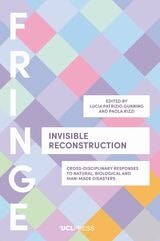
Invisible Reconstruction
Cross-Disciplinary Responses to Natural, Biological and Man-Made DisastersEdited by Lucia Patrizio Gunning and Paola Rizzi
University College London, 2022
What does it really mean to reconstruct a city after a disaster? Is the repair and reinstatement of buildings and infrastructure sufficient? This volume argues that the true measure of success should be societal. After all, a city without people is no city at all. The book brings together academics and practitioners from a wide variety of disciplines, comparing strategies and outcomes in different scenarios and cultures from South America, Europe, and Asia. From cultural heritage and public space to education and participation, contributors reflect on the interconnection of people, culture, and environment and constructive approaches to increasing resilience and reducing vulnerability. Bringing practical examples of how communities and individuals have reacted to or prepared for disaster, the publication proposes a shift in public policy to ensure that physical reinforcement and rebuilding are matched by attention to societal needs. Invisible Reconstruction is essential reading for policymakers, academics, and practitioners working to reduce the impact of disasters or to improve post-disaster recovery.
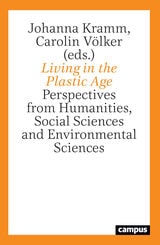
Living in the Plastic Age
Perspectives from Humanities, Social Sciences and Natural SciencesEdited by Johanna Kramm and Carolin Völker
Campus Verlag, 2022
The anthology Living in the Plastic Age focuses on the multidimensional facets of plastics and microplastics from different disciplinary angles. Small plastic fragments (microplastics) and larger plastic waste can be found even on the remotest island. Plastic waste all over the planet is the visual footprint of humanity’s consumerism and mass production. Plastics shape the relationship between society and nature in such a profound way that we can today speak of the “Plastic Age.” This anthology aims to question the role of plastics in our society and the implications plastics have for the environment and human health. The detection of this emergent contaminant opens up a new field of scientific engagement for natural sciences on the effects of (micro-) plastics for the environment and the social sciences on new governance regimes on marine litter as well as on solution strategies to combat plastic waste.
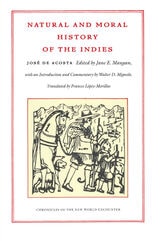
Natural and Moral History of the Indies
José de Acosta
Duke University Press, 2002
A significant contribution to Renaissance Europe's thinking about the New World, Acosta's Natural and Moral History of the Indies reveals an effort to incorporate new information into a Christian, Renaissance worldview. He attempted to confirm for his European readers that a "new" continent did indeed exist and that human beings could and did live in equatorial climates. A keen observer and prescient thinker, Acosta hypothesized that Latin America's indigenous peoples migrated to the region from Asia, an idea put forth more than a century before Europeans learned of the Bering Strait. Acosta's work established a hierarchical classification of Amerindian peoples and thus contributed to what today is understood as the colonial difference in Renaissance European thinking.
Natural
MindVilém Flusser
University of Minnesota Press, 2013
In Natural:Mind, published for the first time in São Paulo, Brazil, in 1979, Vilém Flusser investigates the paradoxical connection between the concepts of nature and culture through a lively para-phenomenological analysis of natural and cultural phenomena. Can culture be considered natural and nature cultural? If culture is our natural habitat then do we not inhabit nature? These are only some of the questions that are raised in Natural:Mind in order to examine our continual redefinition of both terms and what that means for us existentially.
Always applying his fluid and imagistic Husserlian style of phenomenology, Flusser explores different perspectives and relations of items from everyday life. The book is composed of a series of essays based on close observations of familiar objects such as paths, valleys, cows, meadows, trees, fingers, grass, the moon, and buttons. By focusing on things we mostly take for granted, he manages not only to reveal some aspects of their real and obscured nature but also to radically change how we look at them. The ordinary cow will never be seen in the same way again.
Natural
MindVilém Flusser
University of Minnesota Press, 2027
Philosophical reflections on the relations between nature and culture
In Natural:Mind, published for the first time in São Paulo, Brazil, in 1979, Vilém Flusser investigates the paradoxical connection between the concepts of nature and culture through a lively para-phenomenological analysis of natural and cultural phenomena. Can culture be considered natural and nature considered cultural? If culture is our natural habitat then do we not inhabit nature? These are only some of the questions that are raised in Natural:Mind in order to examine our continual redefinition of both terms and what that means for us existentially.
Always applying his fluid and imagistic Husserlian style of phenomenology, Flusser explores different perspectives and relations of items from everyday life. The book is composed of a series of essays based on close observations of familiar objects such as paths, valleys, cows, meadows, trees, fingers, grass, the moon, and buttons. By focusing on things we mostly take for granted, he manages not only to reveal some aspects of their real and obscured nature but also to radically change how we look at them. The ordinary cow will never be seen in the same way again.

On Interpretation
Sociology for Interpreters of Natural and CulturalGary E. Machlis
Oregon State University Press, 1992
Salt Marshes
A Natural and Unnatural HistoryWeis, Judith S
Rutgers University Press, 2009
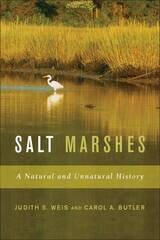
Now championed as critical habitats for plants, animals, and people because of the environmental service and protection they provide, these ecological wonders were once considered unproductive wastelands, home solely to mosquitoes and toxic waste, and mistreated for centuries by the human population. Exploring the fascinating biodiversity of these boggy wetlands, Salt Marshes offers readers a wealth of essential information about a variety of plants, fish, and animals, the importance of these habitats, consequences of human neglect and thoughtless development, and insight into how these wetlands recover.
Judith S. Weis and Carol A. Butler shed ample light on the human impact, including chapters on physical and biological alterations, pollution, and remediation and recovery programs. In addition to a national and global perspective, the authors place special emphasis on coastal wetlands in the Atlantic and Gulf regions, as well as the San Francisco Bay Area, calling attention to their historical and economic legacies.
Written in clear, easy-to-read language, Salt Marshes proves that the battles for preservation and conservation must continue, because threats to salt marshes ebb and flow like the water that runs through them.
Tequila
A Natural and Cultural HistoryAna G. Valenzuela-Zapata and Gary Paul Nabhan
University of Arizona Press, 2004
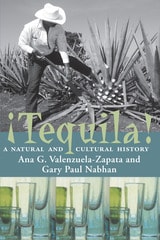
The drink is tequila—more properly, mescal de tequila, the first mescal to be codified and recognized by its geographic origin and the only one known internationally by that name. In ¡Tequila! A Natural and Cultural History, Ana G. Valenzuela-Zapata, the leading agronomist in Mexico's tequila industry, and Gary Paul Nabhan, one of America's most respected ethnobotanists, plumb the myth of tequila as they introduce the natural history, economics, and cultural significance of the plants cultivated for its production.
Valenzuela-Zapata and Nabhan take you into the agave fields of Mexico to convey their passion for the century plant and its popular by-product. In the labor-intensive business of producing quality mescal, the cultivation of tequila azul is maintained through traditional techniques passed down over generations. They tell how jimadores seek out the mature agaves, strip the leaves, and remove the heavy heads from the field; then they reveal how the roasting and fermentation process brings out the flavors that cosmopolitan palates crave.
Today in Oaxaca it's not unusual to find small-scale mescal-makers vending their wares in the market plaza, while in Jalisco the scale of distillation facilities found near the town of Tequila would be unrecognizable to old José Cuervo. Valenzuela-Zapata and Nabhan trace tequila's progress from its modest beginnings to one of the world's favored spirits, tell how innovations from cross-cultural exchanges made fortunes for Cuervo and other distillers, and explain how the meteoric rise in tequila prices is due to an epidemic—one they predicted would occur—linked to the industry's cultivation of just one type of agave.
The tequila industry today markets more than four hundred distinct products through a variety of strategies that heighten the liquor's mystique, and this book will educate readers about the grades of tequila, from blanco to añejo, and marks of distinction for connoisseurs who pay up to two thousand dollars for a bottle. ¡Tequila! A Natural and Cultural History will feed anyone's passion for the gift of the blue agave as it heightens their appreciation for its rich heritage.
The Cast Iron Forest
A Natural and Cultural History of the North American Cross TimbersBy Richard V. Francaviglia
University of Texas Press, 2000
Winner, Friends of the Dallas Public Library Award, Texas Institute of Letters, 2001
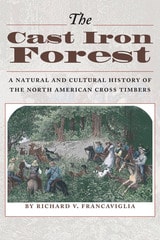
A complex mosaic of post oak and blackjack oak forests interspersed with prairies, the Cross Timbers covers a north-south belt of southern Kansas, eastern Oklahoma, and North Central Texas. Home to Native Americans over several thousand years, the Cross Timbers became a barrier to westward expansion in the nineteenth century, until roads and railroads opened it up to farmers and ranchers, coal miners, and modern city developers, all of whom changed its character in far-reaching ways.
This landmark book fully describes the natural environment of the Cross Timbers and the role that people have played in transforming the region. Richard Francaviglia opens with a natural history that discusses the region's geography and geology, vegetation, and climate. He then traces the interaction of people and the landscape, from the earliest Native American inhabitants and European explorers to the developers and residents of today's ever-expanding cities and suburbs. Many historical and contemporary maps and photographs illustrate the text.
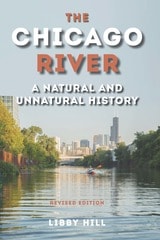
The Chicago River
A Natural and Unnatural HistoryLibby Hill
Southern Illinois University Press, 2019
This widely acclaimed volume weaves the perspectives of science, engineering, commerce, politics, economics, and the natural world into a chronicle of the river from its earliest geologic history through its repeated adaptations to the city that grew up around it. While explaining the river’s role in massive public works, such as drainage and straightening, designed to address the infrastructure needs of a growing population, Hill focuses on the synergy between the river and the people of greater Chicago, whether they be the tribal cultures that occupied the land after glacial retreat, the first European inhabitants, or more recent residents.
In the first edition, Hill brought together years of original research and the contributions of dozens of experts to tell the Chicago River’s story up until 2000. This revised edition features discussions of disinfection, Asian carp, green strategies, the evolution of the Chicago Riverwalk, and the river’s rejuvenation. It also explores how earlier solutions to problems challenge today’s engineers, architects, environmentalists, and public policy agencies as they address contemporary issues.
Revealing the river to be a microcosm of the uneasy relationship between nature and civilization, The Chicago River offers the tools and knowledge for the city’s residents to be champions on the river’s behalf.
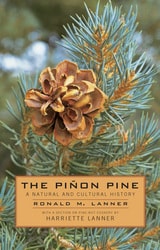
The Pinon Pine
A Natural And Cultural HistoryRonald M. Lanner
University of Nevada Press, 1981
An engaging look at the history of the piñon pine and its ecosystem. Combining natural history and observations of the cultural importance of the tree to both native Indians and European settlers, Lanner provides information on the management of the tree and its interdependence with the birds and animals of the piñon-juniper woodland. Science, cultural history, and ecologicall issues, plus delicious recipes using the piñon pine nuts, make for a concise natural and cultural history of the piñon pine.
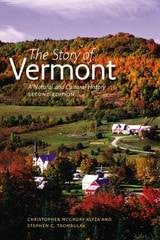
The Story of Vermont
A Natural and Cultural History, Second EditionChristopher McGrory Klyza and Stephen C. Trombulak
University Press of New England, 2015