Results by title
10 books match the query 'Natural Language Processing'
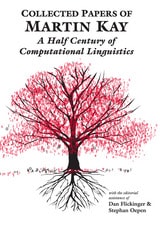
Collected Papers of Martin Kay
A Half Century of Computational LinguisticsMartin Kay, with the editorial assistance of Dan Flickinger and Stephan Oepen
CSLI, 2010
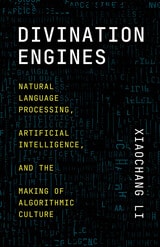
Divination Engines
Natural Language Processing, Artificial Intelligence, and the Making of Algorithmic CultureXiaochang Li
University of Chicago Press, 2026
A revealing and surprising origin story, showing how attempts to render human speech and language computable led from the era of big data to today’s AI.
Since the advent of computers, society has fantasized about conversing with machines. In this eye-opening book, technology expert Xiaochang Li shows readers how that dream both fueled the demand for data and set the stage for today’s generative AI. With original research and clear explanations, Li elucidates the origins of what’s known as natural language processing (NLP) and the heated twentieth-century debates between computer scientists, linguists, and communication engineers that shaped today’s technology. Starting with early devices that recorded, analyzed, and attempted to interpret human speech, she demonstrates how computer speech recognition, particularly efforts led by Bell Labs and IBM, advanced technology by deemphasizing linguistic meaning in favor of statistical prediction. In other words, researchers gradually abandoned systems that sought to understand human language, opting instead for work-arounds that simply predicted patterns in speech and text data. That solution became incredibly and surprisingly adaptable. As Li reveals, transforming linguistic questions into engineering ones ushered in the routine operation of search engines, spam filters, and the varied content sorting and recommendation mechanisms that regulate the access, circulation, and legitimacy of information across every platform. But this has all come at the cost of forever requiring copious and ever-growing amounts of new data.
At its core, Divination Engines illuminates how the artifacts of human communication—speech, text, and images—have become both the fodder for and products of computers. This connection between communication and computation, Li shows, has given rise to data-driven analytics, machine learning, and today’s algorithmic culture.
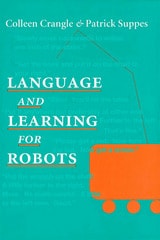
Language and Learning for Robots
Colleen Crangle and Patrick Suppes
CSLI, 1994
The authors develop the notion of an instructable robot—one which derives its intelligence in part from interaction with humans. Since verbal interaction with a robot requires a natural language semantics, the authors propose a natural-model semantics which they then apply to the interpretation of robot commands. Two experimental projects are described which provide natural-language interfaces to robotic aids for the physically disabled. The authors discuss the specific challenges posed by the interpretation of "stop" commands and the interpretation of spatial prepositions.
The authors also examine the use of explicit verbal instruction to teach a robot new procedures, propose ways a robot can learn from corrective commands containing qualitative spatial expressions, and discuss the machine-learning of a natural language use to instruct a robot in the performance of simple physical tasks. Two chapters focus on probabilistic techniques in learning.
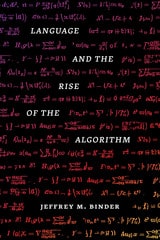
Language and the Rise of the Algorithm
Jeffrey M. Binder
University of Chicago Press, 2022
A wide-ranging history of the algorithm.
Bringing together the histories of mathematics, computer science, and linguistic thought, Language and the Rise of the Algorithm reveals how recent developments in artificial intelligence are reopening an issue that troubled mathematicians well before the computer age: How do you draw the line between computational rules and the complexities of making systems comprehensible to people? By attending to this question, we come to see that the modern idea of the algorithm is implicated in a long history of attempts to maintain a disciplinary boundary separating technical knowledge from the languages people speak day to day.
Here, Jeffrey M. Binder offers a compelling tour of four visions of universal computation that addressed this issue in very different ways: G. W. Leibniz’s calculus ratiocinator; a universal algebra scheme Nicolas de Condorcet designed during the French Revolution; George Boole’s nineteenth-century logic system; and the early programming language ALGOL, short for algorithmic language. These episodes show that symbolic computation has repeatedly become entangled in debates about the nature of communication. Machine learning, in its increasing dependence on words, erodes the line between technical and everyday language, revealing the urgent stakes underlying this boundary.
The idea of the algorithm is a levee holding back the social complexity of language, and it is about to break. This book is about the flood that inspired its construction.
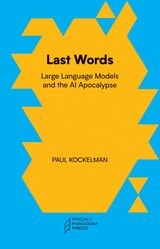
Last Words
Large Language Models and the AI ApocalypsePaul Kockelman
Prickly Paradigm Press, 2024
What kind of meaning can machines make—and why does it matter that it’s not the same as ours?
Anthropologist Paul Kockelman's Last Words offers a rigorous but accessible account of how large language models actually work—and why the meaning they produce is fundamentally different from human meaning-making. Drawing on the semiotics of C.S. Peirce, Kockelman’s witty and insightful pamphlet shows how LLMs are trained to predict word-word relations, not word-world relations, which explains both their uncanny fluency and their systematic blind spots. The result is a compact, essential guide to cutting through the hype: not a dismissal of AI, but a precise account of what it can and cannot do—and who profits from the confusion.
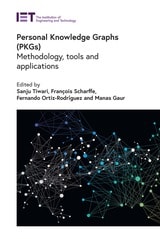
Personal Knowledge Graphs (PKGs)
Methodology, tools and applicationsSanju Tiwari
The Institution of Engineering and Technology, 2023
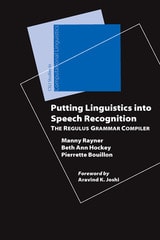
Putting Linguistics into Speech Recognition
The Regulus Grammar CompilerManny Rayner, Beth Ann Hockey, and Pierrette Bouillon
CSLI, 2006
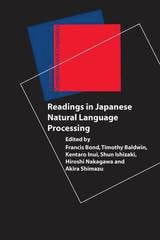
Readings in Japanese Natural Language Processing
Edited by Francis Bond, et al.
CSLI, 2014
The Power of Large Language Models and AI in the Digital Age
Technologies, applications, security and ethicsNeha Sharma
The Institution of Engineering and Technology, 2026
The Tbilisi Symposium on Logic, Language and Computation
Selected PapersEdited by Jonathan Ginzburg, Zurab Khasidashvili, Carl Vogel, Jean-Jacques Lévy,
CSLI, 1998