Results by title

7 books match the query 'Natural Philosophy'
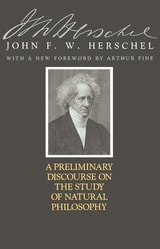
cover of A Preliminary Discourse on the Study of Natural Philosophy

A Preliminary Discourse on the Study of Natural Philosophy

John F. W. Herschel

University of Chicago Press, 1987

Originally published in 1830, this book can be called the first modern work in the philosophy of science, covering an extraordinary range of philosophical, methodological, and scientific subjects. 

"Herschel's book . . . brilliantly analyzes both the history and nature of science."—Keith Stewart Thomson, American Scientist

[more]
cover of Books of Secrets: Natural Philosophy in England, 1550-1600

Books of Secrets

Natural Philosophy in England, 1550-1600

Allison Kavey

University of Illinois Press, 2007

How cultural categories shaped--and were shaped by--new ideas about controlling nature Ranging from alchemy to necromancy, "books of secrets" offered medieval readers an affordable and accessible collection of knowledge about the natural world. Allison Kavey's study traces the cultural relevance of these books and also charts their influence on the people who read them. Citing the importance of printers in choosing the books' contents, she points out how these books legitimized manipulating nature, thereby expanding cultural categories, such as masculinity, femininity, gentleman, lady, and midwife, to include the willful command of the natural world.
[more]
cover of Clear Creek: Toward a Natural Philosophy

Clear Creek

Toward a Natural Philosophy

Erik Reece

West Virginia University Press, 2023

A critic once wrote that Rebecca West’s Black Lamb and Grey Falcon was about two things: Yugoslavia and everything else. Something similar might be said about Clear Creek. In this boundary-defying work, Erik Reece spends a year beside the stream in his rural Kentucky homeplace, tracking the movements of the seasons, the animals, and the thoughts passing through his mind.

Clear Creek is a series of vignettes that calls us out of our frenzied, digitized world to a slower, more contemplative way of being. Reece’s subjects range from solitude and solidarity to the intricacies of forest communities, and from the genius of songwriter Tom T. Hall to reforestation projects on abandoned strip mines. A work of close observation and carefully grounded insights, Clear Creek articulates a nature-based philosophy for pondering humanity’s current plight.
[more]
cover of From Natural Philosophy to the Sciences: Writing the History of Nineteenth-Century Science

From Natural Philosophy to the Sciences

Writing the History of Nineteenth-Century Science

Edited by David Cahan

University of Chicago Press, 2003

During the nineteenth century, much of the modern scientific enterprise took shape: scientific disciplines were formed, institutions and communities were founded, and unprecedented applications to and interactions with other aspects of society and culture occurred.

In this book, eleven leading historians of science assess what their field has taught us about this exciting time and identify issues that remain unexamined or require reconsideration. They treat both scientific disciplines—biology, physics, chemistry, the earth sciences, mathematics, and the social sciences—in their specific intellectual and sociocultural contexts as well as the broader topics of science and medicine; science and religion; scientific institutions and communities; and science, technology, and industry.

Providing a much-needed overview and analysis of a rapidly expanding field, From Natural Philosophy to the Sciences will be essential for historians of science, but also of great interest to scholars of all aspects of nineteenth-century life and culture.

Contributors:
Bernadette Bensaude-Vincent, Jed Z. Buchwald, David Cahan, Joseph Dauben, Frederick Gregory, Michael Hagner, Sungook Hong, David R. Oldroyd, Theodore M. Porter, Robert J. Richards, Ulrich Wengenroth
[more]
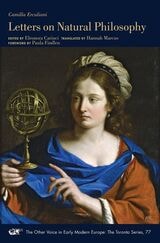
cover of Letters on Natural Philosophy: The Scientific Correspondence of a Sixteenth-Century Pharmacist, with Related Texts

Letters on Natural Philosophy

The Scientific Correspondence of a Sixteenth-Century Pharmacist, with Related Texts

Camilla Erculiani

Iter Press, 2020

In her Letters on Natural Philosophy, published originally in Krakow in 1584, Camilla Erculiani proposed her new theory of the natural causes of the universal flood in the biblical book of Genesis. Erculiani weaves together her understanding of Aristotelian, Platonic, Galenic, and astrological traditions and combines them with her own observations of the world as seen from her apothecary shop in sixteenth-century Padua. This publication brought Erculiani to the attention of the Inquisition, which accused her of heresy, silencing her for centuries.

 This edition presents the first full English translation of Erculiani’s book and other relevant texts, bringing to light the cultural context and scientific thought of this unique natural philosopher.
[more]
cover of The Key to Natural Philosophy

The Key to Natural Philosophy

Barbara Honorius Augustodunensis

Catholic University of America Press, 2026

Honorius Augustodunensis (“of Regensburg”), born perhaps in the 1070s, was a native son of southern Germany or Austria who pursued his studies in England with St. Anselm of Canterbury. Under Anselm’s influence he became a Benedictine monk before returning to Germany in the opening years of the twelfth century. During his life-long monastic career he blossomed as a prolific writer. He died around 1140. The epithet “of Autun,” as a translation of “Augustodunensis,” was applied to him by scholars a century ago and earlier, but it has long been discredited, and the meaning of “Augustodunensis” remains a mystery. Although Honorius has been appropriately described as an enigmatic figure, his strong influence on Western theologians is widely recognized. Despite his large corpus, now known to consist of approximately thirty texts (but almost certainly more) Honorius Augustodunensis is the most unjustly neglected writer of the twelfth- century renaissance. Although he is best known as a popularizer, he also composed a major philosophical text, The Key to Natural Philosophy (Clavis physicae), ca. 1125-30. Taking the form of a dialogue between master and disciple, the Clavis is an abridged paraphrase of Eriugena’s Periphyseon, the most radical work of Neoplatonic thought in the time frame between pseudo-Dionysius and Meister Eckhart. Honorius treats such topics as the unknowability of God, apophatic and cataphatic theology, the primordial causes, the cosmological process of creation and return, human and angelic nature, the Fall, the four elements, and the findings of ancient astronomers. Although Eriugena was condemned for heresy in the thirteenth century, Honorius managed to escape that censure. The Key to Natural Philosophy thus became the chief conduit of the Carolingian philosopher’s thought in the later Middle Ages, influencing readers from Eckhart through Nicholas of Cusa.
[more]
cover of The Nature of Natural Philosophy in the Late Middle Ages (Studies in Philosophy and the History of Philosophy, Volume 52)

The Nature of Natural Philosophy in the Late Middle Ages (Studies in Philosophy and the History of Philosophy, Volume 52)

Edward Grant

Catholic University of America Press, 2010

In this volume, distinguished scholar Edward Grant identifies the vital elements that contributed to the creation of a widespread interest in natural philosophy, which has been characterized as the "Great Mother of the Sciences."
[more]