Results by title
3 books match the query 'Natural foods industry'
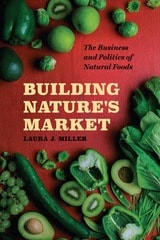
Building Nature's Market
The Business and Politics of Natural FoodsLaura J. Miller
University of Chicago Press, 2017
Building Nature’s Market shows how the meaning of natural foods was transformed as they changed from a culturally marginal, religiously inspired set of ideas and practices valorizing asceticism to a bohemian lifestyle to a mainstream consumer choice. Laura J. Miller argues that the key to understanding this transformation is to recognize the leadership of the natural foods industry. Rather than a simple tale of cooptation by market forces, Miller contends the participation of business interests encouraged the natural foods movement to be guided by a radical skepticism of established cultural authority. She challenges assumptions that private enterprise is always aligned with social elites, instead arguing that profit-minded entities can make common cause with and even lead citizens in advocating for broad-based social and cultural change.
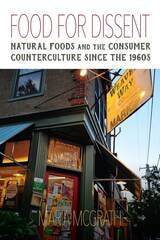
Food for Dissent
Natural Foods and the Consumer Counterculture since the 1960sMaria McGrath
University of Massachusetts Press, 2019
In the 1960s and early 1970s, countercultural rebels decided that, rather than confront the system, they would create the world they wanted. The natural foods movement grew out of this contrarian spirit. Through a politics of principled shopping, eating, and entrepreneurship, food revolutionaries dissented from corporate capitalism and mainstream America.
In Food for Dissent, Maria McGrath traces the growth of the natural foods movement from its countercultural fringe beginning to its twenty-first-century “food revolution” ascendance, focusing on popular natural foods touchstones—vegetarian cookbooks, food co-ops, and health advocates. Guided by an ideology of ethical consumption, these institutions and actors spread the movement's oppositionality and transformed America's foodscape, at least for some. Yet this strategy proved an uncertain instrument for the advancement of social justice, environmental defense, and anti-corporatism. The case studies explored in Food for Dissent indicate the limits of using conscientious eating, shopping, and selling as tools for civic activism.
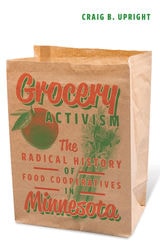
Grocery Activism
The Radical History of Food Cooperatives in MinnesotaCraig B. Upright
University of Minnesota Press, 2020
A key period in the history of food cooperatives that continues to influence how we purchase organic food today
Our notions of food co-ops generally don’t include images of baseball bat–wielding activists in the aisles. But in May 1975, this was the scene as a Marxist group known as the Co-op Organization took over the People’s Warehouse, a distribution center for more than a dozen small cooperative grocery stores in the Minneapolis area. The activist group’s goal: to curtail the sale of organic food. The People’s Warehouse quickly became one of the principal fronts in the political and social battle that Craig Upright explores in Grocery Activism. The story of the fraught relationship of new-wave cooperative grocery stores to the organic food industry, this book is an instructive case study in the history of activists intervening in capitalist markets to promote social change.
Focusing on Minnesota, a state with both a long history of cooperative enterprise and the largest number of surviving independent cooperative stores, Grocery Activism looks back to the 1970s, when the mission of these organizations shifted from political activism to the promotion of natural and organic foods. Why, Upright asks, did two movements—promoting cooperative enterprise and sustainable agriculture—come together at this juncture? He analyzes the nexus of social movements and economic sociology, examining how new-wave cooperatives have pursued social change by imbuing products they sell with social values. Rather than trying to explain the success or failure of any individual cooperative, his work shows how members of this fraternity of organizations supported one another in their mutual quest to maintain fiscal solvency, promote better food-purchasing habits, support sustainable agricultural practices, and extol the virtues of cooperative organizing. A foundational chapter in the history of organic food, Grocery Activism clarifies the critical importance of this period in transforming the politics and economics of the grocery store in America.