Results by title
5 books match the query 'Natural language processing (Computer science)'
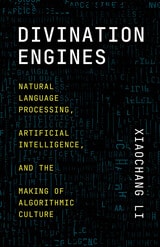
Divination Engines
Natural Language Processing, Artificial Intelligence, and the Making of Algorithmic CultureXiaochang Li
University of Chicago Press, 2026
A revealing and surprising origin story, showing how attempts to render human speech and language computable led from the era of big data to today’s AI.
Since the advent of computers, society has fantasized about conversing with machines. In this eye-opening book, technology expert Xiaochang Li shows readers how that dream both fueled the demand for data and set the stage for today’s generative AI. With original research and clear explanations, Li elucidates the origins of what’s known as natural language processing (NLP) and the heated twentieth-century debates between computer scientists, linguists, and communication engineers that shaped today’s technology. Starting with early devices that recorded, analyzed, and attempted to interpret human speech, she demonstrates how computer speech recognition, particularly efforts led by Bell Labs and IBM, advanced technology by deemphasizing linguistic meaning in favor of statistical prediction. In other words, researchers gradually abandoned systems that sought to understand human language, opting instead for work-arounds that simply predicted patterns in speech and text data. That solution became incredibly and surprisingly adaptable. As Li reveals, transforming linguistic questions into engineering ones ushered in the routine operation of search engines, spam filters, and the varied content sorting and recommendation mechanisms that regulate the access, circulation, and legitimacy of information across every platform. But this has all come at the cost of forever requiring copious and ever-growing amounts of new data.
At its core, Divination Engines illuminates how the artifacts of human communication—speech, text, and images—have become both the fodder for and products of computers. This connection between communication and computation, Li shows, has given rise to data-driven analytics, machine learning, and today’s algorithmic culture.
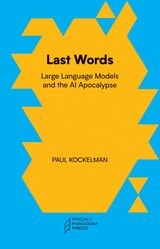
Last Words
Large Language Models and the AI ApocalypsePaul Kockelman
Prickly Paradigm Press, 2024
What kind of meaning can machines make—and why does it matter that it’s not the same as ours?
Anthropologist Paul Kockelman's Last Words offers a rigorous but accessible account of how large language models actually work—and why the meaning they produce is fundamentally different from human meaning-making. Drawing on the semiotics of C.S. Peirce, Kockelman’s witty and insightful pamphlet shows how LLMs are trained to predict word-word relations, not word-world relations, which explains both their uncanny fluency and their systematic blind spots. The result is a compact, essential guide to cutting through the hype: not a dismissal of AI, but a precise account of what it can and cannot do—and who profits from the confusion.
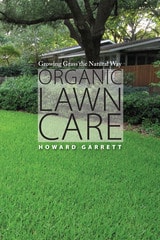
Organic Lawn Care
Growing Grass the Natural WayBy Howard Garrett
University of Texas Press, 2014
Organic gardening expert Howard Garrett offers step-by-step instructions for planting and maintaining lawns, golf courses, and other turf with organic methods that he has proven to be easier, less expensive, and less water-intensive than conventional lawn care.
A lush green lawn is one of the great pleasures of the natural world, whether it’s right outside your front door or on a majestic fairway at a legendary golf course. But anyone who has tried to grow the perfect lawn the conventional way knows it requires an endless cycle of watering and applying synthetic fertilizers and toxic chemical pesticides that costs a lot of money and kills all the life in the soil, on the surface, and on the grass. Fortunately, there’s a better way. Organic lawn care is not only healthier for the environment, it’s actually cheaper and less water-intensive, whether you’re managing a small yard or acres of turf.
In Organic Lawn Care: Growing Grass the Natural Way, Howard Garrett, the renowned “Dirt Doctor,” takes you step-by-step through creating and maintaining turf organically. He begins with the soil, showing you how to establish a healthy habitat for grass. Then he discusses a variety of turfgrasses, including Bermudagrass, bluegrass, buffalograss, fescue, ryegrass, St. Augustine, and zoysia. Garrett explains in detail how to establish and maintain a lawn, including planting, mowing, watering, fertilizing, composting, and managing weeds and pests. And he offers alternatives to lawn grasses and turf, describing the situations in which they might be your best choice.
Follow the program in Organic Lawn Care, and don’t be surprised when your water bill drops dramatically and your lawn or golf course is the best-looking one around.
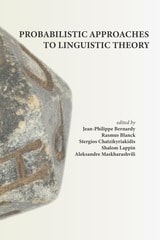
Probabilistic Approaches to Linguistic Theory
Edited by Jean-Philippe Bernardy, Rasmus Blanck, Stergios Chatzikyriakidis, Shalom Lappin, and Aleksandre Maskharashvili
CSLI, 2022
During the last two decades, computational linguists, in concert with other researchers in AI, have turned to machine learning and statistical techniques to capture features of natural language and aspects of the learning process that are not easily accommodated in classical algebraic frameworks. These developments are producing a revolution in linguistics in which traditional symbolic systems are giving way to probabilistic and deep learning approaches. This collection features articles that provide background to these approaches, and their application in syntax, semantics, pragmatics, morphology, psycholinguistics, neurolinguistics, and dialogue modeling. Each chapter provides a self-contained introduction to the topic that it covers, making this volume accessible to graduate students and researchers in linguistics, NLP, AI, and cognitive science.
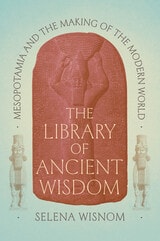
The Library of Ancient Wisdom
Mesopotamia and the Making of the Modern WorldSelena Wisnom
University of Chicago Press, 2025
The library of Ashurbanipal, Assyria’s last great king, held an astonishing collection at the forefront of knowledge in its day, from ancient traditions in religion and literature to the latest developments in magic and medicine. When the Assyrian empire fell, the library burned to the ground, and its contents, clay tablets inscribed with cuneiform writing, lay buried for thousands of years until a team of Victorian archaeologists discovered the remnants in modern-day Iraq. The clay had baked and hardened; the very fire that consumed the library had helped its texts to survive for millennia.
In The Library of Ancient Wisdom, scholar Selena Wisnom, one of only a few hundred experts able to read cuneiform script today, guides us inside this important collection and, through its contents, brings ancient Mesopotamia and its people to life. Introducing us to Ashurbanipal and his family, scribes, astrologers, physicians, and more, Wisnom explores the library’s tablets and the details they divulge about how these ancient people thought about the world. Like us, they had concerns about job security, jealous rivalries, and profound friendships, and questions about the meaning of life. Wisnom ushers us into a world where magic was commonplace, where the gods spoke to you in dreams, and where the secrets of the universe were revealed through puns—taking us to the heart of what it means to be human.
Offering a close look at a major historical landmark as well as a readable account of the world’s earliest civilizations, The Library of Ancient Wisdom lays bare the ideas, hopes, fears, and desires that survive on humble clay.