Results by title
4 books match the query 'Nature conservation in literature'
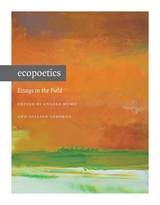
Ecopoetics
Essays in the FieldAngela Hume and Gillian Osborne
University of Iowa Press, 2018
Ecopoetics: Essays in the Field makes a formidable intervention into the emerging field of ecopoetics. The volume’s essays model new and provocative methods for reading twentieth and twenty-first century ecological poetry and poetics, drawing on the insights of ecocriticism, contemporary philosophy, gender and sexuality studies, black studies, Native studies, critical race theory, and disability studies, among others.
Contributors offer readings of a diverse range of poets, few of whom have previously been read as nature writers—from midcentury Beat poet Michael McClure, Objectivist poet George Oppen, and African American poets Melvin Tolson and Robert Hayden; to contemporary writers such as Diné poet Sherwin Bitsui, hybrid/ collage poets Claudia Rankine and Evelyn Reilly, emerging QPOC poet Xandria Phillips, and members of the Olimpias disability culture artists’ collective. While addressing preconceptions about the categories of nature writing and ecopoetics, contributors explore, challenge, and reimagine concepts that have been central to environmental discourse, from apocalypse and embodiment to toxicity and sustainability.
This collection of essays makes the compelling argument that ecopoetics should be read as “coextensive with post-1945 poetry and poetics,” rather than as a subgenre or movement within it. It is essential reading for any student or scholar working on contemporary literature or in the environmental humanities today.
Contributors: Joshua Bennett, Rob Halpern, Matt Hooley, Angela Hume, Lynn Keller, Petra Kuppers, Michelle Niemann, Gillian Osborne, Samia Rahimtoola, Joan Retallack, Joshua Schuster, Jonathan Skinner.
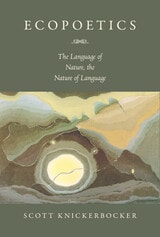
Ecopoetics
The Language of Nature, the Nature of LanguageScott Knickerbocker
University of Massachusetts Press, 2012
Ecopoetics probes the complex relationship between artifice and the natural world in the work of modern American poets—in particular Wallace Stevens, Elizabeth Bishop, Richard Wilbur, and Sylvia Plath. These poets relate to nature as a deep wellspring of meaning, although they all avoid using language the way most nature writers do, merely to reflect or refer directly to the world. Each of these poets, in his or her own distinct way, employs instead what Knickerbocker terms sensuous poesis, the process of rematerializing language through sound effects and other formal devices as a sophisticated response to nonhuman nature.
Rather than attempt to erase the artifice of their own poems, to make them seem more natural and thus supposedly closer to nature, the poets in this book unapologetically embrace artifice—not for its own sake but in order to perform and enact the natural world. Indeed, for them, artifice is natural. In examining their work, Knickerbocker charts a new direction for ecocriticism.
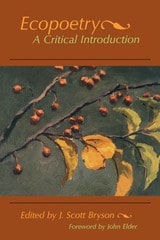
Ecopoetry
Critical IntroductionScott Bryson
University of Utah Press, 2002
The burgeoning field of ecocriticism is beginning to address the work of such ecopoets as Gary Snyder, Mary Oliver, W. S. Merwin, and Wendell Berry, among others, whose poems increasingly deal with ecological and environmental issues. Ecopoetry: A Critical Introduction assembles previously unpublished contributions from many of the most important scholars in the field as they discuss the historical and crosscultural roots of ecopoetry, while expanding the boundaries to include such themes as genocide and extinction, the lesbian body, and post colonialism. This volume gathers these necessary voices in the emerging conversation regarding poetry’s place in the environmental debate.
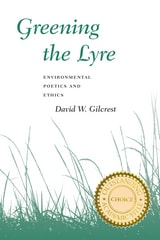
Greening The Lyre
Environmental Poetics And EthicsDavid W. Gilcrest
University of Nevada Press, 2002
This work covers important and neglected ground—environmental language theory. Gilcrest poses two overarching questions: To what extent does contemporary nature poetry represent a recapitulation of familiar poetics? And, to what extent does contemporary nature poetry engage a poetics that stakes out new territory? He addresses these questions with important thinkers, especially Kenneth Burke, and considers such poets as Frost, Kunitz, Heaney, Ammons, Cardenal, and Rich.