Results by title

6 books match the query 'Natures'
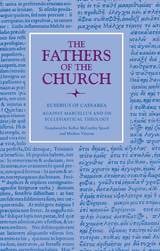
cover of Against Marcellus and On Ecclesiastical History

Against Marcellus and On Ecclesiastical History

Kelly Eusebius of Caesarea

Catholic University of America Press, 2018

This is the first English translation of the last two theological works of Eusebius of Caesarea, Against Marcellus and On Ecclesiastical Theology. The first text was composed after the deposition of Marcellus of Ancyra in 336 to justify the action of the council fathers in ordering the deposition on the grounds of heresy, contending that Marcellus was “Sabellian” (or modalist) on the Trinity and a follower of Paul of Samosata (hence adoptionist) in Christology. Relying heavily upon extensive quotations from a treatise Marcellus wrote against Asterius the Sophist, this text provides important information about ecclesiastical politics in the period before and just after the Council of Nicea, and endeavors to demonstrate Marcellus’s erroneous interpretation of several key biblical passages that had been under discussion since before the council. In doing so, Eusebius criticizes Marcellus’s inadequate account of the distinction between the persons of the Trinity, eschatology, and the Church’s teaching about the divine and human identities of Christ.

On Ecclesiastical Theology, composed circa 338/339 just before Eusebius’s death, and perhaps in response to the amnesty for deposed bishops enacted by Constantius after the death of Constantine in 377 and the possibility of Marcellus’s return to his see, continues to lay out the criticisms initially put forward in Against Marcellus, again utilizing quotations from Marcellus’s book against Asterius. However, we see in this text a much more systematic explanation of Eusebius’s objections to the various elements of Marcellus’s theology and what he sees as the proper orthodox articulation of those elements.

Long overlooked for statements at odds with later orthodoxy, even written off as heretical because allegedly “semi-Arian,” recent scholarship has demonstrated the tremendous influence these texts had on the Greek theological tradition in the fourth century, especially on the orthodox understanding of the Trinity. In addition to their influence, they are some of the few complete texts that we have from Greek theologians in the immediate period following the Council of Nicea in 325, thus filling a gap in the materials available for research and teaching in this critical phase of theological development.

[more]
cover of National Greens: The Natures of Korean Golf

National Greens

The Natures of Korean Golf

Rachael Miyung Joo

Duke University Press, 2027
In National Greens, Rachael Miyung Joo details the rise of golf as a global Korean cultural project in the twenty-first century. While courses began as exclusive domains of the privileged hidden from public view, the sport is now a widespread visible practice popular across communities in South Korea and the Korean diaspora. Based on fieldwork in South Korea, Aotearoa New Zealand, the Philippines, and the United States, Joo aligns this transformation of golfing with shifts in Korean cultural formations, like the rising significance of leisure culture in everyday life, the globalization of Korean media celebrity, and innovative technologies now dedicated to recreation. She also explores the environmental and political repercussions of the sport’s proliferation as an influx in courses radically alters landscapes, and activist attempts to block or slow construction have largely proven ineffective. Highlighting the growth of golf in South Korea, its functions in imperialism and migration, and the effects of golf technologies, National Greens illustrates the game’s symbolic power in shaping ideas of leisure, landscape, environment, nation, and identity.
[more]
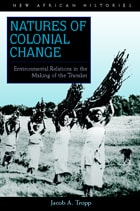
cover of Natures of Colonial Change: Environmental Relations in the Making of the Transkei

Natures of Colonial Change

Environmental Relations in the Making of the Transkei

Jacob A. Tropp

Ohio University Press, 2006

In this groundbreaking study, Jacob A. Tropp explores the interconnections between negotiations over the environment and an emerging colonial relationship in a particular South African context—the Transkei—subsequently the largest of the notorious “homelands” under apartheid.

In the late nineteenth century, South Africa’s Cape Colony completed its incorporation of the area beyond the Kei River, known as the Transkei, and began transforming the region into a labor reserve. It simultaneously restructured popular access to local forests, reserving those resources for the benefit of the white settler economy. This placed new constraints on local Africans in accessing resources for agriculture, livestock management, hunting, building materials, fuel, medicine, and ritual practices.

Drawing from a diverse array of oral and written sources, Tropp reveals how bargaining over resources—between and among colonial officials, chiefs and headmen, and local African men and women—was interwoven with major changes in local political authority, gendered economic relations, and cultural practices as well as with intense struggles over the very meaning and scope of colonial rule itself.

Natures of Colonial Change sheds new light on the colonial era in the Transkei by looking at significant yet neglected dimensions of this history: how both “colonizing” and “colonized” groups negotiated environmental access and how such negotiations helped shape the broader making and meaning of life in the new colonial order.
[more]
cover of Natures of Data: A Discussion between Biologists, Artists and Science Scholars

Natures of Data

A Discussion between Biologists, Artists and Science Scholars

Philipp Fischer, Gabriele Gramelsberger, Christoph Hoffmann, Hans Hofmann, Hans-Jörg Rheinberger, and Hannes Rickli

Diaphanes, 2020
Computer-based technologies for the production and analysis of data have been an integral part of biological research since the 1990s at the latest. This not only applies to genomics and its offshoots but also to less conspicuous subsections such as ecology. But little consideration has been given to how this new technology has changed research practically. How and when do data become questionable? To what extent does necessary infrastructure influence the research process? What status is given to software and algorithms in the production and analysis of data? These questions are discussed by the biologists Philipp Fischer and Hans Hofmann, the philosopher Gabriele Gramelsberger, the historian of science and biology Hans-Jörg Rheinberger, the science theorist Christoph Hoffmann, and the artist Hannes Rickli. The conditions of experimentation in the digital sphere are examined in four chapters—“Data,” “Software,” “Infrastructure,” and “in silico”—in which the different perspectives of the discussion partners complement one another. Rather than confirming any particular point of view, Natures of Data deepens understanding of the contemporary basis of biological research.
[more]
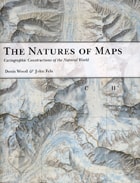
cover of The Natures of Maps: Cartographic Constructions of the Natural World

The Natures of Maps

Cartographic Constructions of the Natural World

Denis Wood and John Fels

University of Chicago Press, 2008

Cartographers have known for decades that maps are far from objective representations of the world; rather, every map reflects the agendas and intentions of its creators. Yet that understanding has had almost no effect on the way maps are viewed and used by the general public. In The Natures of Maps, cartographers Denis Wood and John Fels present a compelling exploration of a wide range of maps to answer the question of, as they put it, why maps have “gotten away with it.”
            To answer that question, the authors turn to a category of maps with a particularly strong reputation for objectivity: maps of nature. From depictions of species habitats and bird migrations to portrayals of the wilds of the Grand Canyon and the reaches of the Milky Way, such maps are usually presumed—even by users who should know better—to be strictly scientific. Yet by drawing our attention to every aspect of these maps’ self-presentation, from place names to titles and legends, the authors reveal the way that each piece of information collaborates in a disguised effort to mount an argument about reality. Without our realizing it, those arguments can then come to define our very relationship to the natural world—determining whether we see ourselves as humble hikers or rampaging despoilers, participants or observers, consumers or stewards.
            Richly illustrated, and crafted in vivid and witty prose, The Natures of Maps will enlighten and entertain map aficionados, scholars, and armchair navigators alike. You’ll never be able to look at Google Maps quite the same way again.
[more]
cover of The Opuscula and the Dispute with Pyrrhus: The Theological and Polemical Works

The Opuscula and the Dispute with Pyrrhus

The Theological and Polemical Works

Kevin M. St. Maximus the Confessor

Catholic University of America Press, 2026

Maximus the Confessor (d. 662), regarded by certain of his contemporaries as a sword of division, has become a bridge between East and West in our time. He lived at a time of theological and political upheaval, coming under intense scrutiny from imperial authorities in the final decades of his life. His conflict with Constantinople led him to engage in a theological and polemical campaign to equip his associates around the Mediterranean to respond to certain innovative doctrines. Maximus saw these new teachings as disconnected from the thought of the approved Fathers and theologically linked with prior heresies. This volume contains significant theological and polemical works— The Small Theological and Polemical Works, also known as the Opuscula, and the Dispute with Pyrrhus—refuting monenergism and monotheletism, the notions that Christ had only one activity or only one will. The Small Theological and Polemical Works are offered here for the first time in a complete English translation, built upon critical scholarship from the past century with key additions from Sergey Epifanovich included. Regarded as the most iconic work associated with Maximus, the famed Dispute with Pyrrhus, the deposed Patriarch of Constantinople, took place in Carthage in July 645. The record of this dialogue reflects Maximus’s mature Christology, while it is also a noteworthy prelude to his journey to Rome, where he worked with Pope Martin at the 649 Lateran Synod, uniting their voices and sealing their fates.
[more]