Results by title
4 books match the query 'Navajo'
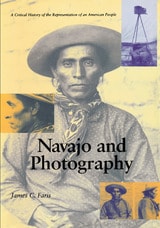
Navajo and Photography
James C Faris
University of Utah Press, 2003
"Our God Tscorenci was our Father and created the sun, which is like a mirror. He sees us from up on high and makes photographs of our reflection. When we die the photograph disappears. Many have been lost."
—Kenchori, an Asháninka from Peruvian Amazonia, when asked to tell a story concerning cameras (From W. Baker, Backward: An Essay on Indians, Time, and Photography).
Historically photographs say less about the Navajo than about photographers of Navajos. In Navajo and Photography James Faris calls attention to the inability of photographs of Navajo by non-Navajo to communicate either the lived experiences of native people or their history. Beginning with the earliest photographs of Navajos in captivity at Bosque Redondo and including the most recent glossy picture books and calendars, Faris’s survey points out assumptions that have always governed photographic representation of the Navajo people. Full of the work of photographers such as Edward S. Curtis and Laura Gilpin, as well as photographs by many less-well known figures, readers will find Navajo and Photography an enlightening juxtaposition of cultures.
The Army and the Navajo
The Bosque Redondo Reservation Experiment, 1863-1868Gerald Thompson
University of Arizona Press, 1976
The Mountainway of the Navajo
Leland C. Wyman; with a myth of the Female Branch recorded and translated by Father Berard Haile, OFM
University of Arizona Press, 1975
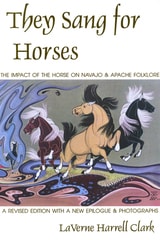
They Sang for Horses
The Impact of the Horse on Navajo and Apache FolkloreLaVerne Harrell Clark
University Press of Colorado, 2001
No Native American groups placed more emphasis on the horse in their lives than did the Navajo and Apache of the Southwest. They Sang for Horses, first published in 1966 and now considered a classic, remains the only comprehensive treatment of the profound mystical influence that the horse has exerted for more than 300 years.
In this completely redesigned and expanded edition, LaVerne Harrell Clark examines how storytellers, singers, medicine men, and painters created the animal's evolving symbolic significance by adapting existing folklore and cultural symbols. Exploring the horse's importance in ceremonies, songs, prayers, customs, and beliefs, she investigates the period of the horse's most pronounced cultural impact on the Navajo and the Apache, starting from the time of its acquisition from the Spanish in the seventeenth century and continuing to the mid-1960s, when the pickup truck began to replace it as the favored means of transportation. In addition, she presents a look at how Navajos and Apaches today continue to redefine the horse's important role in their spiritual as well as material lives.
This classic work is a must for historians, readers interested in Native American folklore and mythology, and anyone who has ever been captivated by the magic and romance of the horse.