Results by title
6 books match the query 'Navajo Women'
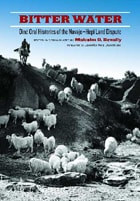
Bitter Water
Diné Oral Histories of the Navajo-Hopi Land DisputeEdited and Translated by Malcolm D. Benally; Foreword by Jennifer Nez Denetdale
University of Arizona Press, 2011
Bitter Water presents the narratives of four Diné women who have resisted removal but who have watched as their communities and lifeways have changed dramatically. The book, based on 25 hours of filmed personal testimony, features the women’s candid discussions of their efforts to carry on a traditional way of life in a contemporary world that includes relocation and partitioned lands; encroaching Western values and culture; and devastating mineral extraction and development in the Black Mesa region of Arizona. Though their accounts are framed by insightful writings by both Benally and Diné historian Jennifer Nez Denetdale, Benally lets the stories of the four women elders speak for themselves.
Scholars, media, and other outsiders have all told their versions of this story, but this is the first book that centers on the stories of women who have lived it—in their own words in Navajo as well as the English translation. The result is a living history of a contested cultural landscape and the unique worldview of women determined to maintain their traditions and lifeways, which are so intimately connected to the land. This book is more than a collection of stories, poetry, and prose. It is a chronicle of resistance as spoken from the hearts of those who have lived it.
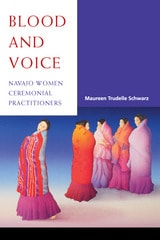
Blood and Voice
Navajo Women Ceremonial PractitionersMaureen Trudelle Schwarz
University of Arizona Press, 2003
The maintenance of the latter tradition has long been held to be the function of the Navajo singer, a role usually viewed as male. But despite this longstanding assumption, women can and do fill this role. Drawing on interviews with seventeen Navajo women practitioners and five apprentices, Maureen Trudelle Schwarz explicates women's role as ceremonial practitioners and shows that it is more complex than has previously been thought. She examines gender differences dictated by the Navajo origin story, details how women came to be practitioners, and reveals their experiences and the strategies they use to negotiate being both woman and singer.
Women who choose careers as singers face complex challenges, since some rules prohibit menstruating women from conducting ceremonies and others regarding sexual continence can strain marital relationships. Additionally, oral history places men in charge of all ceremonial matters. Schwarz focuses on how the reproductive life courses of Navajo women influence their apprenticeships and practices to demonstrate how they navigate these issues to preserve time-honored traditions. Through the words of actual practitioners, she shows how each woman brings her own unique life experience to the role. While differing among individuals, these experiences represent a commitment to shared cultural symbols and result in a consensus that sustains social cohesion.
By showing the differences and similarities between the apprenticeship, initiation, and practice of men and women singers, Blood and Voice offers a better understanding of the role of Navajo women in a profession usually viewed as a male activity—and of the symbolic construction of the self in Navajo culture. It also addresses classic questions concerning the sexual division of labor, menstrual taboos, gender stereotypes, and the tension between tradition and change that will enlighten students of other cultures.
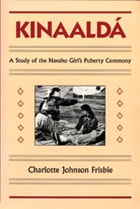
Kinaalda
Charlotte J Frisbie
University of Utah Press, 1993
Kinaaldá, the ceremony associated with the onset of a girl’s puberty, is an important Navajo rite within the Blessingway complex. Derived from the experiences of Changing Woman, the puberty ceremony has been passed through generations and continues to be observed throughout Navajoland.
An acknowledged classic, Kinaaldá remains the most complete "outsider" account of this important ceremony. Charlotte Frisbie’s lucid description takes the reader through the four-day ritual, describing sequence, daily activities, restrictions, observances that include the girl’s race toward the east, and an analysis of the ceremonial music, complete with notations and translation.
To give readers a better sense of why, Frisbie relates the beliefs and practices expressed in Kinaaldá to origin accounts conveyed by medicine people and to explanations and discussions with other Navajos.
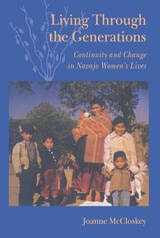
Living Through the Generations
Continuity and Change in Navajo Women’s LivesJoanne McCloskey
University of Arizona Press, 2007
Drawing on ethnographic interviews with 77 women in Crownpoint, New Mexico, and surrounding chapters in the Eastern Navajo Agency, Joanne McCloskey examines the cultural traditions evident in Navajo women’s lives. Navajo women balance the demands of Western society with the desire to preserve Navajo culture for themselves and their families.
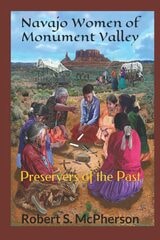
Navajo Women of Monument Valley
Preservers of the PastRobert S. McPherson
University Press of Colorado, 2021
"McPherson, through this oral history of Navajo Women living in Monument Valley, provides a unique story of cultural understanding specific to the area. From personal experience and a shared heritage, these women explain their early struggles in life, religious beliefs and sacred teachings, daily activities of a traditional family, and later, battling against cultural loss. Today's rapidly changing world challenges these elders while enticing the young to forget what it means to be Diné. Here, these women share what they want the youth to know. I highly recommend this book to those who wish to learn about the past, understand the present, and consider the future."
—Ronald P. Maldonado, Navajo Nation Cultural Resource Supervisor
"The teachings and stories presented here are fascinating and important. When reading them, I heard my granmother's and aunt's voices, connecting me to the past while strengthening my understanding of Navajo culture. It is the women who are the heard and soul of preserving this information as they guide youth into the future. Here that wisdom becomes real. Those interested in a balanced presentation of the difficult, yet rewarding live of Navajo elders will be highly rewarded by learning from this book"
—Charlotte Nez Lacy, Heritage Language Educator/Translator
Reflections in Place
Connected Lives of Navajo WomenDonna Deyhle
University of Arizona Press, 2009
As a recognized authority on the subject, qualified by multiple degrees in racial and American Indian studies, Deyhle is able to chronicle the lives and “survivance” of three Navajo women in a way that is simultaneously ethnographic and moving. Her critique of the U.S. education system’s underlying yet very real tendency toward structural discrimination takes shape in elegant prose that moves freely into and out of time and place. The combination of substantive sources and touching personal experience forms a profound and enduring narrative of critical and current importance.
While this book stands as a powerful contribution to American Indian studies, its compelling human elements will extend its appeal to anyone concerned with the ongoing plight of American Indians in the education system.