Results by title
3 books match the query 'Nazi propaganda'

An Intimate History of Nazism
Love, Marriage, and Sexuality in the Third ReichElissa Mailänder
University of Wisconsin Press, 2027
Published to great acclaim in French and now available for the first time in English, this groundbreaking book explores how the Nazi regime used sexuality to promote political loyalty, conformity, and cohesion among “ordinary” Germans. Beginning before the collapse of the Weimar Republic and continuing through the postwar American occupation of Germany, Elissa Mailänder’s study highlights the complex and conflicted ways that sexual “liberation,” repression, and violence were used and experienced in the everyday lives of citizens of the Reich. Her analysis draws on a vast array of sources, from legal dossiers to private photographs and letters, as well as public archives, magazines, and movies. Mailänder’s findings are often uncomfortable; she demonstrates, for example, that a significant number of women who were not persecuted by the regime saw shifts in gender and sexual norms as positive developments—ones that some felt were lost under the American occupation, with its own routines of military sexual exploitation. What emerges is a portrait of a regime that was less interested in repressing sexuality than in reinventing it according to a racist, elitist, and homophobic agenda.

Bending Spines
The Propagandas of Nazi Germany and the German Democratic RepublicRandall L. Bytwerk
Michigan State University Press, 2004
Why do totalitarian propaganda such as those created in Nazi Germany and the former German Democratic Republic initially succeed, and why do they ultimately fail? Outside observers often make two serious mistakes when they interpret the propaganda of this time. First, they assume the propaganda worked largely because they were supported by a police state, that people cheered Hitler and Honecker because they feared the consequences of not doing so. Second, they assume that propaganda really succeeded in persuading most of the citizenry that the Nuremberg rallies were a reflection of how most Germans thought, or that most East Germans were convinced Marxist-Leninists. Subsequently, World War II Allies feared that rooting out Nazism would be a very difficult task. No leading scholar or politician in the West expected East Germany to collapse nearly as rapidly as it did. Effective propaganda depends on a full range of persuasive methods, from the gentlest suggestion to overt violence, which the dictatorships of the twentieth century understood well.
In many ways, modern totalitarian movements present worldviews that are religious in nature. Nazism and Marxism-Leninism presented themselves as explanations for all of life—culture, morality, science, history, and recreation. They provided people with reasons for accepting the status quo. Bending Spines examines the full range of persuasive techniques used by Nazi Germany and the German Democratic Republic, and concludes that both systems failed in part because they expected more of their propaganda than it was able to deliver.
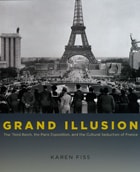
Grand Illusion
The Third Reich, the Paris Exposition, and the Cultural Seduction of FranceKaren Fiss
University of Chicago Press, 2009
Franco-German cultural exchange reached its height at the 1937 Paris World’s Fair, where the Third Reich worked to promote an illusion of friendship between the two countries. Through the prism of this decisive event, Grand Illusion examines the overlooked relationships among Nazi elites and French intellectuals. Their interaction, Karen Fiss argues, profoundly influenced cultural production and normalized aspects of fascist ideology in 1930s France, laying the groundwork for the country’s eventual collaboration with its German occupiers.
Tracing related developments across fine arts, film, architecture, and mass pageantry, Fiss illuminates the role of National Socialist propaganda in the French decision to ignore Hitler’s war preparations and pursue an untenable policy of appeasement. France’s receptiveness toward Nazi culture, Fiss contends, was rooted in its troubled identity and deep-seated insecurities. With their government in crisis, French intellectuals from both the left and the right demanded a new national culture that could rival those of the totalitarian states. By examining how this cultural exchange shifted toward political collaboration, Grand Illusion casts new light on the power of art to influence history.