Results by title
3 books match the query 'Nelkin, Dorothy'
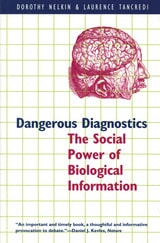
Dangerous Diagnostics
The Social Power of Biological InformationDorothy Nelkin and Laurence Tancredi
University of Chicago Press, 1994
Dangerous Diagnostics is a powerful study of the pervasiveness of diagnostic testing and the potential it offers institutions to classify, categorize, and ultimately control individuals. Nelkin and Tancredi explore the ethical, social, and legal implications of cutting-edge technologies that can lead to new forms of discrimination in the name of standardized, objective measurements. They caution against the creation of an underclass deemed unemployable, untrainable, or uninsurable by such diagnostic tests.
[more]
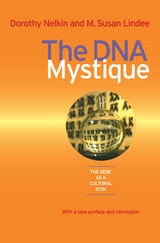
The DNA Mystique
The Gene as a Cultural IconDorothy Nelkin and M. Susan Lindee
University of Michigan Press, 2004
The DNA Mystique suggests that the gene in popular culture draws on scientific ideas but is not constrained by the technical definition of the gene as a section of DNA that codes for a protein. In highlighting DNA as it appears in soap operas, comic books, advertising, and other expressions of mass culture, the authors propose that these domains provide critical insights into science itself.
With a new introduction and conclusion, this edition will continue to be an engaging, accessible, and provocative text for the sociology, anthropology, and bioethics classroom, as well as stimulating reading for those generally interested in science and culture.
With a new introduction and conclusion, this edition will continue to be an engaging, accessible, and provocative text for the sociology, anthropology, and bioethics classroom, as well as stimulating reading for those generally interested in science and culture.
[more]
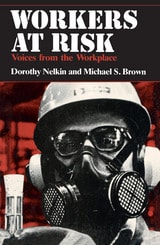
Workers At Risk
Voices from the WorkplaceDorothy Nelkin and Michael S. Brown
University of Chicago Press, 1984
Workers at Risk is a powerful and moving documentary of workers routinely exposed to toxic chemicals. Products and services we all depend on—glass bottles, computers, processed foods and fresh flowers, dry cleaning, medicines, even sculpture and silkscreened toys—are produced by workers in constant contact with more than 63,000 commercial chemicals. For many of them, the risk of death is a way of life.
More than seventy of them speak here of their jobs, their health, and the difficult choices they face in coming to grips with the responsibilities, risks, fears, and satisfactions of their work. Some struggle for information and acknowledgment of their health risks; others struggle to put out of their minds the dangers they know too well. Through extensive interviews, the authors have captured in these voices that double bind of the chemical worker: "If I had known that it would be that lethal, that it could give me or one of my children cancer, I would have refused to work. But it's a matter of survival and we just don't consider all these things. Meanwhile, we've got to make money to survive."
More than seventy of them speak here of their jobs, their health, and the difficult choices they face in coming to grips with the responsibilities, risks, fears, and satisfactions of their work. Some struggle for information and acknowledgment of their health risks; others struggle to put out of their minds the dangers they know too well. Through extensive interviews, the authors have captured in these voices that double bind of the chemical worker: "If I had known that it would be that lethal, that it could give me or one of my children cancer, I would have refused to work. But it's a matter of survival and we just don't consider all these things. Meanwhile, we've got to make money to survive."
[more]