Results by title
44 books match the query 'Neuroscience'
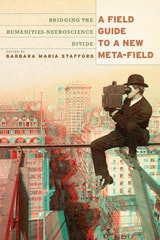
A Field Guide to a New Meta-field
Bridging the Humanities-Neurosciences DivideEdited by Barbara Maria Stafford
University of Chicago Press, 2011
Barbara Stafford is a pioneering art historian whose research has long helped to bridge the divide between the humanities and cognitive sciences. In A Field Guide to a New Meta-Field, she marshals a distinguished group of thinkers to forge a ground-breaking dialogue between the emerging brain sciences, the liberal arts, and social sciences.
Stafford’s book examines meaning and mental function from this dual experimental perspective. The wide-ranging essays included here—from Frank Echenhofer’s foray into shamanist hallucinogenic visions to David Bashwiner’s analysis of emotion and danceability—develop a common language for implementing programmatic and institutional change. Demonstrating how formerly divided fields are converging around shared issues, A Field Guide to a New Meta-Field maps a high-level, crossdisciplinary adventure from one of our leading figures in visual studies.
A Passion for Specificity
Confronting Inner Experience in Literature and ScienceMarco Caracciolo and Russell Hurlburt
The Ohio State University Press, 2016
A Passion for Specificity, with its personal revelations, unexpected twists, and confrontational style, reads like an epistolary novel, but it is a serious exploration of ideas at the heart of literature and science. It is a thoughtful attempt at advancing the emerging “cognitive humanities,” clarifying a number of core issues in the cross-pollination of literature, psychology, philosophy, and consciousness science.

Aesthetics of Discomfort
Conversations on Disquieting ArtFrederick Aldama and Herbert Lindenberger
University of Michigan Press, 2016

Body and Mind in Motion
Dance and Neuroscience in ConversationGlenna Batson with Margaret Wilson
Intellect Books, 2014
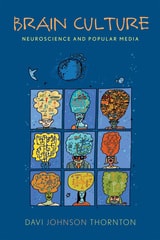
Brain Culture
Neuroscience and Popular MediaDavi Johnson Thornton
Rutgers University Press, 2011
Brain Culture investigates the American obsession with the health of the brain. The brain has become more than a bodily organ, acquiring a near-mystical status. The message that this organ is the key to everything is everywhere--in self-help books that tell us to work on our brains to achieve happiness and enlightenment, in drug advertisements that promise a few tweaks to our brain chemistry will cure us of our discontents, and in politicians' speeches that tell us that our brains are national resources essential to our economic prosperity.
Davi Johnson Thornton looks at these familiar messages, tracing the ways that brain science and colorful brain images produced by novel scientific technologies are taken up and distributed in popular media. She tracks the impact of the message that, "you are your brain" across multiple contemporary contexts, analyzing its influence on child development, family life, education, and public policy. Brain Culture shows that our fixation on the brain is not simply a reaction to scientific progress, but a cultural phenomenon deeply tied to social and political values of individualism and limitless achievement.

Chemically Imbalanced
Everyday Suffering, Medication, and Our Troubled Quest for Self-MasteryJoseph E. Davis
University of Chicago Press, 2020
Chemically Imbalanced is a field report on how ordinary people dealing with common problems explain their suffering, how they’re increasingly turning to the thin and mechanistic language of the “body/brain,” and what these encounters might tell us. Drawing on interviews with people dealing with struggles such as underperformance in school or work, grief after the end of a relationship, or disappointment with how their life is unfolding, Joseph E. Davis reveals the profound revolution in consciousness that is underway. We now see suffering as an imbalance in the brain that needs to be fixed, usually through chemical means. This has rippled into our social and cultural conversations, and it has affected how we, as a society, imagine ourselves and envision what constitutes a good life. Davis warns that what we envision as a neurological revolution, in which suffering is a mechanistic problem, has troubling and entrapping consequences. And he makes the case that by turning away from an interpretive, meaning-making view of ourselves, we thwart our chances to enrich our souls and learn important truths about ourselves and the social conditions under which we live.
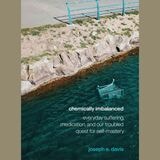
Chemically Imbalanced
Everyday Suffering, Medication, and Our Troubled Quest for Self-MasteryJoseph E. Davis
University of Chicago Press, 2020
Everyday suffering—those conditions or feelings brought on by trying circumstances that arise in everyone’s lives—is something that humans have grappled with for millennia. But the last decades have seen a drastic change in the way we approach it. In the past, a person going through a time of difficulty might keep a journal or see a therapist, but now the psychological has been replaced by the biological: instead of treating the heart, soul, and mind, we take a pill to treat the brain.
Chemically Imbalanced is a field report on how ordinary people dealing with common problems explain their suffering, how they’re increasingly turning to the thin and mechanistic language of the “body/brain,” and what these encounters might tell us. Drawing on interviews with people dealing with struggles such as underperformance in school or work, grief after the end of a relationship, or disappointment with how their life is unfolding, Joseph E. Davis reveals the profound revolution in consciousness that is underway. We now see suffering as an imbalance in the brain that needs to be fixed, usually through chemical means. This has rippled into our social and cultural conversations, and it has affected how we, as a society, imagine ourselves and envision what constitutes a good life. Davis warns that what we envision as a neurological revolution, in which suffering is a mechanistic problem, has troubling and entrapping consequences. And he makes the case that by turning away from an interpretive, meaning-making view of ourselves, we thwart our chances to enrich our souls and learn important truths about ourselves and the social conditions under which we live.
Ethics and Law for Neurosciences Clinicians
Foundations and Evolving ChallengesJames E. Szalados
Rutgers University Press, 2019
Finding Einstein's Brain
Lepore, Frederick E
Rutgers University Press, 2018
Following his death in 1955, Einstein’s brain was removed and preserved, but has never been fully or systematically studied. In fact, the sections are not even all in one place, and some are mysteriously unaccounted for! In this compelling tale, Frederick E. Lepore delves into the strange, elusive afterlife of Einstein’s brain, the controversy surrounding its use, and what its study represents for brain and/or intelligence studies.
Carefully reacting to the skepticism of 21st century neuroscience, Lepore more broadly examines the philosophical, medical, and scientific implications of brain-examination. Is the brain simply a computer? If so, how close are we to artificially creating a human brain? Could scientists create a second Einstein? This “biography of a brain” attempts to answer these questions, exploring what made Einstein’s brain anatomy exceptional, and how “found” photographs--discovered more than a half a century after his death--may begin to uncover the nature of genius.

Foundations and Methods from Mathematics to Neuroscience
Essays Inspired by Patrick SuppesEdited by Colleen E Crangle, Adolfo García de la Sienra, and Helen E. Longino
CSLI, 2014
From Chaos to Stability
How the Brain Invents Our Conscious WorldsIsrael Rosenfield
University of Iowa Press, 2024
To make sense of this chaos, the brain must simplify the sensory inputs by creating, or inventing, the colors, sounds, smells, forms, and faces that are perceived in consciousness, which become a proxy for the chaotic world in which we live. The brain’s ability to generalize and categorize these invented perceptions, and to relate them to one another, enables it to form memories, which are not fixed representations of things past, but a dynamic and malleable function of the brain that is relational.
When formation of these worlds breaks down, neurological differences arise. Although the mechanisms that transform sensory chaos into the simplified perceptions experienced in consciousness remain elusive, Rosenfield and Ziff relate what they have learned by means of imaging brain activity and by mapping the neural circuits that comprise memory traces. In addition, the authors offer perspectives for future studies of consciousness.

Grammar, Geometry, and Brain
Jens Erik Fenstad
CSLI, 2010
This original study considers the effects of language and meaning on the brain. Jens Erik Fenstad—an expert in the fields of recursion theory, nonstandard analysis, and natural language semantics—combines current formal semantics with a geometric structure in order to trace how common nouns, properties, natural kinds, and attractors link with brain dynamics.
How to Grow a Human
Adventures in How We Are Made and Who We ArePhilip Ball
University of Chicago Press, 2019
In his most mind-bending book yet, Ball makes that disconcerting question the focus of a tour through what scientists can now do in cell biology and tissue culture. He shows how these technologies could lead to tailor-made replacement organs for when ours fail, to new medical advances for repairing damage and assisting conception, and to new ways of “growing a human.” For example, it might prove possible to turn skin cells not into neurons but into eggs and sperm, or even to turn oneself into the constituent cells of embryos. Such methods would also create new options for gene editing, with all the attendant moral dilemmas. Ball argues that such advances can therefore never be about “just the science,” because they come already surrounded by a host of social narratives, preconceptions, and prejudices. But beyond even that, these developments raise questions about identity and self, birth and death, and force us to ask how mutable the human body really is—and what forms it might take in years to come.
Knowledge and Representation
Albert Newen, Andreas Bartels, and Eva-Maria Jung
CSLI, 2011
This compilation of cutting-edge philosophical and scientific research comprises a survey of recent neuroscientific research on representational systems in animals and humans. Representational systems provide their owners with useful information about their environment and are shaped by the special informational needs of the organism with respect to its environment. In this volume, the authors address the long-standing dispute about the usefulness of the notion of representation in the study of behavior systems and offer a fresh perspective on representational systems that combines philosophical insights and experimental experience.
Localization and Its Discontents
A Genealogy of Psychoanalysis and the Neuro DisciplinesKatja Guenther
University of Chicago Press, 2015
Given these differences, it is remarkable that both fields found resources for their development in the same tradition of late nineteenth-century German medicine: neuropsychiatry. In Localization and Its Discontents, Katja Guenther investigates the significance of this common history, drawing on extensive archival research in seven countries, institutional analysis, and close examination of the practical conditions of scientific and clinical work. Her remarkable accomplishment not only reframes the history of psychoanalysis and the neuro disciplines, but also offers us new ways of thinking about their future.

Memory
Fragments of a Modern HistoryAlison Winter
University of Chicago Press, 2011
Picture your twenty-first birthday. Did you have a party? If so, do you remember who was there? Now step back: how clear are those memories? Should we trust them to be accurate, or is there a chance that you’re remembering incorrectly? And where have the many details you can no longer recall gone? Are they hidden somewhere in your brain, or are they gone forever?
Such questions have fascinated scientists for hundreds of years, and, as Alison Winter shows in Memory: Fragments of a Modern History, the answers have changed dramatically in just the past century. Tracing the cultural and scientific history of our understanding of memory, Winter explores early metaphors that likened memory to a filing cabinet; later, she shows, that cabinet was replaced by the image of a reel of film, ever available for playback. That model, too, was eventually superseded, replaced by the current understanding of memory as the result of an extremely complicated, brain-wide web of cells and systems that together assemble our pasts. Winter introduces us to innovative scientists and sensationalistic seekers, and, drawing on evidence ranging from scientific papers to diaries to movies, explores the way that new understandings from the laboratory have seeped out into psychiatrists' offices, courtrooms, and the culture at large. Along the way, she investigates the sensational battles over the validity of repressed memories that raged through the 1980s and shows us how changes in technology—such as the emergence of recording devices and computers—have again and again altered the way we conceptualize, and even try to study, the ways we remember.
Packed with fascinating details and curious episodes from the convoluted history of memory science, Memory is a book you'll remember long after you close its cover.
Neuromatic
Or, A Particular History of Religion and the BrainJohn Lardas Modern
University of Chicago Press, 2021
In Neuromatic, religious studies scholar John Lardas Modern offers a sprawling examination of the history of the cognitive revolution and current attempts to locate all that is human in the brain, including spirituality itself. Neuromatic is a wildly original take on the entangled histories of science and religion that lie behind our brain-laden present: from eighteenth-century revivals to the origins of neurology and mystic visions of mental piety in the nineteenth century; from cyberneticians, Scientologists, and parapsychologists in the twentieth century to contemporary claims to have discovered the neural correlates of religion.
What Modern reveals via this grand tour is that our ostensibly secular turn to the brain is bound up at every turn with the religion it discounts, ignores, or actively dismisses. In foregrounding the myths, ritual schemes, and cosmic concerns that have accompanied idealizations of neural networks and inquiries into their structure, Neuromatic takes the reader on a dazzling and disturbing ride through the history of our strange subservience to the brain.
Neuroscience, Psychology, and Religion
Illusions, Delusions, and Realities about Human NatureMalcolm Jeeves
Templeton Press, 2009
Neuroscience, Psychology, and Religion is the second title published in the new Templeton Science and Religion Series. In this volume, Malcolm Jeeves and Warren S. Brown provide an overview of the relationship between neuroscience, psychology, and religion that is academically sophisticated, yet accessible to the general reader.
The authors introduce key terms; thoroughly chart the histories of both neuroscience and psychology, with a particular focus on how these disciplines have interfaced religion through the ages; and explore contemporary approaches to both fields, reviewing how current science/religion controversies are playing out today. Throughout, they cover issues like consciousness, morality, concepts of the soul, and theories of mind. Their examination of topics like brain imaging research, evolutionary psychology, and primate studies show how recent advances in these areas can blend harmoniously with religious belief, since they offer much to our understanding of humanity's place in the world. Jeeves and Brown conclude their comprehensive and inclusive survey by providing an interdisciplinary model for shaping the ongoing dialogue.
Sure to be of interest to both academics and curious intellectuals, Neuroscience, Psychology, and Religion addresses important age-old questions and demonstrates how modern scientific techniques can provide a much more nuanced range of potential answers to those questions.
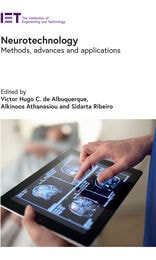
Neurotechnology
Methods, advances and applicationsVictor Hugo C. de Albuquerque
The Institution of Engineering and Technology, 2020

Psychological Science and Christian Faith
Insights and Enrichments from Constructive DialogueMalcolm A. Jeeves
Templeton Press, 2018
Because Christianity and psychology deal with different levels of truth and speak vastly different languages, efforts to unify them often create more problems than they solve. What is needed is a better way to think about the relationship—an approach that does justice to the emerging insights from psychological science and biblical scholarship and that can enrich our understanding of both. In this volume, two accomplished psychologists show how this complementary dialogue can unfold, giving us a broader, deeper understanding of ourselves, our relationships, and our place in the cosmos.
.
Revertigo
An Off-Kilter MemoirFloyd Skloot
University of Wisconsin Press, 2014
This intimate memoir—tenuous, shifting, sometimes humorous—demonstrates Skloot’s considerable literary skill honed as an award-winning essayist, memoirist, novelist, and poet. His recollections of a strange, spinning world prompt further musings on the forces of uncertainty, change, and displacement that have shaped him from childhood to late middle age, repeatedly knocking him awry, realigning his hopes and plans, even his perceptions. From the volatile forces of his mercurial, shape-shifting early years to his obsession with reading, acting, and writing, from the attack of vertigo to a trio of postvertigo (but nevertheless dizzying) journeys to Spain and England, and even to a place known only in his mother’s unhinged fantasies, Skloot makes sense of a life’s phantasmagoric unpredictability.
Finalist, Sarah Winnemucca Award for Creative Nonfiction, Oregon Book Awards
Sensing Qualia
Solving the Hard Problem of ConsciousnessPaul G. Skokowski
University of Chicago Press, 2026
Philosophers of mind and neuroscientists often debate what they call the hard problem of consciousness, that is, how we might account for qualia—our subjective experiences of phenomena like color, taste, pain, smell, and more. In Sensing Qualia, Paul G. Skokowski surveys the most influential theories of mind since Descartes in order to establish a new theory he calls sensory naturalism, which recognizes the senses as natural detectors of physical properties in the world.
Drawing on neuroscience, physics, and philosophy, Skokowski provides a naturalistic framework for studying qualia in the physical world and explores the limits of qualia in androids and AI. The result is a compelling explanation of qualia for anyone curious about the nature of conscious experience in humans and AI.
Signal Processing and Machine Learning for Brain-Machine Interfaces
Toshihisa Tanaka
The Institution of Engineering and Technology, 2018
Sleep and Wakefulness
Nathaniel Kleitman
University of Chicago Press, 1987
The Absent Body
Drew Leder
University of Chicago Press, 1990
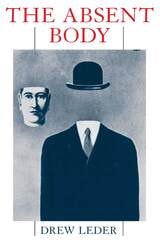
In part 1, Leder explores a wide range of bodily functions with an eye to structures of concealment and alienation. He discusses not only perception and movement, skills and tools, but a variety of "bodies" that philosophers tend to overlook: the inner body with its anonymous rhythms; the sleeping body into which we nightly lapse; the prenatal body from which we first came to be. Leder thereby seeks to challenge "primacy of perception." In part 2, Leder shows how this phenomenology allows us to rethink traditional concepts of mind and body. Leder argues that Cartesian dualism exhibits an abiding power because it draws upon life-world experiences. Descartes' corpus is filled with disruptive bodies which can only be subdued by exercising "disembodied" reason. Leder explores the origins of this notion of reason as disembodied, focusing upon the hidden corporeality of language and thought. In a final chapter, Leder then proposes a new ethic of embodiment to carry us beyond Cartesianism.
This original, important, and accessible work uses examples from the author's medical training throughout. It will interest all those concerned with phenomenology, the philosophy of mind, or the Cartesian tradition; those working in the health care professions; and all those fascinated by the human body.
The Assemblage Brain
Sense Making in NeurocultureTony D. Sampson
University of Minnesota Press, 2016
Once upon a time, neuroscience was born. A dazzling array of neurotechnologies emerged that, according to popular belief, have finally begun to unlock the secrets of the brain. But as the brain sciences now extend into all corners of cultural, social, political, and economic life, a yet newer world has taken shape: “neuroculture,” which goes further than ever before to tackle the profound ethical implications we face in consequence.
The Assemblage Brain unveils a major new concept of sense making, one that challenges conventional scientific and philosophical understandings of the brain. Drawing on Deleuze and Guattari, Tony D. Sampson calls for a radical critical theory that operates in the interferences between philosophy, science, art, and politics. From this novel perspective the book is structured around two questions: “What can be done to a brain?” and “What can a brain do?” Sampson examines the rise of neuroeconomics in informing significant developments in computer work, marketing, and the neuropharmaceutical control of inattentiveness in the classroom. Moving beyond the neurocapitalist framework, he then reestablishes a place for proto-subjectivity in which biological and cultural distinctions are reintegrated in an understanding of the brain as an assemblage.
The Assemblage Brain unravels the conventional image of thought that underpins many scientific and philosophical accounts of how sense is produced, providing a new view of our current time in which capitalism and the neurosciences endeavor to colonize the brain.
The Brain's Body
Neuroscience and Corporeal PoliticsVictoria Pitts-Taylor
Duke University Press, 2016
The Connector
Living with Experimental NeuroprostheticsAlexandra Middleton
Duke University Press, 2026
The Gerbil in Behavioral Investigations
Mechanisms of Territoriality and Olfactory CommunicationBy Del Thiessen and Pauline Yahr
University of Texas Press, 1977
In this comprehensive account of olfactory communication and territorial behavior in the Mongolian gerbil, Del Thiessen and PaulineYahr provide the first detailed study of the neurological and physiological mechanisms that control these basic functions. In addition to explaining the links between hormones, genes, olfactory cues, and territorial acts, they also offer a more general picture of gerbil behavior, as well as a brief look at other mammalian species that communicate social status by way of olfactory messages.
Territorial behavior, as defined by the authors, includes all acts that are restricted to a particular area and are crucial for successful reproduction. In the Mongolian gerbil, and probably in other mammals as well, territoriality is controlled by sex hormones acting on specific areas of the central nervous system. Hormones from the gonads apparently act in the brain by altering the genetic apparatus controlling biochemicals used in neural communication. Without these hormones, the animal is socially inert and unable to transmit genes to the next generation. The authors conclude from the results of over ten years of investigation that the most complex social interactions depend on the integrity of the hormone system and its constant tuning by olfactory stimuli.
The book incorporates a review of all previously known studies of gerbil behavior and representative data for many other scent-marking species. A stereotaxic brain atlas for the gerbil is a feature that will be especially helpful to other researchers. The book's eclectic nature should make it valuable to anyone concerned with territorial behavior, hormones and behavior, or brain processes, as well as to those who are specifically interested in the Mongolian gerbil.
The Lying Brain
Lie Detection in Science and Science FictionMelissa M. Littlefield
University of Michigan Press, 2011
"The Lying Brain is a study to take seriously. Its argument is timely, clear, and of particular importance to the enlargement of our understanding of the relationships among science studies, literary studies, and technology studies."
---Ronald Schleifer, University of Oklahoma
Real and imagined machines, including mental microscopes, thought translators, and polygraphs, have long promised to detect deception in human beings. Now, via fMRI and EEG, neuroscientists seem to have found what scientists, lawyers, and law enforcement officials have sought for over a century: foolproof lie detection. But are these new lie detection technologies any different from their predecessors? The Lying Brain is the first book to explore the cultural history of an array of lie detection technologies: their ideological assumptions, the scientific and fictional literatures that create and market them, and the literacies required for their interpretation.
By examining a rich archive of materials about lie detection---from science to science fiction---The Lying Brain demonstrates the interconnections of science, literature, and popular culture in the development and dissemination of deception detection in the American cultural imagination. As Melissa Littlefield demonstrates, neuroscience is not building a more accurate lie detector; it is simply recycling centuries-old ideologies about deception and its detection.
Cover art: "Human Brain" © Denis Barbulet, courtesy of Shutterstock.com
The Meaning of the Body
Aesthetics of Human UnderstandingMark Johnson
University of Chicago Press, 2007
In The Meaning of the Body, Mark Johnson continues his pioneering work on the exciting connections between cognitive science, language, and meaning first begun in the classic Metaphors We Live By. Johnson uses recent research into infant psychology to show how the body generates meaning even before self-consciousness has fully developed. From there he turns to cognitive neuroscience to further explore the bodily origins of meaning, thought, and language and examines the many dimensions of meaning—including images, qualities, emotions, and metaphors—that are all rooted in the body’s physical encounters with the world. Drawing on the psychology of art and pragmatist philosophy, Johnson argues that all of these aspects of meaning-making are fundamentally aesthetic. He concludes that the arts are the culmination of human attempts to find meaning and that studying the aesthetic dimensions of our experience is crucial to unlocking meaning's bodily sources.

The Memory Sessions
Suzanne Farrell Smith
Bucknell University Press, 2019
Published by Bucknell University Press. Distributed worldwide by Rutgers University Press.
The Mimetic Brain
Jean-Michel Oughourlian
Michigan State University Press, 2016
Offering up clinical studies and a complete reevaluation of classical psychiatry, Oughourlian explores the interaction among reason, emotions, and imitation and reveals that rivalry—the blind spot in contemporary neuroscientific understandings of imitation—is a misunderstood driving force behind mental illness. Oughourlian’s analyses shake the very foundations of psychiatry as we know it and open up new avenues for both theoretical research and clinical practice.

The Moral Conflict of Law and Neuroscience
Peter A. Alces
University of Chicago Press, 2018
Peter A. Alces considers where and how the law currently fails to appreciate the neuroscientific revelation that humans may in key ways lack normative free will—and therefore moral responsibility. The most accessible setting in which to consider the potential impact of neuroscience is criminal law, as certain aspects of criminal law already reveal the naiveté of most normative reasoning, such as the inconsistent treatment of people with equally disadvantageous cognitive deficits, whether congenital or acquired. But tort and contract law also assume a flawed conception of human agency and responsibility. Alces reveals the internal contradictions of extant legal doctrine and concludes by considering what would be involved in constructing novel legal regimes based on emerging neuroscientific insights.
The Neuroscientific Turn
Transdisciplinarity in the Age of the BrainMelissa M. Littlefield and Jenell M. Johnson, editors
University of Michigan Press, 2012

The Neurotransmitter Revolution
Serotonin, Social Behavior, and the LawRoger D. Masters
Southern Illinois University Press, 1993
Extraordinary advances in neurochemistry are both transforming our understanding of human nature and creating an urgent problem. Much is now known about the ways that neurotransmitters influence normal social behavior, mental illness, and deviance. What are these discoveries about the workings of the human brain? How can they best be integrated into our legal system?
These explosive issues are best understood by focusing on a single neurotransmitter like serotonin, which is associated with such diverse behaviors as dominance and leadership, seasonal depression, suicide, alcoholism, impulsive homicide, and arson. This book brings together revised papers from a conference on this theme organized by the Gruter Institute for Law and Behavioral Research, supplemented with articles by leading scholars who did not attend. Contributors include psychiatrists, neurologists, social scientists, and legal scholars.
The Neurotransmitter Revolution presents a unique survey of the scientific and legal implications of research on the way serotonin combines with other factors to shape human behavior. The findings are quite different from what might have been expected even a decade ago.
The neurochemistry of behavior is not the same thing as genetic determinism. On the contrary, the activity of serotonin varies from one individual to another for many reasons, including the individual’s life experience, social status, personality, and diet. And there are a number of major neurotransmitter systems, each of which interacts with the other. Behavior, culture, and the social environment can influence neurochemistry along with inheritance. Nature and nurture interact—and these interactions can be understood from a vigorously scientific point of view.
The fact that our actions are heavily influenced by neurotransmitters like serotonin is bound to be disquieting. A sophisticated understanding of law and human social behavior will be needed if our society is to respond adequately to these rapid advances in our knowledge. This book is an essential step in that direction, providing the first comprehensive survey of the biochemical, social, and legal considerations arising from research on the behavioral effects of serotonin and related neurotransmitters.
The Wandering Mind
What the Brain Does When You're Not LookingMichael C. Corballis
University of Chicago Press, 2015
That may be bad news for me, but is it bad news for people in general? Does the fact that as much as fifty percent of our waking hours find us failing to focus on the task at hand represent a problem? Michael Corballis doesn’t think so, and with The Wandering Mind, he shows us why, rehabilitating woolgathering and revealing its incredibly useful effects. Drawing on the latest research from cognitive science and evolutionary biology, Corballis shows us how mind-wandering not only frees us from moment-to-moment drudgery, but also from the limitations of our immediate selves. Mind-wandering strengthens our imagination, fueling the flights of invention, storytelling, and empathy that underlie our shared humanity; furthermore, he explains, our tendency to wander back and forth through the timeline of our lives is fundamental to our very sense of ourselves as coherent, continuing personalities.
Full of unusual examples and surprising discoveries, The Wandering Mind mounts a vigorous defense of inattention—even as it never fails to hold the reader’s.

Theories of Vision from Al-kindi to Kepler
David C. Lindberg
University of Chicago Press, 1981
David C. Lindberg is professor and chairman of the department of the history of science at the University of Wisconsin, Madison.
Trialectic
The Confluence of Law, Neuroscience, and MoralityPeter A. Alces
University of Chicago Press, 2023
A thought-provoking examination of how insights from neuroscience challenge deeply held assumptions about morality and law.
As emerging neuroscientific insights change our understanding of what it means to be human, the law must grapple with monumental questions, both metaphysical and practical. Recent advances pose significant philosophical challenges: how do neuroscientific revelations redefine our conception of morality, and how should the law adjust accordingly?
Trialectic takes account of those advances, arguing that they will challenge normative theory most profoundly. If all sentient beings are the coincidence of mechanical forces, as science suggests, then it follows that the time has come to reevaluate laws grounded in theories dependent on the immaterial that distinguish the mental and emotional from the physical. Legal expert Peter A. Alces contends that such theories are misguided—so misguided that they undermine law and, ultimately, human thriving.
Building on the foundation outlined in his previous work, The Moral Conflict of Law and Neuroscience, Alces further investigates the implications for legal doctrine and practice.
Unleaded
How Changing Our Gasoline Changed EverythingCarrie Nielsen
Rutgers University Press, 2021
Unleaded tells the story of how crusading scientists and activists convinced the U.S. government to ban lead additives in gasoline. It also reveals how, for nearly fifty years, scientific experts paid by the oil and mining industries abused their authority to convince the public that leaded gasoline was perfectly harmless.
Combining environmental history, sociology, and neuroscience, Carrie Nielsen explores how lead exposure affects the developing brains of children and is linked to social problems including academic failure, teen pregnancies, and violent crime. She also shows how, even after the nationwide outrage over Flint’s polluted water, many poor and minority communities and communities of color across the United States still have dangerously high lead levels. Unleaded vividly depicts the importance of sound science and strong environmental regulations to protect our nation’s most vulnerable populations.
Unraveling
Remaking Personhood in a Neurodiverse AgeMatthew J. Wolf-Meyer
University of Minnesota Press, 2020
Developing a cybernetic model of subjectivity and personhood that honors disability experiences to reconceptualize the category of the human
Twentieth-century neuroscience fixed the brain as the basis of consciousness, the self, identity, individuality, even life itself, obscuring the fundamental relationships between bodies and the worlds that they inhabit. In Unraveling, Matthew J. Wolf-Meyer draws on narratives of family and individual experiences with neurological disorders, paired with texts by neuroscientists and psychiatrists, to decenter the brain and expose the ableist biases in the dominant thinking about personhood.
Unraveling articulates a novel cybernetic theory of subjectivity in which the nervous system is connected to the world it inhabits rather than being walled off inside the body, moving beyond neuroscientific, symbolic, and materialist approaches to the self to focus instead on such concepts as animation, modularity, and facilitation. It does so through close readings of memoirs by individuals who lost their hearing or developed trauma-induced aphasia, as well as family members of people diagnosed as autistic—texts that rethink modes of subjectivity through experiences with communication, caregiving, and the demands of everyday life.
Arguing for a radical antinormative bioethics, Unraveling shifts the discourse on neurological disorders from such value-laden concepts as “quality of life” to develop an inclusive model of personhood that honors disability experiences and reconceptualizes the category of the human in all of its social, technological, and environmental contexts.
What Freud Didn't Know
A Three-Step Practice for Emotional Well-Being through Neuroscience and PsychologyStokes, Timothy B
Rutgers University Press, 2009
What Freud Didn't Know, well-supported by research and groundbreaking in theory, combines neuroscience and psychology to explain how the amygdala region of the brain evolved to unconsciously record, store, and activate emotional memory loops and imagery associated with painful events, especially those of childhood. This book is the first to bring together diverse, post-Freudian discoveries to produce a coherent three-step practice for understanding problematic aspects of the human mind which can be mastered easily, in a clinical or self-help setting. Stokes explores recent breakthroughs, many in marked contrast to Freud's views, which will change how we view psychological and emotional problems and their treatments.
Grounded in current theories about brain circuitry, What Freud Didn't Know integrates ideas about mindfulness, habitual thinking, and insight imagery and provides readers with the tools to rescript their personal narratives for psychological well-being. As an alternative approach to treating stress, most types of depression, anxiety, and phobias without prescription drugs, Stokes's three-step practice can be used to build resiliency and inner peace.
Wheeling and Dealing
Living with Spinal Cord InjuryEsther Isabelle Wilder
Vanderbilt University Press, 2006
Meghan is a high-level quadriplegic, living alone, who uses a power wheelchair and requires daily attendant care. She laments, "There are so many people who think we're asexual, we're not pretty, and we're creeps and weirdoes." To dispel this myth, she envisions a fashion show of women in wheelchairs parading down a runway. Meghan has been involved in a number of sexual relationships since sustaining her injury. While she doesn't think her disability has diminished her sexual pleasure, she feels that it has affected her sexual performance: "Well, you can't move it. You can't, like, bump and grind."
In 32 unusually frank in-depth interviews like these, the men and women in this book freely discuss their sex lives, their beliefs about God, how they want others to treat them, and whether they want to walk again. In each chapter the author presents their complex voices and comprehensive research about different facets of spinal cord injury (SCI).
Wheeling and Dealing explores the extent to which people with spinal cord injury locate their challenges in their physical impairments or in the social environment. Some disagree with those disability activists who focus almost exclusively on the latter, but the author examines this issue in depth.
Topics include:
--Physical health from degrees of loss of function to problems like pressure sores, temperature regulation, and bladder control.
--The stages of psychological adjustment and rehabilitation.
--Obstacles to sexual intimacy, treatment of erectile dysfunction, and new sources of sexual pleasure and emotional intimacy.
--Religion and spirituality.
--Social and political beliefs, with those with SCI weighing in on everything from welfare services to embryonic stem cell research.
--Dating, marriage, and parenting.
--Friendship networks and social supports; concerns about transportation and accessibility; stigma.
--Education, employment, and economic consequences.
This book is the recipient of the 2004 Norman L. and Roselea J. Goldberg Prize from Vanderbilt University Press for the best project in the area of medicine.
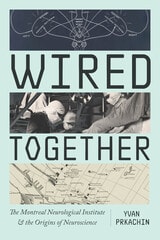
Wired Together
The Montreal Neurological Institute and the Origins of NeuroscienceYvan Prkachin
University of Chicago Press, 2026
Wired Together explains the rise of neuroscience by tracing the history of the Montreal Neurological Institute (MNI) and the men and women who transformed it into neuroscience’s most innovative and productive research site. Opened by neurosurgeon Wilder Penfield in 1934, the MNI pioneered the surgical treatment of epilepsy and transformed the operating theater into a new kind of scientific laboratory for investigating the functions of the brain. But more than that, the MNI became a crucial site for forming new interdisciplinary practices. These involved, as Yvan Prkachin puts it, wiring together new assemblies of physicians, surgeons, and scientists into a growing network that made possible the emergence of an interdisciplinary science of the brain.
Wired Together also traces how the MNI and its network of scientists spread this new interdisciplinary neuroscience to the rest of the world. Prkachin uncovers the surprising history of some of the most important neuroscientific organizations, discoveries, theories, and instruments from their beginnings in Montreal through the complex international networks of the post-war sciences. In doing so, he tells the stories of the most crucial and least understood characters from early neuroscience—such as Brenda Milner, Donald Hebb, Herbert Jasper, Molly Harrower, and David Hubel—as well as the surprising origins of scientific practices and ideas like sensory deprivation, multiple forms of memory, and artificial neural networks.