Results by title

3 books match the query 'New Bedford'
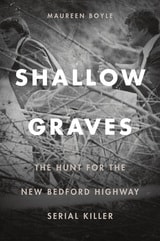
cover of Shallow Graves: The Hunt for the New Bedford Highway Serial Killer

Shallow Graves

The Hunt for the New Bedford Highway Serial Killer

Maureen Boyle

University Press of New England, 2017
Eleven women went missing over the spring and summer of 1988 in New Bedford, Massachusetts, an old fishing port known as the Whaling City, where Moby Dick, Frederick Douglass, textile mills, and heroin-dealing represent just a few of the many threads in the community’s diverse fabric. In Shallow Graves, investigative reporter Maureen Boyle tells the story of a case that has haunted New England for thirty years. The Crimes: The skeletal remains of nine of the women, aged nineteen to thirty-six, were discovered near highways around New Bedford. Some had clearly been strangled, others were so badly decomposed that police were left to guess how they had died. The Victims: All the missing women had led troubled lives of drug addiction, prostitution, and domestic violence, including Nancy Paiva, whose sister was a hard-working employee of the City of New Bedford, and Debra Greenlaw DeMello, who came from a solidly middle-class family but fell into drugs and abusive relationships. In a bizarre twist, Paiva’s clothes were found near DeMello’s body. The Investigators: Massachusetts state troopers Maryann Dill and Jose Gonsalves were the two constants in a complex cast of city, county, and state cops and prosecutors. They knew the victims, the suspects, and the drug-and-crime-riddled streets of New Bedford. They were present at the beginning of the case and they stayed to the bitter end. The Suspects: Kenneth Ponte, a New Bedford attorney and deputy sheriff with an appetite for drugs and prostitutes, landed in the investigative crosshairs from the start. He was indicted by a grand jury in the murder of one of the victims, but those charges were later dropped. Anthony DeGrazia was a loner who appeared to fit the classic serial-killer profile: horrific childhood abuse, charming, charismatic, but prone to bursts of violence. He hunted prostitutes in the city by night and served at a Catholic church by day. Which of these two was the real killer? Or was it someone else entirely? Maureen Boyle first broke the story in 1988 and stayed with it for decades. In Shallow Graves she spins a riveting narrative about the crimes, the victims, the hunt for the killers, and the search for justice, all played out against the backdrop of an increasingly impoverished community beset by drugs and crime. Drawing on more than one hundred interviews, along with police reports, first-person accounts, and field reporting both during the killings and more recently, Shallow Graves brings the reader behind the scenes of the investigation, onto the streets of the city, and into the homes of the families still hoping for answers.
[more]
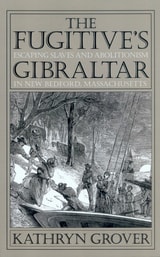
cover of The Fugitive’s Gibraltar: Escaping Slaves and Abolitionism in New Bedford, Massachusetts

The Fugitive’s Gibraltar

Escaping Slaves and Abolitionism in New Bedford, Massachusetts

Kathryn Grover

University of Massachusetts Press, 2001

The Fugitive's Gibraltar is a richly researched work of social and cultural history that examines the city of New Bedford, Massachusetts as one of the most important and welcoming refuges for freedom-seeking enslaved people in antebellum America. The book's title derives from the phrase used by Frederick Douglass—himself among the most famous of New Bedford's many fugitive residents—to describe the city's reputation as a place of relative safety and freedom for Black Americans fleeing enslavement in the South.

Grover draws on an extraordinary breadth of primary sources to reconstruct the lives of fugitive slaves who came to New Bedford before the Civil War, as well as the city's larger African American community and the white and Black abolitionists who worked alongside them. The book explores how New Bedford's booming whaling economy—which depended heavily on Black labor and offered Black sailors wages equal to those of white sailors—created economic and social conditions unusually hospitable to free and freedom-seeking Black people. New Bedford's maritime character is thus deeply intertwined with its abolitionist identity.

The work examines the networks of people and organizations that sheltered, employed, and advocated for fugitives; traces individual stories of escape and resettlement; and situates New Bedford's experience within the broader national struggle over slavery, the Fugitive Slave Acts, and the abolitionist movement. Notable figures discussed include Frederick Douglass and Henry "Box" Brown. The book also sheds light on the daily lives, livelihoods, and community institutions of New Bedford's African American population—their churches, mutual aid societies, and social networks—providing a nuanced portrait of Black life in a northern city during this turbulent era.

[more]
cover of Went to the Devil: A Yankee Whaler in the Slave Trade

Went to the Devil

A Yankee Whaler in the Slave Trade

Anthony J. Connors

University of Massachusetts Press, 2019

Edward Davoll was a respected New Bedford whaling captain in an industry at its peak in the 1850s. But mid-career, disillusioned with whaling, desperately lonely at sea, and experiencing financial problems, he turned to the slave trade, with disastrous results. Why would a man of good reputation, in a city known for its racial tolerance and Quaker-inspired abolitionism, risk engagement with this morally repugnant industry?

In this riveting biography, Anthony J. Connors explores this question by detailing not only the troubled, adventurous life of this man but also the turbulent times in which he lived. Set in an era of social and political fragmentation and impending civil war, when changes in maritime law and the economics of whaling emboldened slaving agents to target captains and their vessels for the illicit trade, Davoll's story reveals the deadly combination of greed and racial antipathy that encouraged otherwise principled Americans to participate in the African slave trade.
[more]