Results by title
26 books match the query 'New Hampshire'
A Writer Reforms (the Teaching of) Writing
Donald Murray and the Writing Process Movement, 1963–1987Michael J. Michaud
University Press of Colorado, 2024
American Intelligence
Small-Town News and Political Culture in Federalist New HampshireBen P. Lafferty
University of Massachusetts Press, 2020
Taking up the New Hampshire newspaper industry as its case study, American Intelligence unpacks the ways in which an unprecedented quantity of printed material was gathered, distributed, marketed, and consumed, as well as the strong influence that it had on the shaping of the American political imagination. Ben P. Lafferty also considers the lives of the printers themselves and asks why so many men chose to pursue such a fraught and turbulent profession. This snapshot resonates with the contemporary media-saturated and politically chaotic age.

American Sweepstakes
How One Small State Bucked the Church, the Feds, and the Mob to Usher in the Lottery AgeKevin Flynn
University Press of New England, 2015
Bad Blood
Freedom and Death in the White MountainsCasey Sherman
University Press of New England, 2012

Birdwatching in New Hampshire
Eric A. Masterson
University Press of New England, 2013
Black Portsmouth
Three Centuries of African-American HeritageMark J. Sammons
University of New Hampshire Press, 2004
Few people think of a rich Black heritage when they think of New England. In the pioneering book Black Portsmouth, Mark J. Sammons and Valerie Cunningham celebrate it, guiding the reader through more than three centuries of New England and Portsmouth social, political, economic, and cultural history as well as scores of personal and site-specific stories.
Here, we meet such Africans as the likely negro boys and girls from Gambia, who debarked at Portsmouth from a slave ship in 1758, and Prince Whipple, who fought in the American Revolution. We learn about their descendants, including the performer Richard Potter and John Tate of the People's Baptist Church, who overcame the tragedies and challenges of their ancestors' enslavement and subsequent marginalization to build communities and families, found institutions, and contribute to their city, region, state, and nation in many capacities. Individual entries speak to broader issues—the anti-slavery movement, American religion, and foodways, for example. We also learn about the extant historical sites important to Black Portsmouth—including the surprise revelation of an African burial ground in October 2003—as well as the extraordinary efforts being made to preserve remnants of the city's early Black heritage.
Colonial New Hampshire
A HistoryJere R. Daniell
University Press of New England, 2015
From the Mountains to the Sea
Protecting Nature in Postwar New HampshireKimberly A. Jarvis
University of Massachusetts Press, 2020
Shaped by New Hampshire's unique conservation focus on both resource use and preservation that developed during the first years of the twentieth century, as well as on the tradition of home rule in the state, the outcome of each campaign relied on the insight into, appreciation for, and dedication to protecting the historic and aesthetic values of these three places.

In the Evil Day
Violence Comes to One Small TownRichard Adams Carey
University Press of New England, 2015
Integrated Landscaping
Following Nature’s LeadLauren Chase-Rowell
University of New Hampshire Press, 2012
Most landscape manuals describe a linear sequence of processes: design, plant selection, installation, and ongoing maintenance. Integrated Landscaping is different. It uses natural ecosystems as models, taking a nonlinear, holistic approach that addresses these processes simultaneously. Integrated Landscaping treats each site as a system of plant and animal communities, considering their interrelationships with each other and their environment.
Integrated Landscaping: Following Nature's Lead is a valuable resource for anyone concerned with helping to shape the landscape we all share. When we see ourselves as part of the whole, we can see that what we do in places where we live, work, and play has a ripple effect far beyond the space each of us calls home.

Jane Kenyon
The Making of a PoetDana Greene
University of Illinois Press, 2023
Pleasure-loving, sarcastic, stubborn, determined, erotic, deeply sad--Jane Kenyon’s complexity and contradictions found expression in luminous poems that continue to attract a passionate following. Dana Greene draws on a wealth of personal correspondence and other newly available materials to delve into the origins, achievement, and legacy of Kenyon’s poetry and separate the artist’s life story from that of her husband, the award-winning poet Donald Hall.
Impacted by relatives’ depression during her isolated childhood, Kenyon found poetry at college, where writers like Robert Bly encouraged her development. Her graduate school marriage to the middle-aged Hall and subsequent move to New Hampshire had an enormous impact on her life, moods, and creativity. Immersed in poetry, Kenyon wrote about women’s lives, nature, death, mystical experiences, and melancholy--becoming, in her own words, an “advocate of the inner life.” Her breakthrough in the 1980s brought acclaim as “a born poet” and appearances in the New Yorker and elsewhere. Yet her ongoing success and artistic growth exacerbated strains in her marriage and failed to stave off depressive episodes that sometimes left her non-functional. Refusing to live out the stereotype of the mad woman poet, Kenyon sought treatment and confronted her illness in her work and in public while redoubling her personal dedication to finding pleasure in every fleeting moment. Prestigious fellowships, high-profile events, residencies, and media interviews had propelled her career to new heights when leukemia cut her life short and left her husband the loving but flawed curator of her memory and legacy.
Revelatory and insightful, Jane Kenyon offers the first full-length biography of the elusive poet and the unquiet life that shaped her art.
Migrants and City-Making
Dispossession, Displacement, and Urban RegenerationAyse Caglar and Nina Glick Schiller
Duke University Press, 2018
North Country Captives
Selected Narratives of Indian Captivity from Vermont and New HampshireEdited by Colin G. Calloway
University Press of New England, 1992

Orozco's American Epic
Myth, History, and the Melancholy of RaceMary K. Coffey
Duke University Press, 2020
Stark Decency
German Prisoners of War in a New England VillageAllen V. Koop
Dartmouth College Press, 1988

The Archeology of New Hampshire
Exploring 10,000 Years in the Granite StateDavid Starbuck
University of New Hampshire Press, 2006
Several states already boast volumes showcasing their archeological history, but not New Hampshire—until now. David R. Starbuck's volume fills that void. Going beyond standard state guides that focus primarily on prehistoric sites, Starbuck also devotes equal time to historic, industrial, and nautical sites. This approach reflects the thinking of most contemporary archeologists who conduct research at a diverse range of sites.
A veteran of thirty years of field research throughout the Granite State, Starbuck revisits some of his own sites, including excavations at the New England Glassworks in Temple, two prehistoric sites on the Merrimack River, the Joseph Hazeltine pottery workshop outside Concord, the Governor Wentworth Estate in Wolfeboro, and his own long-term survey and excavation project at Canterbury Shaker Village. At the same time, though, Starbuck includes the work of other contemporary New Hampshire archeologists, representative sites of “old-timers” whose digs preceded his arrival, and the investigations of avocational diggers.
Starbuck's introduction offers an anecdotal history of archeological research in New Hampshire through the people who shaped it. Part I discusses discoveries that predate white settlement: the Paleo-Indian Period; the Archaic Period; and the Woodland Period. Part II moves from the seventeenth century to the present. Chapters include historical archeology (forts, farms, potters, Shakers); industrial archeology (mills, factories, railroads, dams, and bridges); and nautical archeology (discoveries in the state's lakes and on the seacoast).
In addition to summarizing some of the more interesting finds, Starbuck includes stories about archeologists and the techniques they have used to glean information from the past. Overall, he provides a lively account of what it is like to practice archeology in a small but dynamic New England state.
The Fires of New England
A Story of Protest and Rebellion in Antebellum AmericaEric J. Morser
University of Massachusetts Press, 2017
Few people embraced the manifesto and its radical message. Nonetheless, as Eric J. Morser illustrates in this eloquently written and deeply researched book, the address matters because it reveals how commercial, cultural, political, and social changes were remaking the lives of the men who drafted and shared it in the 1830s. Using an imaginative range of sources, Morser artfully reconstructs their moving personal tales and locates them in a grander historical context. By doing so, he demonstrates that even seemingly small stories from antebellum America can help us understand the rich complexities of the era.
The First Primary
New Hampshire's Outsize Role in Presidential NominationsDavid W. Moore
University of New Hampshire Press, 2015
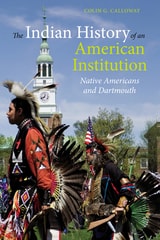
The Indian History of an American Institution
Native Americans and DartmouthColin G. Calloway
Dartmouth College Press, 2010
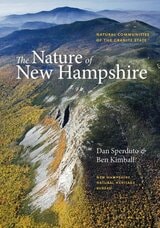
The Nature of New Hampshire
Natural Communities of the Granite StateDan Sperduto
University of New Hampshire Press, 2011
With gorgeous photographs, informative text, and recommended places to visit, The Nature of New Hampshire provides an important common language for conservation planning and informed land stewardship. Whether used as a field guide or an at-home resource, this book will help readers reconnect with their surroundings, and understand the places they value.
The New Hiking the Monadnock Region
44 Nature Walks and Day-Hikes in the Heart of New EnglandJoe Adamowicz
University Press of New England, 2007
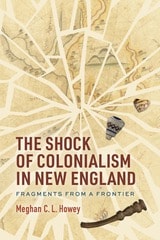
The Shock of Colonialism in New England
Fragments from a FrontierMeghan C. L. Howey
University of Alabama Press, 2025
Explores the untold impacts of colonialism in New England through diverse colonist lives, Indigenous encounters, and environmental legacies.
In The Shock of Colonialism in New England, archaeologist Meghan C. L. Howey uses excavations in the seventeenth-century colonial frontier of the Great Bay Estuary/P8bagok in today’s New Hampshire to trace the connection between European global colonialism and the planetary climate crises. Howey shows how this landscape holds forgotten stories of what it meant to live through the shock of colonialism.
These stories reveal an unexpected diversity and dynamism among English colonists, multifaceted encounters with Indigenous peoples, and lasting environmental damage from labor-intensive industries. Early Euro-American maps and stunning archaeological finds, such as a broken pickaxe embedded in a hearth, and a historical marker for the Oyster River “Massacre” of 1694 complicate our limited views of a shared past.
The reality of English colonialism in the dispossession of Indigenous lands and its wake is not commemorated. Howey’s work is a powerful corrective that traces the rise of intergenerational colonial wealth made possible by land commodified as property, the increased labor required to work newly opened land, the importation of indentured Scots and enslaved Africans to provide that labor, and the resulting degradation of the natural environment. Through Howey’s insights into the stories they tell, these fragments from a frontier can help contemporary readers better understand the past as they seek a more just and sustainable future.
The Sustainable Learning Community
One University’s Journey to the FutureJohn Aber
University of New Hampshire Press, 2009
Twin States, Different Paths
The Politics of New Hampshire and VermontBrian L. Porto
University of Massachusetts Press, 2026
A cultural and policy history that explains why two neighboring states developed divergent attitudes toward government and culture
At first glance, New Hampshire and Vermont seem like mirror images. Separated only by the Connecticut River, the oft-termed “Twin States” share a common history, relatively small populations, and heavily mountainous and forested landscapes dotted with small towns. Yet despite their similarities, they have evolved strikingly different political cultures, with Vermont prizing cooperation and community and New Hampshire celebrating independence and freedom from government. Perhaps nowhere is this divergence in political visions more pronounced than in their respective state mottos: Vermont’s communal "Freedom and Unity" and New Hampshire’s libertarian “Live Free or Die.”
Twin States, Different Paths explores these contrasting political cultures. Brian Porto traces these differences back to the land itself: to the geology and geography that shaped early settlement, patterns of land use, and the distinct ways people built their communities. From these origins emerged two enduring civic philosophies—New Hampshire’s devotion to low taxes and limited government, and Vermont’s emphasis on equality and shared responsibility. Bringing historical and cultural analysis together with contemporary case studies, Porto examines how these traditions influence each state’s approach to today’s policy challenges, including affordable housing and public-school funding. The result is a clear, balanced portrait of how deeply rooted attitudes toward freedom, unity, and governance continue to shape public life in both states.
Written with scholarly rigor yet in an engaging and accessible style, Twin States, Different Paths fills a notable gap in the study of New England politics. It offers insights not only for scholars and students of political culture, history, and public policy, but also for general readers, policymakers, and residents who wish to understand how two neighbors—so similar in geography and spirit—continue to follow such different paths in defining the role of government and community.
You Had a Job for Life
Story of a Company TownJamie Sayen
University Press of New England, 2017
You Had a Job for Life
Story of a Company TownJamie Sayen
Brandeis University Press, 2023
Absentee owners. Single-minded concern for the bottom line. Friction between workers and management. Hostile takeovers at the hands of avaricious and unaccountable multinational interests. The story of America’s industrial decline is all too familiar—and yet, somehow, still hard to fathom. Jamie Sayen spent years interviewing residents of Groveton, New Hampshire, about the century-long saga of their company town. The community’s paper mill had been its economic engine since the early twentieth century. Purchased and revived by local owners in the postwar decades, the mill merged with Diamond International in 1968. It fell victim to Anglo-French financier James Goldsmith’s hostile takeover in 1982, then suffered through a series of owners with no roots in the community until its eventual demise in 2007. Drawing on conversations with scores of former mill workers, Sayen reconstructs the mill’s human history: the smells of pulp and wood, the injuries and deaths, the struggles of women for equal pay and fair treatment, and the devastating impact of global capitalism on a small New England town. This is a heartbreaking story of the decimation of industrial America.