Results by title
2 books match the query 'New Hollywood'
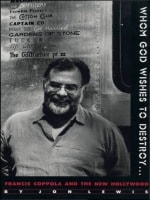
Whom God Wishes to Destroy . . .
Francis Coppola and the New HollywoodJon Lewis
Duke University Press, 1995
In March 1980 Francis Coppola purchased the dilapidated Hollywood General Studios facility with the hope and dream of creating a radically new kind of studio, one that would revolutionize filmmaking, challenge the established studio machinery, and, most importantly, allow him to make movies as he wished. With this event at the center of Whom God Wishes to Destroy, Jon Lewis offers a behind-the-scenes view of Coppola’s struggle—that of the industry’s best-known auteur—against the changing realities of the New Hollywood of the 1980s. Presenting a Hollywood history steeped in the trade news, rumor, and gossip that propel the industry, Lewis unfolds a lesson about power, ownership, and the role of the auteur in the American cinema. From before the success of The Godfather to the eventual triumph of Apocalypse Now, through the critical upheaval of the 1980s with movies like Rumble Fish, Hammett, Peggy Sue Got Married, to the 1990s and the making of Bram Stoker’s Dracula and Kenneth Branagh’s Frankenstein, Francis Coppola’s career becomes the lens through which Lewis examines the nature of making movies and doing business in Hollywood today.
[more]
Women and New Hollywood
Gender, Creative Labor, and 1970s American CinemaAaron Hunter
Rutgers University Press, 2023
The 1970s has often been hailed as a great moment for American film, as a generation of “New Hollywood” directors like Scorsese, Coppola, and Altman offered idiosyncratic visions of what movies could be. Yet the auteurist discourse hailing these directors as the sole authors of their films has obscured the important creative roles women played in the 1970s American film industry.
Women and New Hollywood revises our understanding of this important era in American film by examining the contributions that women made not only as directors, but also as screenwriters, editors, actors, producers, and critics. Including essays on film history, film texts, and the decade’s film theory and criticism, this collection showcases the rich and varied cinematic products of women’s creative labor, as well as the considerable barriers they faced. It considers both women working within and beyond the Hollywood film industry, reconceptualizing New Hollywood by bringing it into dialogue with other American cinemas of the 1970s. By valuing the many forms of creative labor involved in film production, this collection offers exciting alternatives to the auteurist model and new ways of appreciating the themes and aesthetics of 1970s American film.
Women and New Hollywood revises our understanding of this important era in American film by examining the contributions that women made not only as directors, but also as screenwriters, editors, actors, producers, and critics. Including essays on film history, film texts, and the decade’s film theory and criticism, this collection showcases the rich and varied cinematic products of women’s creative labor, as well as the considerable barriers they faced. It considers both women working within and beyond the Hollywood film industry, reconceptualizing New Hollywood by bringing it into dialogue with other American cinemas of the 1970s. By valuing the many forms of creative labor involved in film production, this collection offers exciting alternatives to the auteurist model and new ways of appreciating the themes and aesthetics of 1970s American film.
[more]