Results by title
2 books match the query 'New Horizons'
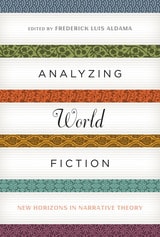
Analyzing World Fiction
New Horizons in Narrative TheoryEdited by Frederick Luis Aldama
University of Texas Press, 2011
Why are many readers drawn to stories that texture ethnic experiences and identities other than their own? How do authors such as Salman Rushdie and Maxine Hong Kingston, or filmmakers in Bollywood or Mexico City produce complex fiction that satisfies audiences worldwide? In Analyzing World Fiction, fifteen renowned luminaries use tools of narratology and insights from cognitive science and neurobiology to provide answers to these questions and more.
With essays ranging from James Phelan's "Voice, Politics, and Judgments in Their Eyes Were Watching God" and Hilary Dannenberg's "Narrating Multiculturalism in British Media: Voice and Cultural Identity in Television" to Ellen McCracken's exploration of paratextual strategies in Chicana literature, this expansive collection turns the tide on approaches to postcolonial and multicultural phenomena that tend to compress author and narrator, text and real life. Striving to celebrate the art of fiction, the voices in this anthology explore the "ingredients" that make for powerful, universally intriguing, deeply human story-weaving.
Systematically synthesizing the tools of narrative theory along with findings from the brain sciences to analyze multicultural and postcolonial film, literature, and television, the contributors pioneer new techniques for appreciating all facets of the wonder of storytelling.
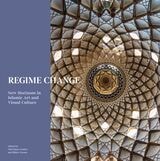
Regime Change
New Horizons in Islamic Art and Visual CultureEdited by Christiane Gruber and Bihter Esener
Gingko, 2024
The essays collected in this volume highlight some of the regimes of thought and changing trends that structure the field of Islamic art history. The authors present new research exploring the intentions of patrons, the agency of craftsmen, and their responses to previous artistic production, thereby allowing artifacts and monuments to be set within their historical, social, and artistic contexts.
In their contributions, Annabel Teh Gallop, Dmitry Bondarev, and Umberto Bongianino discuss significant changes to Qur’an production due to dynastic and political regime changes in Sumatra and the Malay Peninsula, as well as in Borno and Morocco in Africa. Corinne Mühlemann looks at changes in the role and status of designers and weavers making silk in Khurasan in the post-Mongol period. Lisa Golombek, Michael Chagnon, and Farshid Emami explore Safavid art and architecture, focusing on the material and sensorial qualities of a group of tiled arch panels tiles with narrative scenes, a delicately painted vase, and the clocks of the main square of seventeenth-century Isfahan. Regime change also comes about through technological shifts, and Ulrich Marzolph and Yasemin Gencer ask how the rise of photography and new printing techniques shaped the production, exchange, and transmission of images in Iran and Turkey.