Results by title
14 books match the query 'New Millennium'

America's Demographic Tapestry
Baseline for the New MillenniumEdited by James W. Hughes and Joseph J. Seneca
Rutgers University Press, 1999
Beneath the surface of public-policy concerns that seem temporary are powerful evolutionary forces with long-term effects. One of the most important of these is the profound demographic change taking place in America-change which has extraordinary social and economic consequences, and far-reaching public-policy implications for the future of the nation.
James W. Hughes and Joseph J. Seneca have assembled experts on demography, immigration, policy, and family life to explain and document both changes and prospects for changes. Contributors profile the contours of demographic change in America and identify select public-policy challenges arising from this change. They cover a wide range of demographic shifts-"baby booms" and "baby busts," rising immigration, increasing ethnic and racial diversity, the proliferation of different household configurations, economic upward mobility that stems from the information-age rather than the industrial economy, and suburban and sunbelt gains.
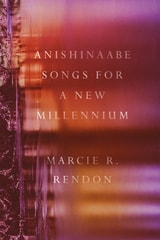
Anishinaabe Songs for a New Millennium
Marcie R. Rendon
University of Minnesota Press, 2024
Poem-songs summon the voices of Anishinaabe ancestors and sing to future generations
The ancestors that walk with us, sing us our song. When we get quiet enough, we can hear them sing and make them audible to people today. In Anishinaabe Songs for a New Millennium, Marcie R. Rendon, a member of the White Earth Nation, summons those ancestors’ songs, and so begins the dream singing for generations yet to come. “The Anishinaabe heard stories in their dream songs,” Ojibwe author Gerald Vizenor wrote, and like those stories once inscribed in pictographs on birch-bark scrolls, Rendon’s poem-songs evoke the world still unfolding around us, reflecting our place in time for future generations.
Through dream-songs and poem-songs responding to works of theater, choral music, and opera, Rendon brings memory to life, the senses to attention—to see the moonbeams blossoming on the windowsill, to feel the hold of the earth, to hear the echo of grandmother’s breath, to lie on the bones of ancestors and feel the rhythms of silence running deep. Her singing, breaking the boundaries that time would impose, carries the Anishinaabe way of life and way of seeing forward in the world.
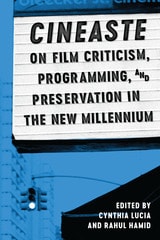
Cineaste on Film Criticism, Programming, and Preservation in the New Millennium
Edited by Cynthia Lucia and Rahul Hamid
University of Texas Press, 2017
Digital technology and the Internet have revolutionized film criticism, programming, and preservation in deeply paradoxical ways. The Internet allows almost everyone to participate in critical discourse, but many print publications and salaried positions for professional film critics have been eliminated. Digital technologies have broadened access to filmmaking capabilities, as well as making thousands of older films available on DVD and electronically. At the same time, however, fewer older films can be viewed in their original celluloid format, and newer, digitally produced films that have no “material” prototype are threatened by ever-changing servers that render them obsolete and inaccessible.
Cineaste, one of the oldest and most influential publications focusing on film, has investigated these trends through a series of symposia with the top film critics, programmers, and preservationists in the United States and beyond. This volume compiles several of these symposia: “Film Criticism in America Today” (2000), “International Film Criticism Today” (2005), “Film Criticism in the Age of the Internet” (2008), “Film Criticism: The Next Generation” (2013), “The Art of Repertory Film Exhibition and Digital Age Challenges” (2010), and “Film Preservation in the Digital Age” (2011). It also includes interviews with the late, celebrated New Yorker film critic Pauline Kael and the critic John Bloom (“Joe Bob Briggs”), as well as interviews with the programmers/curators Peter von Bagh and Mark Cousins and with the film preservationist George Feltenstein. This authoritative collection of primary-source documents will be essential reading for scholars, students, and film enthusiasts.
Composition Studies in the New Millennium
Rereading the Past, Rewriting the FutureEdited by Lynn Z. Bloom, Donald A. Daiker, and Edward M. White
Southern Illinois University Press, 2003
A collection of twenty-four essays assessing and challenging the current state of writing instruction, Composition Studies in the New Millennium: Rereading the Past, Rewriting the Future emerges from presentations given at the national Writing Program Administrators conference held at Miami University in Oxford, Ohio, in 2001. Like its acclaimed and widely-used predecessor, Composition in the Twenty-First Century: Crisis and Change, this timely collection by leading scholars in composition studies responds to concerns about the evolution and future of this field of study.
Charting new directions, the contributors grapple with seven distinct questions: What do we mean by composition studies—past, present, and future? What do and should we teach when we teach composition? Where will composition be taught, and who will teach it? What theories and philosophies will undergird our research paradigms, and what will those paradigms be? How will new technologies change composition studies? What languages will our students write, and what will they write about? What political and social issues have shaped composition studies in the past and will shape this field in the future?
In addressing these queries, the essayists approach composition studies from perspectives ranging from rhetorical to cultural, political to economic, administrative to technological; and they do so with a style and organization appropriate for composition instructors, scholars, and administrators at all levels, from teaching assistants to college presidents. The result is an invaluable vision of the future of composition studies in the new millennium.
Ethical Issues for a New Millennium
Edited by John Howie
Southern Illinois University Press, 2002
Modern advances in science and medicine bring with them an array of complex ethical dilemmas. In Ethical Issues for a New Millennium editor John Howie addresses contemporary ethical problems with eight essays from top thinkers in the field. This collection offers new and comprehensive overviews of some very tough ethical issues that will remain foremost in our minds in the years ahead. Each essay is written by a recognized authority within his or her specific field, and brings to light ethical questions rooted in ongoing philosophical debates in arenas such as human rights, the welfare state, women’s rights, genetic and gender equality, genetic equity, cloning, organ transplants, environmental ethics, insurrectionist ethics, and the erosion of moral sensibility.
These lectures where originally presented at Southern Illinois University as part of the Wayne Leys Memorial Lectures series. This collection represents the fourth volume in the series.
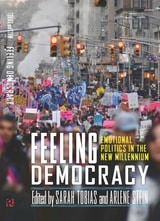
Feeling Democracy
Emotional Politics in the New MillenniumSarah Tobias
Rutgers University Press, 2024
The essays in Feeling Democracy examine how both reactionary and progressive politics are driven largely by emotional appeals to the public. The contributors in this collection cover everything from immigrants’ rights movements to white nationalist rallies to show how solidarities forged around gender, race, and sexuality become catalysts for a passionate democratic politics. Some essays draw parallels between today’s activist strategies and the use of emotion in women-led radical movements from the 1960s and 1970s, while others expand the geographic scope of the collection by considering Asian decolonial politics and Egyptian pro-democracy protests.
Incorporating scholarship from fields as varied as law, political science, philosophy, psychoanalysis, and history, Feeling Democracy considers how emotional rhetoric in politics can be a double-edged sword—often wielded by authoritarian populists who seek to undermine democracy but sometimes helping to bring about a genuine renewal of participatory democracy.
Michigan State University
The Rise of a Research University and the New Millennium, 1970-2005Douglas A. Noverr
Michigan State University Press, 2015
Through the vicissitudes of government funding and other challenges, the university has established itself as a renowned research and educational institution with a remarkably rich array of facilities, scientists, and researchers who continue to make landmark contributions to their fields. At the same time it has strived to be known for its accessibility, diversity, equality of opportunity, and antidiscrimination policies and practices. Michigan State University sheds new light on the growth of this dynamic and multifaceted institution.
Nashville in the New Millennium
Immigrant Settlement, Urban Transformation, and Social BelongingJamie Winders
Russell Sage Foundation, 2013
Out of This World
Speculative Fiction in Translation from the Cold War to the New MillenniumRachel S. Cordasco
University of Illinois Press, 2021
An informative and one-of-a-kind guide, Out of This World offers readers and scholars alike a tour of speculative fiction's new globalized era.

Spanish Cinema of the New Millennium
And the Winner Is...Thomas G. Deveny
Intellect Books, 2019
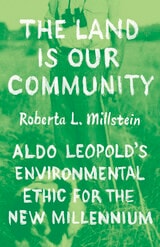
The Land Is Our Community
Aldo Leopold’s Environmental Ethic for the New MillenniumRoberta L. Millstein
University of Chicago Press, 2024
Informed by his experiences as a hunter, forester, wildlife manager, ecologist, conservationist, and professor, Aldo Leopold developed a view he called the land ethic. In a classic essay, published posthumously in A Sand County Almanac, Leopold advocated for an expansion of our ethical obligations beyond the purely human to include what he variously termed the “land community” or the “biotic community”—communities of interdependent humans, nonhuman animals, plants, soils, and waters, understood collectively. This philosophy has been extremely influential in environmental ethics as well as conservation biology and related fields.
Using an approach grounded in environmental ethics and the history and philosophy of science, Roberta L. Millstein reexamines Leopold’s land ethic in light of contemporary ecology. Despite the enormous influence of the land ethic, it has sometimes been dismissed as either empirically out of date or ethically flawed. Millstein argues that these dismissals are based on problematic readings of Leopold’s ideas. In this book, she provides new interpretations of the central concepts underlying the land ethic: interdependence, land community, and land health. She also offers a fresh take on of his argument for extending our ethics to include land communities as well as Leopold-inspired guidelines for how the land ethic can steer conservation and restoration policy.
The Strange Death of Marxism
The European Left in the New MillenniumPaul Edward Gottrfied
University of Missouri Press, 2005
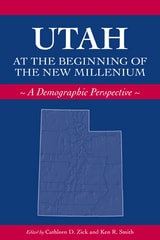
Utah at the Beginning of the New Millennium
A Demographic PerspectiveZick and Smith
University of Utah Press, 2006
Utah’s leading social scientists and population-related scholars draw on their specific areas of expertise and analyze Utah’s population using recent sources of data such as the 2000 U.S. Census. The chapters are organized into three broad topical sections: the foundations of Utah’s population (basic demographics), how the nature of the population affects our daily lives (quality of life issues), and the public policy challenges that will face Utah’s leaders (emerging issues).
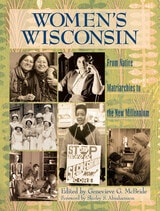
Women's Wisconsin
From Native Matriarchies to the New MillenniumEdited by Genevieve G. McBride
Wisconsin Historical Society Press, 2005
Women's Wisconsin: From Native Matriarchies to the New Millennium, a women's history anthology published on Women's Equality Day 2005, made history as the first single-source history of Wisconsin women. This unique tome features dozens of excerpts of articles as well as primary sources, such as women's letters, reminiscences, and oral histories, previously published over many decades in the Wisconsin Magazine of History and other Wisconsin Historical Society Press publications.
Editor and historian Genevieve G. McBride provides the contextual commentary and overarching analysis to make the history of Wisconsin women accessible to students, scholars, and lifelong learners.