Results by title
15 books match the query 'New South'

A Socialist Utopia in the New South
The Ruskin Colonies in Tennessee and Georgia, 1894-1901W. Fitzhugh Brundage
University of Illinois Press, 1996
This first book-length study of the Ruskin colonies shows how several hundred utopian socialists gathered as a cooperative community in Tennessee and Georgia in the late nineteenth century. The communitarians' noble but fatally flawed act of social endeavor revealed the courage and desperation they felt as they searched for alternatives to the chaotic and competitive individualism of the age of robber barons and for a viable model for a just and humane society at a time of profound uncertainty about public life in the United States.
An Old Creed for the New South
Proslavery Ideology and Historiography, 1865-1918John David Smith, With a New Preface by the Author
Southern Illinois University Press, 1985
An Old Creed for the New South:Proslavery Ideology and Historiography, 1865–1918 details the slavery debate from the Civil War through World War I. Award-winning historian John David Smith argues that African American slavery remained a salient metaphor for how Americans interpreted contemporary race relations decades after the Civil War.
Smith draws extensively on postwar articles, books, diaries, manuscripts, newspapers, and speeches to counter the belief that debates over slavery ended with emancipation. After the Civil War, Americans in both the North and the South continued to debate slavery’s merits as a labor, legal, and educational system and as a mode of racial control. The study details how white Southerners continued to tout slavery as beneficial for both races long after Confederate defeat. During Reconstruction and after Redemption, Southerners continued to refine proslavery ideas while subjecting blacks to new legal, extralegal, and social controls.
An Old Creed for the New South links pre– and post–Civil War racial thought, showing historical continuity, and treats the Black Codes and the Jim Crow laws in new ways, connecting these important racial and legal themes to intellectual and social history. Although many blacks and some whites denounced slavery as the source of the contemporary “Negro problem,” most whites, including late nineteenth-century historians, championed a “new” proslavery argument. The study also traces how historian Ulrich B. Phillips and Progressive Era scholars looked at slavery as a golden age of American race relations and shows how a broad range of African Americans, including Booker T. Washington and W. E. B. Du Bois, responded to the proslavery argument. Such ideas, Smith posits, provided a powerful racial creed for the New South.
This examination of black slavery in the American public mind—which includes the arguments of former slaves, slaveholders, Freedmen's Bureau agents, novelists, and essayists—demonstrates that proslavery ideology dominated racial thought among white southerners, and most white northerners, in the five decades following the Civil War.
Anthropologists and Indians in the New South
Edited by Rachel Bonney and J. Anthony Paredes; Foreword by Raymond D. Fogelson
University of Alabama Press, 2001
A clear assessment of the growing mutual respect and strengthening bond between modern Native Americans and the researchers who explore their past
Southern Indians have experienced much change in the last half of the 20th century. In rapid succession since World War II, they have passed through the testing field of land claims litigation begun in the 1950s, played upon or retreated from the civil rights movement of the 1960s, seen the proliferation of “wannabe” Indian groups in the 1970s, and created innovative tribal enterprises—such as high-stakes bingo and gambling casinos—in the 1980s. The Native American Graves Protection and Repatriation Act of 1990 stimulated a cultural renewal resulting in tribal museums and heritage programs and a rapprochement with their western kinsmen removed in “Old South” days.
Anthropology in the South has changed too, moving forward at the cutting edge of academic theory. This collection of essays reflects both that which has endured and that which has changed in the anthropological embrace of Indians from the New South. Beginning as an invited session at the 30th-anniversary meeting of the Southern Anthropological Society held in 1996, the collection includes papers by linguists, archaeologists, and physical anthropologists, as well as comments from Native Americans.
This broad scope of inquiry—ranging in subject from the Maya of Florida, presumed biology, and alcohol-related problems to pow-wow dancing, Mobilian linguistics, and the “lost Indian ancestor” myth—results in a volume valuable to students, professionals, and libraries. Anthropologists and Indians in the New South is a clear assessment of the growing mutual respect and strengthening bond between modern Native Americans and the researchers who explore their past.
Arkansas and the New South, 1874–1929
Carl Moneyhon
University of Arkansas Press, 1997
This study is the first published in the Histories of Arkansas, a new series that will build a complete chronological history of the state from the colonial period through modern times. Under the general editorship of noted historian Elliott West, this series will include various thematic histories as well as the chronologically arranged core volumes.
In Arkansas and the New South, 1874–1929 Carl Moneyhon examines the struggle of Arkansas’s people to enter the economic and social mainstreams of the nation in the years from the end of Reconstruction to the beginning of the Great Depression. Economic changes brought about by development of the timber industry, exploitation of the rich coal fields in the western part of the state, discovery of petroleum, and building of manufacturing industries transformed social institutions and fostered a demographic shift from rural to urban settings.
Arkansans were notably successful in bringing the New South to their state, relying on individual enterprise and activist government as they integrated more fully into the national economy and society. But by 1929 persistent problems in the still dominant agricultural sector, the onset of the depression, and heightening social tensions arrested progress and dealt the state a major economic setback that would only be overcome in the years following World War II.
Expanding upon scholarly articles that merely touch on this era in Arkansas history and delving into pertinent primary sources, Moneyhon offers not only an overall look at the state but also an explanation for the singular path it took during these momentous years.

Black Business in the New South
A Social History of the NC Mutual Life Insurance CompanyWalter B. Weare
Duke University Press, 1993

Entering the Fray
Gender, Politics, and Culture in the New SouthEdited by Jonathan Daniel Wells & Sheila R. Phipps
University of Missouri Press, 2009

Henry Bradley Plant
Gilded Age Dreams for Florida and a New SouthCanter Brown Jr.
University of Alabama Press, 2020
In this landmark biography, Canter Brown Jr. makes evident the extent of Henry Bradley Plant’s influences throughout North, Central, and South America as well as his role in the emergence of integrated transportation and a national tourism system. One of the preeminent historians of Florida, Brown brings this important but understudied figure in American history to the foreground.
Henry Bradley Plant: Gilded Age Dreams for Florida and a New South carefully examines the complicated years of adventure and activity that marked Plant’s existence, from his birth in Connecticut in 1819 to his somewhat mysterious death in New York City in 1899. Brown illuminates Plant’s vision and perspectives for the state of Florida and the country as a whole and traces many of his influences back to events from his childhood and early adulthood. The book also elaborates on Plant’s controversial Civil War relationships and his utilization of wartime earnings in the postwar era to invest in the bankrupt Southern rail lines. With the success of his businesses such as the Southern Express Company and the Tampa Bay Hotel, Plant transformed Florida into a hub for trade and tourism—traits we still recognize in the Florida of today.
This thoroughly researched biography fills important gaps in Florida’s social and economic history and sheds light on a historical figure to an extent never previously undertaken or sufficiently appreciated. Both informative and innovative, Brown’s volume will be a valuable resource for scholars and general readers interested in Southern history, business history, Civil War–era history, and transportation history.
Leaders of Their Race
Educating Black and White Women in the New SouthSarah Case
University of Illinois Press, 2017
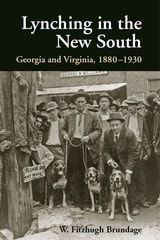
Lynching in the New South
Georgia and Virginia, 1880-1930W. Fitzhugh Brundage
University of Illinois Press, 1993
A groundbreaking study, Lynching in the New South is a classic portrait of the tradition of violence that poisoned American life.
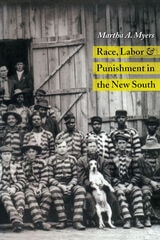
RACE LABOR PUNISHMENT IN NEW SOUTH
MARTHA A. MYERS
The Ohio State University Press, 1998
The Browning of the New South
Jennifer A. Jones
University of Chicago Press, 2019

Thomas Goode Jones
Race, Politics, and Justice in the New SouthBrent J. Aucoin
University of Alabama Press, 2016
Thomas Goode Jones of Alabama is the first comprehensive biography of a key Alabama politician and federal jurist whose life and times embody the conflicts and transformations in the Deep South between the Civil War and World War I.
A man who both represented and differed from his class, Thomas Goode Jones offers contemporary readers and scholars an ideal subject of study to understand a period of southern history that still shapes American life today. Often overshadowed by the pharaonic antebellum period, the Civil War, and the luminous heights of the civil rights movement, the deceptively placid decades at the turn of the century were, in fact, a period when southerners fiercely debated the course of the South’s future. In tracing Jones’s career, Brent J. Aucoin offers vivid accounts of the great events and trends of that pivotal period: Reconstruction, the birth of the “Solid South,” the Populist Revolt, and the establishment of racial disenfranchisement and segregation.
Born in 1844, Jones served in the Confederate army and after the war identified as a conservative “Bourbon” Democrat. He served as Alabama's governor from 1890 to 1894 and as a federal judge from 1901 until his death in 1914. As a veteran, politician, and judge, Jones embodied numerous roles in the shifting political landscape of the South.
Jones was not, however, a reflexive conformist and sometimes pursued policies at odds with his party. Jones’s rhetoric and support of African American civil rights were exceptional and earned him truculent criticism from unrepentant racist factions in his party. His support was so fearless that it inspired Booker T. Washington to recommend Jones to Republican president Theodore Roosevelt as a federal judge. On the bench, Jones garnered national attention for his efforts to end peonage and lynching, and yet he also enabled the establishment of legalized segregation in Alabama, confounding attempts easily to categorize him as an odious reactionary or fearless progressive.
Troubled Ground
A Tale of Murder, Lynching, and Reckoning in the New SouthClaude A. Clegg III
University of Illinois Press, 2010

We Ain't What We Was
Civil Rights in the New SouthFrederick M. Wirt
Duke University Press, 1997
Wirt uses multiple indicators—interviews with leaders, attitude tests of children, content analysis of newspapers, school records, and voting and job data—to record what has changed in the Deep South as a result of the 60s revolution in civil rights. Although racism continues to exist in Panola, Wirt maintains that the current generation of southerners is sharply distinguished from its predecessors, and he effectively documents the transformations in individuals and institutions. In a time of increasing popular challenges to the use of law in support of civil liberties, or the place of the federal government to effect necessary social change, this book testifies to the great changes, both public and personal, that were brought about by the strong implementation of civil rights law over thirty years ago. "We Ain’t What We Was" shows that adaptation to change was not overnight, not final, but gradual and always persistent.

Who Killed John Clayton?
Political Violence and the Emergence of the New South, 1861-1893Kenneth C. Barnes
Duke University Press, 1998
More than a description of this particular event, however, Who Killed John Clayton? traces patterns of political violence in this section of the South over a three-decade period. Using vivid courtroom-type detail, Barnes describes how violence was used to define and control the political system in the post-Reconstruction South and how this system in turn produced Jim Crow. Although white Unionists and freed blacks had joined under the banner of the Republican Party and gained the upper hand during Reconstruction, during these last decades of the nineteenth century conservative elites, first organized as the Ku Klux Klan and then as the revived Democratic Party, regained power—via such tactics as murdering political opponents, lynching blacks, and defrauding elections.
This important recounting of the struggle over political power will engage those interested in Southern and American history.