Results by title
3 books match the query 'New Understanding'
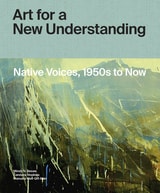
Art for a New Understanding
Native Voices, 1950s to NowMindy N. Besaw
University of Arkansas Press, 2018
Art for a New Understanding, an exhibition from Crystal Bridges Museum of American Art that opened in October 2018, seeks to radically expand and reposition the narrative of American art since 1950 by charting a history of the development of contemporary Indigenous art from the United States and Canada, beginning when artists moved from more regionally-based conversations and practices to national and international contemporary art contexts.
This fully illustrated volume includes essays by art historians and historians and reflections by the artists included in the collection. Also included are key contemporary writings—from the 1950s onward—by artists, scholars, and critics, investigating the themes of transculturalism and pan-Indian identity, traditional practices conducted in radically new ways, displacement, forced migration, shadow histories, the role of personal mythologies as a means to reimagine the future, and much more.
As both a survey of the development of Indigenous art from the 1950s to the present and a consideration of Native artists within contemporary art more broadly, Art for a New Understanding expands the definition of American art and sets the tone for future considerations of the subject. It is an essential publication for any institution or individual with an interest in contemporary Native American art, and an invaluable resource in ongoing scholarly considerations of the American contemporary art landscape at large.
[more]

Dogs
A New Understanding of Canine Origin, Behavior and EvolutionRaymond Coppinger and Lorna Coppinger
University of Chicago Press, 2002
Biologists, breeders and trainers, and champion sled dog racers, Raymond and Lorna Coppinger have more than four decades of experience with literally thousands of dogs. Offering a scientifically informed perspective on canines and their relations with humans, the Coppingers take a close look at eight different types of dogs—household, village, livestock guarding, herding, sled-pulling, pointing, retrieving, and hound. They argue that dogs did not evolve directly from wolves, nor were they trained by early humans; instead they domesticated themselves to exploit a new ecological niche: Mesolithic village dumps. Tracing the evolution of today's breeds from these village dogs, the Coppingers show how characteristic shapes and behaviors—from pointing and baying to the sleek shapes of running dogs—arise from both genetic heritage and the environments in which pups are raised.
For both dogs and humans to get the most out of each other, we need to understand and adapt to the biological needs and dispositions of our canine companions, just as they have to ours.
For both dogs and humans to get the most out of each other, we need to understand and adapt to the biological needs and dispositions of our canine companions, just as they have to ours.
[more]
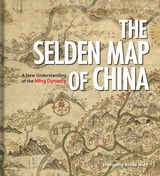
The Selden Map of China
A New Understanding of the Ming DynastyHongping Annie Nie
Bodleian Library Publishing, 2019
Dating from the seventeenth century at the height of the Ming Dynasty, the Selden Map of China reveals a country very different from popular conceptions of the time, looking not inward to the Asian landmass but outward to the sea. Discovered in the stacks of the Bodleian Library, this beautifully decorative map of China is, in fact, a seafaring chart showing Ming Dynasty trade routes. It is the earliest surviving example of Chinese merchant cartography and is evidence that Ming China was outward-looking, capitalistic, and vibrant.
Exploring the commercial aims of the Ming Dynasty, the port city of Quanzhou and its connections with the voyages of the early traveler Zheng He, this book describes the historical background of the era in which the map was used. It also includes an analysis of the skills and techniques involved in Chinese map-making and the significance of the compass bearings, scale, and ratios found on the map, all of which combine to represent a breakthrough in cartographic techniques.
The enthralling story revealed by this extraordinary artifact sheds light on the long history of China’s relationship with the sea and with the wider world.
[more]