Results by title
42 books match the query 'New York City'
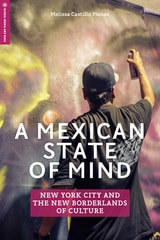
A Mexican State of Mind
New York City and the New Borderlands of CultureMelissa Castillo-Garsow
Rutgers University Press, 2020

A Sporting Time
New York City and the Rise of Modern Athletics, 1820-70Melvin L. Adelman
University of Illinois Press, 1986
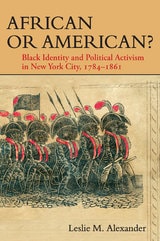
African or American?
Black Identity and Political Activism in New York City, 1784-1861Leslie M. ALexander
University of Illinois Press, 2012
During the early national and antebellum eras, black leaders in New York City confronted the tenuous nature of Northern emancipation. Despite the hope of freedom, black New Yorkers faced a series of sociopolitical issues including the persistence of Southern slavery, the threat of forced removal, racial violence, and the denial of American citizenship. Even efforts to create community space within the urban landscape, such as the African Burial Ground and Seneca Village, were eventually demolished to make way for the city's rapid development. In this illuminating history, Leslie M. Alexander chronicles the growth and development of black activism in New York from the formation of the first black organization, the African Society, in 1784 to the eve of the Civil War in 1861. In this critical period, black activists sought to formulate an effective response to their unequal freedom. Examining black newspapers, speeches, and organizational records, this study documents the creation of mutual relief, religious, and political associations, which black men and women infused with African cultural traditions and values.
As Alexander reveals, conflicts over early black political strategy foreshadowed critical ideological struggles that would bedevil the black leadership for generations to come. Initially, black leaders advocated racial uplift through a sense of communalism and connection to their African heritage. Yet by the antebellum era, black activists struggled to reconcile their African identity with a growing desire to gain American citizenship. Ultimately, this battle resulted in competing agendas; while some leaders argued that the black community should dedicate themselves to moral improvement and American citizenship, others began to consider emigrating to Africa or Haiti. In the end, the black leadership resolved to assert an American identity and to expand their mission for full equality and citizenship in the United States. This decision marked a crucial turning point in black political strategy, for it signaled a new phase in the quest for racial advancement and fostered the creation of a nascent Black Nationalism.
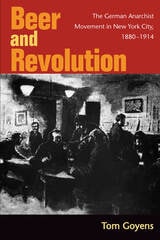
Beer and Revolution
The German Anarchist Movement in New York City, 1880-1914Tom Goyens
University of Illinois Press, 2007
Beer and Revolution examines the rollicking life and times of German immigrant anarchists in New York City from 1880 to 1914. Offering a new approach to an often misunderstood political movement, Tom Goyens puts a human face on anarchism and reveals a dedication less to bombs than to beer halls and saloons where political meetings, public lectures, discussion circles, fundraising events, and theater groups were held.
Goyens brings to life the fascinating relationship between social space and politics by examining how the intersection of political ideals, entertainment, and social activism embodied anarchism not as an abstract idea, but as a chosen lifestyle for thousands of women and men. He shows how anarchist social gatherings were themselves events of defiance and resistance that aimed at establishing anarchism as an alternative lifestyle through the combination of German working-class conviviality and a dedication to the principle that coercive authority was not only unnecessary, but actually damaging to full and free human development as well. Goyens also explores the broader circumstances in both the United States and Germany that served as catalysts for the emergence of anarchism in urban America and how anarchist activism was hampered by police surveillance, ethnic insularity, and a widening gulf between the anarchists' message and the majority of American workers.
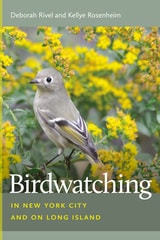
Birdwatching in New York City and on Long Island
Deborah Rivel and Kellye Rosenheim
University Press of New England, 2016
This easy-to-use guide gives seasonal information for both popular birding sites and those off the beaten path. Precise directions to the best viewing locations within the region’s diverse habitats enable birdwatchers to efficiently explore urban and wild birding hotspots. Over 500 species of birds can be seen in New York City’s five boroughs and on Long Island, one of the most densely populated and urbanized regions in North America, which also happens to be situated directly on the Atlantic Flyway. In this fragmented environment of scarce resources, birds concentrate on what’s available. This means that high numbers of birds are found in small spaces. In fact, Central Park alone attracts over 225 species of birds, which birders from around the world flock to see during spring and fall migration. Beyond Central Park, the five boroughs and Long Island have numerous wildlife refuges of extraordinary scenic beauty where resident and migratory birds inhabit forests, wetlands, grasslands, and beaches. These special places present an opportunity to see a wide array of songbirds, endangered nesting shorebirds, raptors, and an unprecedented number and variety of waterfowl. Including the latest information on the seasonal status and distribution of more than 400 species, with 39 maps and over 50 photographs, this full-color guide features information essential to planning a birding visit. It will become the go-to book for both the region’s longtime birders and those exploring the area for the first time.
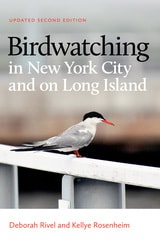
Birdwatching in New York City and on Long Island
Second EditionDeborah Rivel and Kellye Rosenheim
Brandeis University Press, 2025
Over five hundred species of birds can be seen in New York City’s five boroughs and on Long Island, one of the most densely populated and urbanized regions in North America, which also happens to be situated directly on the Atlantic Flyway. In this fragmented environment where resources are scarce, birds congregate in small spaces—Central Park alone attracts over 225 species of birds (not to mention birders from around the world who flock to the park during spring and fall migration). Beyond Central Park, the five boroughs and Long Island boast numerous wildlife refuges of extraordinary scenic beauty where resident and migratory birds inhabit forests, wetlands, grasslands, and beaches. These places present a unique opportunity to see a wide array of songbirds, endangered nesting shorebirds, raptors, and an unprecedented number and variety of waterfowl.
The fully updated edition of this easy-to-use guide provides year-round information for both popular birding sites as well as those off the beaten path. Precise directions to the best viewing locations within the region’s diverse habitats enable birdwatchers to explore urban and wild birding hot spots. Including the latest information on the seasonal status and distribution of more than four hundred species, and featuring thirty-nine maps and over fifty photographs, this full-color guide offers information essential to locals and visitors alike. This is the go-to book for both longtime birders and those exploring the area for the first time.
Black Women and Politics in New York City
Julie A. Gallagher
University of Illinois Press, 2014
Historian and human rights activist Julie A. Gallagher deftly examines how race, gender, and the structure of the state itself shape outcomes, and exposes the layers of power and discrimination at work in American society. She combines her analysis with a look at the career of Shirley Chisholm, the first black woman elected to Congress and the first to run for president on a national party ticket. In so doing, she rewrites twentieth-century women's history and the dominant narrative arcs of feminist history that hitherto ignored African American women and their accomplishments.
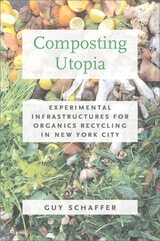
Composting Utopia
Experimental Infrastructures for Organics Recycling in New York CityGuy Schaffer
University of Massachusetts Press, 2023
New Yorkers generate millions of tons of trash annually, which, through the magic of infrastructure and one of the largest waste management systems in the world, disappears from city sidewalks each night. Under pressure from environmentalists, activists, policymakers, and industry, the New York City Department of Sanitation started exploring ways to divert organic material from the waste stream, and in 2013, launched its composting pilot program.
Drawing on three years of ethnographic fieldwork with community composters and microhaulers in New York City, alongside the rollout of the city’s curbside organics collection system, Composting Utopia describes how local, grassroots organizations intervened in the city’s waste system, enacting change and presenting an alternative vision of the composting city. As Guy Shaffer argues, movement-driven infrastructure projects develop new tools for organizing the world, give communities agency over urban design, and promote just sustainability.
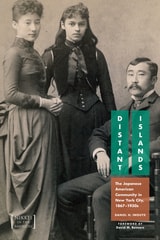
Distant Islands
The Japanese American Community in New York City, 1876-1930sDaniel H. Inouye
University Press of Colorado, 2018
The New York Japanese American community was a composite of several micro communities divided along status, class, geographic, and religious lines. Using a wealth of primary sources—oral histories, memoirs, newspapers, government documents, photographs, and more—Daniel H. Inouye tells the stories of the business and professional elites, mid-sized merchants, small business owners, working-class families, menial laborers, and students that made up these communities. The book presents new knowledge about the history of Japanese immigrants in the United States and makes a novel and persuasive argument about the primacy of class and status stratification and relatively weak ethnic cohesion and solidarity in New York City, compared to the pervading understanding of nikkei on the West Coast. While a few prior studies have identified social stratification in other nikkei communities, this book presents the first full exploration of the subject and additionally draws parallels to divisions in German American communities.
Distant Islands is a unique and nuanced historical account of an American ethnic community that reveals the common humanity of pioneering Japanese New Yorkers despite diverse socioeconomic backgrounds and life stories. It will be of interest to general readers, students, and scholars interested in Asian American studies, immigration and ethnic studies, sociology, and history.
Winner- Honorable Mention, 2018 Immigration and Ethnic History Society First Book Award
Ethnic Solidarity for Economic Survival
Korean Greengrocers in New York CityPyong Gap Min
Russell Sage Foundation, 2008
Evangelical Gotham
Religion and the Making of New York City, 1783–1860Kyle B. Roberts
University of Chicago Press, 2016

Gastrodiplomacy
Chinese Exclusion and the Ascent of Chinese Restaurants in New York City, 1870–1943Heather Ruth Lee
University of Chicago Press, 2027
Traces how Chinese migrants challenged racialization and disenfranchisement by establishing Chinese restaurants during the Gilded Age.
In Gastrodiplomacy, Heather Ruth Lee dives deep into not just the history of Chinese restaurants in early twentieth-century New York City but the delicate, inchoate, and constantly evolving dynamics among their owners, workers, and their predominantly white clientele. Lee argues that the stylistic and capitalist choices made by restaurateurs (“gastrodiplomats”) had outsized political effects on paternalistic white diners (“gastroliberals”) who patronized their establishments, particularly when it came to racial relations in cities that were growing and diversifying. Lee is not starry-eyed—satisfying white tongues and stomachs didn’t lead to an urban utopia of peace, harmony, and brotherhood—but she shows the great and subtle influences of Chinese migrants on American urban space, culture, and metropolitan identity in a defining time.
In Lee’s capable and compelling telling, the Chinese restaurant becomes a distinctive locus for the negotiation of political power, cultural influence, urban identity, and more. Gastrodiplomacy reveals much about burgeoning and increasingly cosmopolitan American cities, as well as about their dynamic relationships with the fluidities of the American character.
History of Public Health in New York City, 1625-1866
Volume 1John Duffy
Russell Sage Foundation, 1968
Hives of Sickness
Public Health and Epidemics in New York CityRosner, David
Rutgers University Press, 1995
An 1865 report on public health in New York painted a grim picture of "high brick blocks and closely-packed houses . . . literally hives of sickness" propagating epidemics of cholera, smallpox, typhoid, typhus, and yellow fever, which swept through the whole city. In this stimulating collection of essays, nine historians of American medicine explore New York's responses to its public health crises from colonial times to the present. The essays illustrate the relationship between the disease environment of New York and changes in housing, population, social conditions, and the success of medical science, linking such factors to New York's experiences with smallpox, polio, and AIDS.
The volume is essential reading for anyone interested in American public health and the social history of New York.
The contributors are Ronald Bayer, Elizabeth Blackmar, Gretchen A. Condran, Elizabeth Fee, Daniel M. Fox, Evelynn M. Hammonds, Alan M. Kraut, Judith Walzer Leavitt, and Naomi Rogers. David Rosner is a professor of history at Baruch College and The Graduate School of the City University of New York. Robert R. Macdonald is the director of the Museum of the City of New York.
A publication of the Museum of the City of New York
Choice Reviews 1995 November
This is one of a series of books focusing on the impact of disease intended to enhance the understanding of both past and present regarding reactions to periodic epidemics. Robert B. Macdonald, director of the Museum of the City of New York, which supports this series, states: "The individual and collective responses to widespread sickness are mirrors to the cultural, religious, economic, political, and social histories of cities and nations." Rosner selected eight renowned and respected individuals to describe the reactions and responses to smallpox, polio, and AIDS epidemics in New York City since 1860, and the efforts of officials and professionals to deal with the impact of disease. Essayists present disease broadly from economic, social, political, and health perspectives. Causes of epidemics include the expected and usual: thousands of immigrants pouring into the city, inadequate water and food supplies, lack of sewage disposal, unemployment leading to poverty. An unexpected cause was the avarice of real estate investors, inexorably driving up housing costs.
Highly recommended for all students of history, public health, health policy, and sociology. Upper-division undergraduate through professional. Copyright 1999 American Library Association
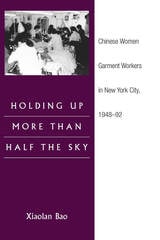
Holding Up More Than Half the Sky
Chinese Women Garment Workers in New York City, 1948-92Xiaolan Bao
University of Illinois Press, 2001
In 1982, 20,000 Chinese-American garment workers—most of them women—went on strike in New York City. Every Chinese garment industry employer in the city soon signed a union contract. The successful action reflected the ways women's changing positions within their families and within the workplace galvanized them to stand up for themselves.
Xiaolan Bao's now-classic study penetrates to the heart of Chinese American society to explain how this militancy and organized protest, seemingly so at odds with traditional Chinese female behavior, came about. Drawing on more than one hundred interviews, Bao blends the poignant personal stories of Chinese immigrant workers with the interwoven history of the garment industry and the city's Chinese community. Bao shows how the high rate of married women employed outside the home profoundly transformed family culture and with it the image and empowerment of Chinese American women. At the same time, she offers a complex and subtle discussion of the interplay of ethnic and class factors within New York's garment industry.
Passionately told and prodigiously documented, Holding Up More Than Half the Sky examines the journey of a community's women through an era of change in the home, on the shop floor, and walking the picket line.
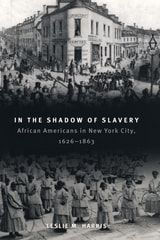
In the Shadow of Slavery
African Americans in New York City, 1626-1863Leslie M. Harris
University of Chicago Press, 2003
In 1991 in lower Manhattan, a team of construction workers made an astonishing discovery. Just two blocks from City Hall, under twenty feet of asphalt, concrete, and rubble, lay the remains of an eighteenth-century "Negro Burial Ground." Closed in 1790 and covered over by roads and buildings throughout the nineteenth and twentieth centuries, the site turned out to be the largest such find in North America, containing the remains of as many as 20,000 African Americans. The graves revealed to New Yorkers and the nation an aspect of American history long hidden: the vast number of enslaved blacks who labored to create our nation's largest city.
In the Shadow of Slavery lays bare this history of African Americans in New York City, starting with the arrival of the first slaves in 1626, moving through the turbulent years before emancipation in 1827, and culminating in one of the most terrifying displays of racism in U.S. history, the New York City Draft Riots of 1863. Drawing on extensive travel accounts, autobiographies, newspapers, literature, and organizational records, Leslie M. Harris extends beyond prior studies of racial discrimination by tracing the undeniable impact of African Americans on class, politics, and community formation and by offering vivid portraits of the lives and aspirations of countless black New Yorkers.
Written with clarity and grace, In the Shadow of Slavery is an ambitious new work that will prove indispensable to historians of the African American experience, as well as anyone interested in the history of New York City.
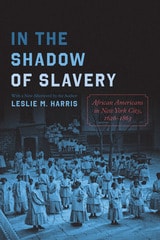
In the Shadow of Slavery
African Americans in New York City, 1626-1863Leslie M. Harris
University of Chicago Press, 2024
The popular understanding of the history of slavery in America almost entirely ignores the institution’s extensive reach in the North. But the cities of the North were built by—and became the home of—tens of thousands of enslaved African Americans, many of whom would continue to live there as free people after Emancipation.
In the Shadow of Slavery reveals the history of African Americans in the nation’s largest metropolis, New York City. Leslie M. Harris draws on travel accounts, autobiographies, newspapers, literature, and organizational records to extend prior studies of racial discrimination. She traces the undeniable impact of African Americans on class distinctions, politics, and community formation by offering vivid portraits of the lives and aspirations of countless black New Yorkers. This new edition includes an afterword by the author addressing subsequent research and the ongoing arguments over how slavery and its legacy should be taught, memorialized, and acknowledged by governments.
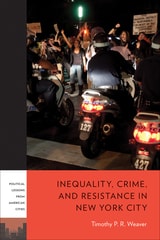
Inequality, Crime, and Resistance in New York City
Timothy P. R. Weaver
Temple University Press, 2025
Weaver brings these clashes to the fore by showing how New York City politics has been shaped by these conflicting orders. He examines the transformation of the city’s political economy in the aftermath of the 1975 fiscal crisis through neoliberal real estate development and privatization, the conservative rise of law-and-order politics in the 1970s to 1990s, and the efforts of the city’s egalitarians to respond to each of these shifts through social movements such as Occupy and Black Lives Matter.
Inequality, Crime, and Resistance in New York City belies glib assumptions about the city’s liberal character. Weaver reveals the metropolis not as a homogenous political whole, but as a site in which the victories and defeats of rival political forces change the terms of local citizenship for the millions of residents who call the city home.
In the series Political Lessons from American Cities
Landscape of Modernity
Essays on New York City, 1900-1940David Ward
Russell Sage Foundation, 1992
Media Capital
Architecture and Communications in New York CityAurora Wallace
University of Illinois Press, 2012
Money Has No Smell
The Africanization of New York CityPaul Stoller
University of Chicago Press, 2002
Blending fascinating ethnographic description with incisive social analysis, Stoller shows how these savvy West African entrepreneurs have built cohesive and effective multinational trading networks, in part through selling a simulated Africa to African Americans. These and other networks set up by the traders, along with their faith as devout Muslims, help them cope with the formidable state regulations and personal challenges they face in America. As Stoller demonstrates, the stories of these West African traders illustrate and illuminate ongoing debates about globalization, the informal economy, and the changing nature of American communities.

More Than Two to Tango
Argentine Tango Immigrants in New York CityAnahí Viladrich
University of Arizona Press, 2013
Based on a highly visible group of performers within the almost hidden population of Argentines in the United States, More than Two to Tango addresses broader questions on the understudied role of informal webs in the entertainment field. Through the voices of both early generations of immigrants and the latest wave of newcomers, Anahí Viladrich explores how the dancers, musicians, and singers utilize their complex social networks to survive as artists and immigrants. She reveals a diverse community navigating issues of identity, class, and race as they struggle with practical concerns, such as the high cost of living in New York City and affordable health care.
Argentina’s social history serves as the compelling backdrop for understanding the trajectory of tango performers, and Viladrich uses these foundations to explore their current unified front to keep tango as their own “authentic” expression. Yet social ties are no panacea for struggling immigrants. Even as More Than Two to Tango offers the notion that each person is truly conceived and transformed by their journeys around the globe, it challenges rosy portraits of Argentine tango artists by uncovering how their glamorous representations veil their difficulties to make ends meet in the global entertainment industry. In the end, the portrait of Argentine tango performers’ diverse career paths contributes to our larger understanding of who may attain the “American Dream,” and redefines what that means for tango artists.
Nursing with a Message
Public Health Demonstration Projects in New York CityD'Antonio, Patricia
Rutgers University Press, 2017
This book is also freely available online as an open access digital edition.
Download the open access ebook here.
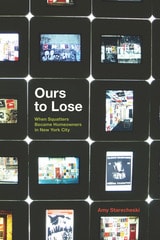
Ours to Lose
When Squatters Became Homeowners in New York CityAmy Starecheski
University of Chicago Press, 2016
Those decades of strife, however, also gave the Lower East Side something unusual: a radical movement that blended urban homesteading and European-style squatting in a way never before seen in the United States. Ours to Lose tells the oral history of that movement through a close look at a diverse group of Lower East Side squatters who occupied abandoned city-owned buildings in the 1980s, fought to keep them for decades, and eventually began a long, complicated process to turn their illegal occupancy into legal cooperative ownership. Amy Starecheski here not only tells a little-known New York story, she also shows how property shapes our sense of ourselves as social beings and explores the ethics of homeownership and debt in post-recession America.
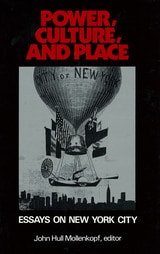
Power, Culture and Place
Essays on New York CityJohn H. Mollenkopf
Russell Sage Foundation, 1988
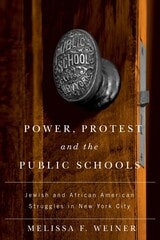
Power, Protest, and the Public Schools
Jewish and African American Struggles in New York CityMelissa F. Weiner
Rutgers University Press, 2012
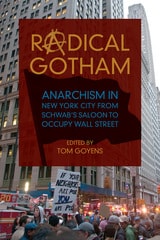
Radical Gotham
Anarchism in New York City from Schwab's Saloon to Occupy Wall StreetEdited by Tom Goyens
University of Illinois Press, 2017
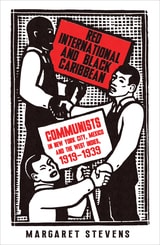
Red International and Black Caribbean
Communists in New York City, Mexico and the West Indies, 1919-1939Margaret Stevens
Pluto Press, 2017
Challenging dominant accounts, Red International and Black Caribbean debunks the “great men” narrative, emphasizes the role of women in their capacity as laborers, and paints the true struggles of black peasants and workers in Communist parties.
Reinventing Care
Assisted Living in New York CityDavid Barton Smith
Vanderbilt University Press, 2003
In Reinventing Care, David Barton Smith offers brilliant insights into those questions by examining the realities of assisted living in New York City. Encompassing the largest, most concentrated population of elderly in the United States, New York spends more per person caring for its seniors than any other urban center. Yet, while the size of the city's care system boggles the mind, it nevertheless contains the same elements that exist in other metropolitan areas and thus provides valuable lessons for the nation as a whole.
Smith's study draws on twenty-five years of research, including hundreds of interviews and visits to representative facilities. He provides a succinct overview of how care is presently organized for New York's aging population and traces the history of the system up to the present. Among the key issues he addresses are the role of market forces and government regulation, the impact of class differences on access to quality care, and the ways in which perceptions of community affect the creation and management of assisted living programs. At the heart of the book are ten fascinating case studies, half of them focused on private-pay facilities and the other half on public-pay institutions.
While finding that the actualities of assisted living rarely match the rhetoric of its proponents, Smith sees much to admire in its goals. He suggests tactics and strategies--such as promoting family- and community-based models of assisted living and adopting a standard of licensure for certain facilities--that could point the way to a better future.
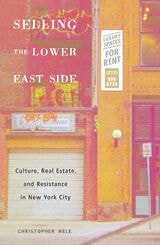
Selling The Lower East
Culture, Real Estate, and Resistance in New York CityChristopher Mele
University of Minnesota Press, 2000
Tracks the shifting views of the Lower East Side from ghetto to desirable urban niche.
The Lower East Side of Manhattan is rich in stories-of poor immigrants who flocked there in the late nineteenth and early twentieth centuries; of beatniks, hippies, and artists who peopled it mid-century; and of the real estate developers and politicians who have always shaped what is now termed the "East Village." Today, the musical Rent plays on Broadway to a mostly white and suburban audience, MTV exploits the neighborhood’s newly trendy squalor in a film promotion, and on the Internet a cyber soap opera and travel-related Web pages lure members of the middle class to enjoy a commodified and sanitized version of the neighborhood.
In this sweeping account, Christopher Mele analyzes the political and cultural forces that have influenced the development of this distinctive community. He describes late nineteenth-century notions of the Lower East Side as a place of entrenched poverty, ethnic plurality, political activism, and "low" culture that elicited feelings of revulsion and fear among the city’s elite and middle classes. The resulting-and ongoing-struggle between government and residents over affordable and decent housing has in turn affected real estate practices and urban development policies. Selling the Lower East Side recounts the resistance tactics used by community residents, as well as the impulse on the part of some to perpetuate the image of the neighborhood as dangerous, romantic, and bohemian, clinging to the marginality that has been central to the identity of the East Village and subverting attempts to portray it as "new and improved." Ironically, this very image of urban grittiness has been appropriated by a cultural marketplace hungry for new fodder. Mele explores the ways that developers, media executives, and others have coopted the area’s characteristics-analyzing the East Village as a "style provider" where what is being marketed is "difference." The result is a visionary look at how political and economic actions transform neighborhoods and at what happens when a neighborhood is what is being "consumed."A comprehensive web site for Selling the Lower East Side can be found at www.upress.umn.edu/sles.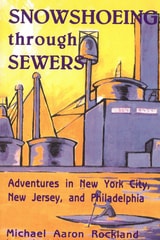
Snowshoeing Through Sewers
Adventures in New York City, New Jersey, and PhiladelphiaMichael Aaron Rockland
Rutgers University Press, 2008
In these ten alternately poetic and comic tales of adventure in the New York/Philadelphia corridor, the most densely populated chunk of America, Rockland walks and bikes areas meant only for cars and paddles through waters capable of dissolving canoes. He hikes the length of New York's Broadway, camps in New York City, treks across Philadelphia, pedals among the tractor trailers of Route 1 in New Jersey, and paddles around Manhattan and through the dark tunnels under Trenton.
Whereas Henry David Thoreau built his cabin on Walden Pond to get out of town, for Rockland, the challenge is to head into town. As he writes, "in the late twentieth century, a weed and trash-filled city lot . . . may be a better place than the wilderness to contemplate one's relationship to nature."
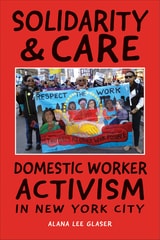
Solidarity & Care
Domestic Worker Activism in New York CityAlana Lee Glaser
Temple University Press, 2023
Solidarity & Care examines the political mobilization of diverse care workers who joined together and supported one another through education, protests, lobbying, and storytelling. Domestic work activists used narrative and emotional appeals to build a coalition of religious communities, employers of domestic workers, labor union members, and politicians to first pass and then to enforce the new law.
Through oral history interviews, as well as ethnographic observation during DWU meetings and protest actions, Glaser chronicles how these women fought (and continue to fight) to improve working conditions. She also illustrates how they endure racism, punitive immigration laws, on-the-job indignities, and unemployment that can result in eviction and food insecurity.
The lessons from Solidarity & Care along with the DWU’s precedent-setting legislative success have applications to workers across industries.
All royalties will go directly to the Domestic Workers United
Sounding Salsa
Performing Latin Music in New York CityChristopher Washburne
Temple University Press, 2008
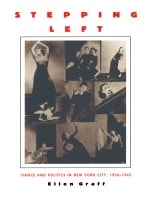
Stepping Left
Dance and Politics in New York City, 1928–1942Ellen Graff
Duke University Press, 1997
From Communist Party pageants to union hall performances to benefits for the Spanish Civil War, Graff documents the passionate involvement of American dancers in the political and social controversies that raged throughout the Depression era. Dancers formed collectives and experimented with collaborative methods of composition at the same time that they were marching in May Day parades, demonstrating for workers’ rights, and protesting the rise of fascism in Europe. Graff records the explosion of choreographic activity that accompanied this lively period—when modern dance was trying to establish legitimacy and its own audience. Stepping Left restores a missing legacy to the history of American dance, a vibrant moment that was supressed in the McCarthy era and almost lost to memory. Revisiting debates among writers and dancers about the place of political content and ethnicity in new dance forms, Stepping Left is a landmark work of dance history.
Surviving the Americas
Garifuna Persistence from Nicaragua to New York CitySerena Cosgrove, José Idiáquez, Leonard Joseph Bent, and Andrew Gorvetzian
University of Minnesota Press, 2020
In Surviving the Americas, Serena Cosgrove, José Idiáquez, Leonard Joseph Bent, and Andrew Gorvetzian shed light on what it means to be Garifuna today, particularly in Nicaragua. Their research includes over nine months of fieldwork in Garifuna communities in the Pearl Lagoon on the southern Caribbean coast of Nicaragua and in New York City. The resulting ethnography illustrates the unique social issues of the Nicaraguan Garifuna and how their culture, traditions, and reverence for their ancestors continues to persist.
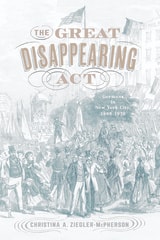
The Great Disappearing Act
Germans in New York City, 1880-1930Christina A. Ziegler-McPherson
Rutgers University Press, 2022
This study examines these questions in relation to the German immigrant community in New York City between 1880-1930, and seeks to understand how German-American New Yorkers assimilated into the larger American society in the early twentieth century.
By the turn of the twentieth century, New York City was one of the largest German-speaking cities in the world and was home to the largest German community in the United States. This community was socio-economically diverse and increasingly geographically dispersed, as upwardly mobile second and third generation German Americans began moving out of the Lower East Side, the location of America’s first Kleindeutschland (Little Germany), uptown to Yorkville and other neighborhoods. New York’s German American community was already in transition, geographically, socio-economically, and culturally, when the anti-German/One Hundred Percent Americanism of World War I erupted in 1917.
This book examines the structure of New York City’s German community in terms of its maturity, geographic dispersal from the Lower East Side to other neighborhoods, and its ultimate assimilation to the point of invisibility in the 1920s. It argues that when confronted with the anti-German feelings of World War I, German immigrants and German Americans hid their culture – especially their language and their institutions – behind closed doors and sought to make themselves invisible while still existing as a German community.
But becoming invisible did not mean being absorbed into an Anglo-American English-speaking culture and society. Instead, German Americans adopted visible behaviors of a new, more pluralistic American culture that they themselves had helped to create, although by no means dominated. Just as the meaning of “German” changed in this period, so did the meaning of “American” change as well, due to nearly 100 years of German immigration.
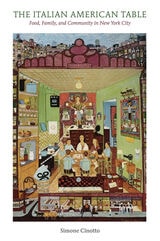
The Italian American Table
Food, Family, and Community in New York CitySimone Cinotto
University of Illinois Press, 2013
Looking at the historic Italian American community of East Harlem in the 1920s and 30s, Simone Cinotto recreates the bustling world of Italian life in New York City and demonstrates how food was at the center of the lives of immigrants and their children. From generational conflicts resolved around the family table to a vibrant food-based economy of ethnic producers, importers, and restaurateurs, food was essential to the creation of an Italian American identity. Italian American foods offered not only sustenance but also powerful narratives of community and difference, tradition and innovation as immigrants made their way through a city divided by class conflict, ethnic hostility, and racialized inequalities.
The Menace of Prosperity
New York City and the Struggle for Economic Development, 1865–1981Daniel Wortel-London
University of Chicago Press, 2025
Many local policymakers make decisions based on a deep-seated belief: what’s good for the rich is good for cities. Convinced that local finances depend on attracting wealthy firms and residents, municipal governments lavish public subsidies on their behalf. Whatever form this strategy takes—tax-exempt apartments, corporate incentives, debt-financed mega projects—its rationale remains consistent and assumed to be true. But this wasn’t always the case. Between the 1870s and the 1970s, a wide range of activists, citizens, and intellectuals in New York City connected local fiscal crises to the greed and waste of the rich. These figures saw other routes to development, possibilities rooted in alternate ideas about what was fiscally viable.
In The Menace of Prosperity, Daniel Wortel-London argues that urban economics and politics are shaped by what he terms the “fiscal imagination” of policymakers, activists, advocates, and other figures. His survey of New York City during a period of explosive growth shows how residents went beyond the limits of redistributive liberalism to imagine how their communities could become economically viable without the largesse of the wealthy. Their strategies—which included cooperatives, public housing, land-value taxation, public utilities, and more—centered the needs and capabilities of ordinary residents as the basis for local economies that were both prosperous and just.
Overturning stale axioms about economic policy, The Menace of Prosperity shows that not all growth is productive for cities. Wortel-London’s ambitious history demonstrates the range of options we’ve abandoned and hints at the economic frameworks we could still realize—and the more democratic cities that might result.
The Menace of Prosperity
New York City and the Struggle for Economic Development, 1865–1981Daniel Wortel-London
University of Chicago Press, 2025
Upends entrenched thinking about cities, demonstrating how urban economies are defined—or constrained—by the fiscal imagination of policymakers, activists, and residents.
Many local policymakers make decisions based on a deep-seated belief: what’s good for the rich is good for cities. Convinced that local finances depend on attracting wealthy firms and residents, municipal governments lavish public subsidies on their behalf. Whatever form this strategy takes—tax-exempt apartments, corporate incentives, debt-financed mega projects—its rationale remains consistent and assumed to be true. But this wasn’t always the case. Between the 1870s and the 1970s, a wide range of activists, citizens, and intellectuals in New York City connected local fiscal crises to the greed and waste of the rich. These figures saw other routes to development, possibilities rooted in alternate ideas about what was fiscally viable.
In The Menace of Prosperity, Daniel Wortel-London argues that urban economics and politics are shaped by what he terms the “fiscal imagination” of policymakers, activists, advocates, and other figures. His survey of New York City during a period of explosive growth shows how residents went beyond the limits of redistributive liberalism to imagine how their communities could become economically viable without the largesse of the wealthy. Their strategies—which included cooperatives, public housing, land-value taxation, public utilities, and more—centered the needs and capabilities of ordinary residents as the basis for local economies that were both prosperous and just.
Overturning stale axioms about economic policy, The Menace of Prosperity shows that not all growth is productive for cities. Wortel-London’s ambitious history demonstrates the range of options we’ve abandoned and hints at the economic frameworks we could still realize—and the more democratic cities that might result.
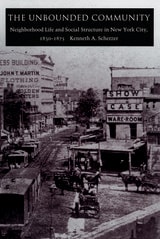
The Unbounded Community
Neighborhood Life and Social Structure in New York City, 1830–1875Kenneth A. Scherzer
Duke University Press, 1992
After a critical examination of recent historical renderings of neighborhood life, Scherzer focuses on the ecological, symbolic, and social aspects of nineteenth-century community life in New York City. Employing a wide array of sources, from census reports and church records to police blotters and brothel guides, he documents the complex composition of neighborhoods that defy simple categorization by class or ethnicity. From his account, the New York City neighborhood emerges as a community in flux, born out of the chaos of May Day, the traditional moving day. The fluid geography and heterogeneity of these neighborhoods kept most city residents from developing strong local attachments. Scherzer shows how such weak spatial consciousness, along with the fast pace of residential change, diminished the community function of the neighborhood. New Yorkers, he suggests, relied instead upon the "unbounded community," a collection of friends and social relations that extended throughout the city.
With pointed argument and weighty evidence, The Unbounded Community replaces the neighborhood of nostalgia with a broader, multifaceted conception of community life. Depicting the neighborhood in its full scope and diversity, the book will enhance future forays into urban history.
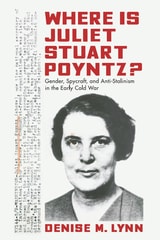
Where Is Juliet Stuart Poyntz?
Gender, Spycraft, and Anti-Stalinism in the Early Cold WarDenise Lynn
University of Massachusetts Press, 2021
In Where Is Juliet Stuart Poyntz?, Denise M. Lynn argues that Poyntz's sudden disappearance was the final straw for many on the American political left, who then abandoned Marxism and began to embrace anti-communism. In the years to follow, the left crafted narratives of her disappearance that became central to the Cold War. While scholars have thoroughly analyzed the influence of the political right in the anti-communism of this era, this captivating and compelling study is unique in exploring the influence of the political left.
Who Cleans the Park?
Public Work and Urban Governance in New York CityJohn Krinsky and Maud Simonet
University of Chicago Press, 2017
In Who Cleans the Park? John Krinsky and Maud Simonet explain that the work of maintaining parks has intersected with broader trends in welfare reform, civic engagement, criminal justice, and the rise of public-private partnerships. Welfare-to-work trainees, volunteers, unionized city workers (sometimes working outside their official job descriptions), staff of nonprofit park “conservancies,” and people sentenced to community service are just a few of the groups who routinely maintain parks. With public services no longer being provided primarily by public workers, Krinsky and Simonet argue, the nature of public work must be reevaluated. Based on four years of fieldwork in New York City, Who Cleans the Park? looks at the transformation of public parks from the ground up. Beginning with studying changes in the workplace, progressing through the public-private partnerships that help maintain the parks, and culminating in an investigation of a park’s contribution to urban real-estate values, the book unearths a new urban order based on nonprofit partnerships and a rhetoric of responsible citizenship, which at the same time promotes unpaid work, reinforces workers’ domination at the workplace, and increases the value of park-side property. Who Cleans the Park? asks difficult questions about who benefits from public work, ultimately forcing us to think anew about the way we govern ourselves, with implications well beyond the five boroughs.