Results by title
4 books match the query 'New York Intellectuals'
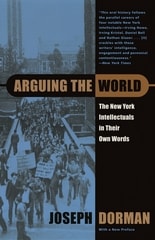
Arguing the World
The New York Intellectuals in their Own WordsJoseph Dorman
University of Chicago Press, 2001
Joseph Dorman's acclaimed documentary, Arguing the World, included stunning interviews with Irving Howe, Daniel Bell, Irving Kristol, and Nathan Glazer. Now with a new preface, Dorman converted the film into this book that includes an overview of the New York Intellectuals and a chapter on the future of the public intellectual. Expertly spliced together from the film and new material, this book gives the sense that these men are still engaged in their fiery debates that targeted everything from the Depression to McCarthyism to the rise of the New Left through the Age of Reagan.
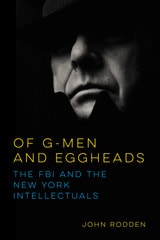
Of G-Men and Eggheads
The FBI and the New York IntellectualsJohn Rodden
University of Illinois Press, 2017
John Rodden cuts this tall tale down to its authentic pint size, refusing to indulge the public relations myth promoted by J. Edgar Hoover's FBI. In Of G-Men and Eggheads, Rodden portrays federal agents’ hilarious obsession with monitoring that ever-present threat to national security, the American literary intellectual. Drawing on government dossiers and archives, Rodden focuses on the onetime members of a radical political sect of ex-Trotskyists (barely numbering a thousand at its height), the so-called New York intellectuals. He describes the nonsensical decades-long pursuit of this group of intellectuals, especially Lionel Trilling, Dwight Macdonald, and Irving Howe. The Keystone Cops style of numerous FBI agents is documented carefully in Rodden's meticulous case studies of how Hoover's men recruited informants to snoop on the "Commies," opened their personal mail, tracked their movements, and reported on their wives and friends.
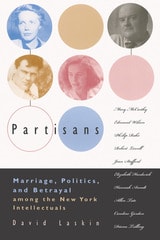
Partisans
Marriage, Politics, and Betrayal Among the New York IntellectualsDavid Laskin
University of Chicago Press, 2001
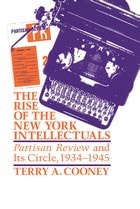
The Rise of the New York Intellectuals
Partisan Review and Its Circle, 1934–1945Terry A. Cooney
University of Wisconsin Press, 1986
Cosmopolitan visions
Terry A. Cooney traces the evolution of the Partisan Review—often considered to be the most influential little magazine ever published in America—during its formative years, giving a lucid and dispassionate view of the magazine and its luminaries who played a leading role in shaping the public discourse of American intellectuals. Included are Lionel Trilling, Philip Rahv, William Phillips, Dwight Macdonald, F. W. Dupee, Mary McCarthy, Sidney Hook, Harold Rosenberg, and Delmore Schwartz, among others.
“An excellent book, which works at each level on which it operates. It succeeds as a straightforward narrative account of the Partisan Review in the 1930s and 1940s. The magazine’s leading voices—William Phillips, Philip Rahv, Dwight MacDonald, Lionel Trilling, and all the rest—receive their due. . . . Among the themes that engage Cooney. . . . are: how they dealt with ‘modernism’ in culture and radicalism in politics, each on its own and in combination; how Jewishness played a complex and fascinating role in many of the thinkers’ lives; and, especially, how ‘cosmopolitanism’ best explains what the Partisan Review was all about.”—Robert Booth Fowler, Journal of American History