Results by title
3 books match the query 'New York University'
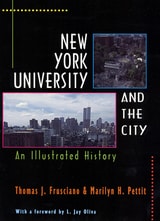
New York University and the City
An Illustrated HistoryFrusciano, Thomas J
Rutgers University Press, 1997
In New York University and the City, Thomas J. Frusciano and Marilyn H. Pettit situate the history of a unique urban university within the context of the social, political, and economic history of New York City. The authors trace the movement northward on Manhattan Island of both university and city, from the commercial hustle and bustle around City Hall, where the first classes were held in 1832, to the rural environs of Greenwich Village, and ultimately even farther north in 1894 to the undergraduate extension on the "secluded hilltop" of University Heights in the Bronx.
Vividly illustrated with both historical and contemporary images, New York University and the City explores various themes in the history of higher education and how NYU responded to changes in urban demographics, curriculum demands, and physical space during critical periods in the city's development. The relationship between university and city is further examined through extensive biographical portraits of the many historical personalities who made contributions to the development of both city and university.
The founding of New York University in 1831 is a watershed in the history of higher education in the United States. Albert Gallatin, former secretary of the treasury, led a group that proposed the creation of an institution of higher learning in New York City that would "correspond with the spirit and wants of the age and country," a nondenominational institution that would enlarge the opportunities of education for those qualified and inclined. NYU was expected to educate not only gentlemen scholars but also the sons of the great commercial metropolis. It also reflected and symbolized the aspirations of the city. By 1931, NYU was the nation's largest private university. Frusciano and Pettit chronicle the university's growth and struggles to its ultimate position as one of the most prestigious academic research institutions in the world.
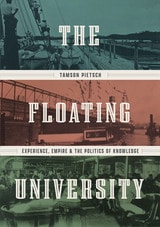
The Floating University
Experience, Empire, and the Politics of KnowledgeTamson Pietsch
University of Chicago Press, 2023
In 1926, New York University professor James E. Lough—an educational reformer with big dreams—embarked on a bold experiment he called the Floating University. Lough believed that taking five hundred American college students around the globe by ship would not only make them better citizens of the world but would demonstrate a model for responsible and productive education amid the unprecedented dangers, new technologies, and social upheavals of the post–World War I world. But the Floating University’s maiden voyage was also its last: when the ship and its passengers returned home, the project was branded a failure—the antics of students in hotel bars and port city back alleys that received worldwide press coverage were judged incompatible with educational attainment, and Lough was fired and even put under investigation by the State Department.
In her new book, Tamson Pietsch excavates a rich and meaningful picture of Lough’s grand ambition, its origins, and how it reveals an early-twentieth-century America increasingly defined both by its imperialism and the professionalization of its higher education system. As Pietsch argues, this voyage—powered by an internationalist worldview—traced the expanding tentacles of US power, even as it tried to model a new kind of experiential education. She shows that this apparent educational failure actually exposes a much larger contest over what kind of knowledge should underpin university authority, one in which direct personal experience came into conflict with academic expertise. After a journey that included stops at nearly fifty international ports and visits with figures ranging from Mussolini to Gandhi, what the students aboard the Floating University brought home was not so much knowledge of the greater world as a demonstration of their nation’s rapidly growing imperial power.
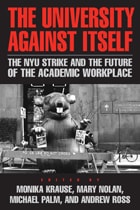
The University Against Itself
The NYU Strike and the Future of the Academic Workplaceedited by Monika Krause, Mary Nolan, Michael Palm and Andrew Ross
Temple University Press, 2008
All of the contributors were either participants in the NYU strike -- graduate students, faculty, and organizers -- or are nationally recognized as writers on academic labor. They are deeply troubled by the ramifications of corporatizing universities. Here they spell out their concerns, offering lessons from one historic strike as well as cautions about the future of all universities.
Contributors include: Stanley Aronowitz, Barbara Bowen, Andrew Cornell, Ashley Dawson, Stephen Duncombe, Steve Fletcher, Greg Grandin, Adam Green, Kitty Krupat, Gordon Lafer, Micki McGee, Sarah Nash, Cary Nelson, Matthew Osypowski, Ed Ott, Ellen Schrecker, Susan Valentine, and the editors.