Results by title
2 books match the query 'Nez Percé Indians'
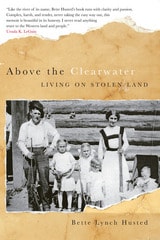
Above the Clearwater
Living on Stolen LandBette Lynch Husted
Oregon State University Press, 2004
Like her father before her, Bette Husted grew up on stolen land. The bench land above the Clearwater River in north-central Idaho had been a home for the Nez Perce Indians until the Dawes Act opened their reservation to settlement in 1895. As a child on the family homestead, Husted felt the presence of the Nez Perce: "But they were always just out of sight, like a smoky shadow behind me that I couldn't quite turn around quickly enough to catch."
Above the Clearwater chronicles her family's history on the land, revealing their joys and sorrows, their triumphs and tragedies. In a series of graceful and moving essays, Husted traces this intimate history, from her Cold War childhood to her struggles as a parent and finally to her life as a woman and teacher in the rural West. Her family's stories echo those of countless other families in the American West: the conflicts with guns, the struggles over land ownership and water rights, the isolation of women, the separations by race and class, the family secrets of mental illness and suicide.
With a powerful, poetic voice, Husted illuminates the tangled relationship between the history of a particular place and the history of the families who inhabit that place over time. As Above the Clearwater explores one family's search for a home on land taken from its original inhabitants, it quietly asks all readers to examine their own homes in the same light.
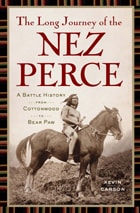
The Long Journey of the Nez Perce
A Battle History from Cottonwood to Bear PawKevin Carson
Westholme Publishing, 2011
Chiefs Joseph, Looking Glass, White Bird, and Their People Against the United States
In 1877, the U.S. Government opened the Nez Perce lands in Oregon to settlers and ordered the tribe to move to a reservation in Idaho Territory. Although reluctant to leave their homeland, the Nez Perce began the long trek eastward. A small band of young warriors vented their frustration, however, in two days of deadly attacks on settlements along the Salmon River. Realizing that the U.S. response would be overwhelming—particularly in light of Custer’s defeat the year before—the Nez Perce leaders, including Chiefs Joseph, Looking Glass, and White Bird, prepared their people for war. A U.S. Army battalion led by Civil War general Oliver O. Howard along with several other coordinated army units began pursuit in an effort to subdue the Nez Perce and forceably move them to the reservation. The Nez Perce resolved to escape to freedom in Canada. Using their intimate knowledge of the land and their native Appaloosa horses skillfully, the Nez Perce were able to successfully check and elude the much larger American force for more than three months as they wound their way across the Rocky Mountains, through the newly established Yellowstone National Park, and into Montana. The war finally ended when the exhausted Indians—men, women, and children—were surrounded in the Bear Paw Mountains. Looking Glass was shot dead, and at this point, Chief Joseph relinquished and gave his famous address of surrender to General Howard. While most of the Nez Perce ended up on a reservation, the band led by White Bird was able to make their way to Canada and freedom.
The Nez Perce War is one of the most important and emotional campaigns of the Indian Wars. It essentially closed an era in American history, and the amount of time, money, and troops required to subdue the Nez Perce brought the plight of American Indians and the reservation system to the front pages of newspapers around the world. In The Long Journey of the Nez Perce: A Battle History from Cottonwood to Bear Paw, former U.S. Army engineering officer Kevin Carson brings his intimate knowledge of the territory crossed by the Nez Perce along with his skill as a cartographer to reconstruct in detail the battles and skirmishes along the entire route of the conflict.