Results by title
2 books match the query 'Nguyen, Kim Hong'
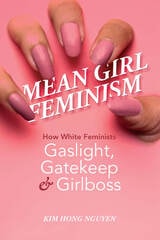
Mean Girl Feminism
How White Feminists Gaslight, Gatekeep, and GirlbossKim Hong Nguyen
University of Illinois Press, 2024
Mean girl feminism encourages girls and women to be sassy, sarcastic, and ironic as feminist performance. Yet it coopts its affect, form, and content from racial oppression and protest while aiming meanness toward people in marginalized groups.
Kim Hong Nguyen’s feminist media study examines four types of white mean girl feminism prominent in North American popular culture: the bitch, the mean girl, the power couple, and the global mother. White feminists mime the anger, disempowerment, and resistance felt by people of color and other marginalized groups. Their performance allows them to pursue and claim a special place within established power structures, present as intellectually superior, substitute nonpolitical playacting for a politics of solidarity and community, and position themselves as better, more enlightened masters than patriarchy. But, as Nguyen shows, the racialized meanness found across pop culture opens possibilities for building an intersectional feminist politics that rejects performative civility in favor of turning anger into liberation.

We Can Do Better
Feminist Manifestos for Media and CommunicationLinda Steiner
Rutgers University Press, 2025