Results by title
4 books match the query 'Niebuhr, Reinhold'
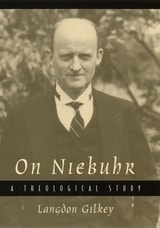
On Niebuhr
A Theological StudyLangdon Gilkey
University of Chicago Press, 2001
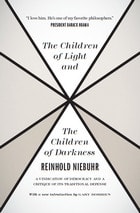
The Children of Light and the Children of Darkness
A Vindication of Democracy and a Critique of Its Traditional DefenseReinhold Niebuhr
University of Chicago Press, 2011
The Children of Light and the Children of Darkness, first published in 1944, is considered one of the most profound and relevant works by the influential theologian Reinhold Niebuhr, and certainly the fullest statement of his political philosophy. Written and first read during the prolonged, tragic world war between totalitarian and democratic forces, Niebuhr’s book took up the timely question of how democracy as a political system could best be defended.
Most proponents of democracy, Niebuhr claimed, were “children of light,” who had optimistic but naïve ideas about how society could be rid of evil and governed by enlightened reason. They needed, he believed, to absorb some of the wisdom and strength of the “children of darkness,” whose ruthless cynicism and corrupt, anti-democratic politics should otherwise be repudiated. He argued for a prudent, liberal understanding of human society that took the measure of every group’s self-interest and was chastened by a realistic understanding of the limits of power. It is in the foreword to this book that he wrote, “Man’s capacity for justice makes democracy possible; but man’s inclination to injustice makes democracy necessary.”
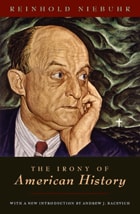
The Irony of American History
Reinhold Niebuhr
University of Chicago Press, 2008
“The supreme American theologian of the twentieth century.”—Arthur Schlesinger Jr., New York Times
“Niebuhr is important for the left today precisely because he warned about America’s tendency—including the left’s tendency—to do bad things in the name of idealism. His thought offers a much better understanding of where the Bush administration went wrong in Iraq.”—Kevin Mattson, The Good Society
“Irony provides the master key to understanding the myths and delusions that underpin American statecraft. . . . The most important book ever written on US foreign policy.”—Andrew J. Bacevich, from the Introduction
Why Niebuhr Now?
John Patrick Diggins
University of Chicago Press, 2011
Barack Obama has called him “one of my favorite philosophers.” John McCain wrote that he is “a paragon of clarity about the costs of a good war.” Andrew Sullivan has said, “We need Niebuhr now more than ever.” For a theologian who died in 1971, Reinhold Niebuhr is maintaining a remarkably high profile in the twenty-first century.
In Why Niebuhr Now? acclaimed historian John Patrick Diggins tackles the complicated question of why, at a time of great uncertainty about America’s proper role in the world, leading politicians and thinkers are turning to Niebuhr for answers. Diggins begins by clearly and carefully working through Niebuhr’s theology, which focuses less on God’s presence than his absence—and the ways that absence abets the all-too-human sin of pride. He then shows how that theology informed Niebuhr’s worldview, leading him to be at the same time a strong opponent of fascism and communism and a leading advocate for humility and caution in foreign policy.
Turning to the present, Diggins highlights what he argues is a misuse of Niebuhr’s legacy on both the right and the left: while neoconservatives distort Niebuhr’s arguments to support their call for an endless war on terror in the name of stopping evil, many liberal interventionists conveniently ignore Niebuhr’s fundamental doubts about power. Ultimately, Niebuhr’s greatest lesson is that, while it is our duty to struggle for good, we must at the same time be wary of hubris, remembering the limits of our understanding.
The final work from a distinguished writer who spent his entire career reflecting on America’s history and promise, Why Niebuhr Now? is a compact and perceptive book that will be the starting point for all future discussions of Niebuhr.