Results by title
2 books match the query 'Night riding (Racial violence)'
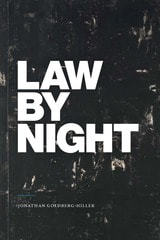
Law by Night
Jonathan Goldberg-Hiller
Duke University Press, 2023
In Law by Night Jonathan Goldberg-Hiller asks what we can learn about modern law and its authority by understanding how it operates in the dark of night. He outlines how the social experience and cultural meanings of night promote racialized and gender violence, but also make possible freedom of movement for marginalized groups that might be otherwise unavailable during the day. Examining nighttime racial violence, curfews, gun ownership, the right to sleep, and “take back the night” rallies, Goldberg-Hiller demonstrates that liberal legal doctrine lacks a theory of the night that accounts for a nocturnal politics that has historically allowed violence to persist. By locating the law’s nocturnal limits, Goldberg-Hiller enriches understandings of how the law reinforces hierarchies of race and gender and foregrounds the night’s potential to enliven a more egalitarian social life.
[more]
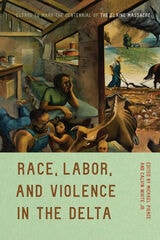
Race, Labor, and Violence in the Delta
Essays to Mark the Centennial of the Elaine MassacreMichael Pierce
University of Arkansas Press, 2022
Race, Labor, and Violence in the Delta examines the history of labor relations and racial conflict in the Mississippi Valley from the Civil War into the late twentieth century. This essay collection grew out of a conference marking the hundredth anniversary of one of the nation’s deadliest labor conflicts—the 1919 Elaine Massacre, during which white mobs ruthlessly slaughtered over two hundred African Americans across Phillips County, Arkansas, in response to a meeting of unionized Black sharecroppers. The essays here demonstrate that the brutality that unfolded in Phillips County was characteristic of the culture of race- and labor-based violence that prevailed in the century after the Civil War. They detail how Delta landowners began seeking cheap labor as soon as the slave system ended—securing a workforce by inflicting racial terror, eroding the Reconstruction Amendments in the courts, and obstructing federal financial-relief efforts. The result was a system of peonage that continued to exploit Blacks and poor whites for their labor, sometimes fatally. In response, laborers devised their own methods for sustaining themselves and their communities: forming unions, calling strikes, relocating, and occasionally operating outside the law. By shedding light on the broader context of the Elaine Massacre, Race, Labor, and Violence in the Delta reveals that the fight against white supremacy in the Delta was necessarily a fight for better working conditions, fair labor practices, and economic justice.
[more]