Results by title
7 books match the query 'Nightmare'
American Dream, American Nightmare
Fiction since 1960Kathryn Hume
University of Illinois Press, 2000
In breaking down the divisions among standard categories of race, religion, ethnicity, and gender, Hume identifies shared core concerns, values, and techniques among seemingly disparate and unconnected writers including T. Coraghessan Boyle, Ralph Ellison, Russell Banks, Gloria Naylor, Tim O'Brien, Maxine Hong Kingston, Walker Percy, N. Scott Momaday, John Updike, Toni Morrison, William Kennedy, Julia Alvarez, Thomas Pynchon, Leslie Marmon Silko, and Don DeLillo.
Hume explores fictional treatments of the slippage in the immigrant experience between America's promise and its reality. She exposes the political link between contemporary stories of lost innocence and liberalism's inadequacies. She also invites us to look at the literary challenge to scientific materialism in various searches for a spiritual dimension in life.
The expansive future promised by the American Dream has been replaced, Hume finds, by a sense of tarnished morality and a melancholy loss of faith in America's exceptionalism. American Dream, American Nightmare examines the differing critiques of America embedded in nearly a hundred novels and points to the source for recovery that appeals to many of the authors.
Imaginary Cities
A Tour of Dream Cities, Nightmare Cities, and Everywhere in BetweenDarran Anderson
University of Chicago Press, 2017
This book is about those cities. It’s neither a history of grand plans nor a literary exploration of the utopian impulse, but rather something different, hybrid, idiosyncratic. It’s a magpie’s book, full of characters and incidents and ideas drawn from cities real and imagined around the globe and throughout history. Thomas More’s allegorical island shares space with Soviet mega-planning; Marco Polo links up with James Joyce’s meticulously imagined Dublin; the medieval land of Cockaigne meets the hopeful future of Star Trek. With Darran Anderson as our guide, we find common themes and recurring dreams, tied to the seemingly ineluctable problems of our actual cities, of poverty and exclusion and waste and destruction. And that’s where Imaginary Cities becomes more than a mere—if ecstatically entertaining—intellectual exercise: for, as Anderson says, “If a city can be imagined into being, it can be re-imagined.” Every architect, philosopher, artist, writer, planner, or citizen who dreams up an imaginary city offers lessons for our real ones; harnessing those flights of hopeful fancy can help us improve the streets where we live.
Though it shares DNA with books as disparate as Calvino’s Invisible Cities and Jane Jacobs’s Death and Life of Great American Cities, there’s no other book quite like Imaginary Cities. After reading it, you’ll walk the streets of your city—real or imagined—with fresh eyes.

Nightmare in the Pacific
The World War II Saga of Artie Shaw and His Navy BandMichael Doyle
University of North Texas Press, 2025
Nightmare on Iwo Jima
A Marine in CombatPatrick F. Caruso, with a foreword by David G. Rathgeber
University of Alabama Press, 2007
Nightmare
The Underside of the Nixon YearsJ. Anthony Lukas
Ohio University Press, 1999
In July 1973, for the first time in its history, the New York Times Magazine devoted a full issue to a single article: Pulitzer Prize–winning journalist J. Anthony Lukas’s account of the Watergate story to date. Six months later, a second installment ran in another full issue. Later the Times asked him to write a third issue, on the impeachment, which never appeared because of Nixon’s intervening resignation. But all of Lukas’s painstaking reporting on Nixon’s last months in office appears here, along with added information on every aspect of Watergate.
Widely acclaimed as a major text of the Watergate saga, J. Anthony Lukas’s Nightmare is a masterwork of investigation, highlighted by in-depth character sketches of the key players. For students of history coming to these events for the first time, this book reveals in depth the particular trauma of a nation in turmoil; for those who remember, the upheaval and what was at stake are once more brought to life.
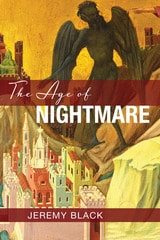
The Age of Nightmare
The Gothic and British Culture, 1750–1900Jeremy Black
St. Augustine's Press, 2022
Black's understanding of the Gothic writer is a remarkable contribution to the legacy of British literature and the novel at large. Once again, in Black thoroughness meets fidelity and the reader is overcome with his own insights into the period on the merit of Black's efforts.
In The Weight of Words Series, Black is devoted to the preservation of the memory of British literary genius, and in so doing he is carving out a niche for himself. As in the Gothic novel where landscapes give quarter to influences that seem to interact with the human fates that freely wander in, reading Black is an experience of suddenly finding oneself in possession of an education, and his allure takes a cue from the horrific Gothic tempt.
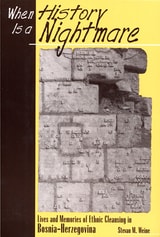
When History Is A Nightmare
Lives and Memories of Ethnic Cleansing in Bosnia-HerzegovinaStevan M. Weine, M.D.
Rutgers University Press, 1999
Weine investigates the survivors’ attempts to reconcile the contrasting, collective memories of having lived in a smoothly functioning, multiethnic society with the later memories of the ethnic atrocities. He discusses the little-known group concept of merhamet. Denoting compassion, forgiveness, and charity, merhamet was a critical cultural value for the Bosnian Muslims.
Weine also explores how ethnic cleansing was justified from the vantage point of psychiatrists who played prominent roles in instigating the horrors. He also provides personal portraits of leaders such as Jovan Raskovic and Radovan Karadzic. He concludes by describing the recovery efforts of survivors—how they work to confront the destructive nature of their memories while trying to bring about healing, both individually and collectively.