Results by title
3 books match the query 'Nightmares'
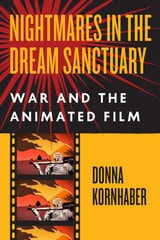
Nightmares in the Dream Sanctuary
War and the Animated FilmDonna Kornhaber
University of Chicago Press, 2019
Generation after generation, artists have turned to this most fantastical of mediums to capture real-life horrors they can express in no other way. From Chinese animators depicting the Japanese invasion of Shanghai to Bosnian animators portraying the siege of Sarajevo, from African animators documenting ethnic cleansing to South American animators reflecting on torture and civil war, from Vietnam-era protest films to the films of the French Resistance, from firsthand memories of Hiroshima to the haunting work of Holocaust survivors, the animated medium has for more than a century served as a visual repository for some of the darkest chapters in human history. It is a tradition that continues even to this day, in animated shorts made by Russian dissidents decrying the fighting in Ukraine, American soldiers returning from Iraq, or Middle Eastern artists commenting on the Israeli-Palestinian conflict, the Arab Spring, or the ongoing crisis in Yemen.
Nightmares in the Dream Sanctuary: War and the Animated Film vividly tells the story of these works and many others, covering the full history of animated film and spanning the entire globe. A rich, serious, and deeply felt work of groundbreaking media history, it is also an emotional testament to the power of art to capture the endurance of the human spirit in the face of atrocity.
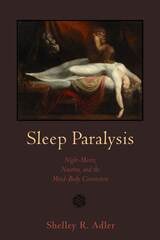
Sleep Paralysis
Night-mares, Nocebos, and the Mind-Body ConnectionAdler, Shelley R
Rutgers University Press, 2011
Shelley R. Adler's fifteen years of field and archival research focus on the ways in which night-mare attacks have been experienced and interpreted throughout history and across cultures and how, in a unique example of the effect of nocebo (placebo's evil twin), the combination of meaning and biology may result in sudden nocturnal death.
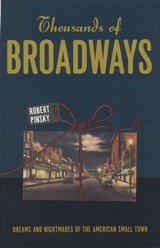
Thousands of Broadways
Dreams and Nightmares of the American Small TownRobert Pinsky
University of Chicago Press, 2009
Broadway, the main street that runs through Robert Pinsky’s home town of Long Branch, New Jersey, was once like thousands of other main streets in small towns across the country. But for Pinsky, one of America’s most admired poets and its former Poet Laureate, this Broadway is the point of departure for a lively journey through the small towns of the American imagination. Thousands of Broadways explores the dreams and nightmares of such small towns—their welcoming yet suffocating, warm yet prejudicial character during their heyday, from the early nineteenth century through World War II.
The citizens of quintessential small towns know one another extensively and even intimately, but fail to recognize the geniuses and criminal minds in their midst. Bringing the works of such figures as Mark Twain, William Faulkner, Alfred Hitchcock, Thornton Wilder, Willa Cather, and Preston Sturges to bear on this paradox, as well as reflections on his own time growing up in a small town, Pinsky explores how such imperfect knowledge shields communities from the anonymity and alienation of modern life. Along the way, he also considers how small towns can be small minded—in some cases viciously judgmental and oppressively provincial. Ultimately, Pinsky examines the uneasy regard that creative talents like him often have toward the small towns that either nurtured or thwarted their artistic impulses.
Of living in a small town, Sherwood Anderson once wrote that "the sensation is one never to be forgotten. On all sides are ghosts, not of the dead, but of living people." Passionate, lyrical, and intensely moving, Thousands of Broadways is a rich exploration of this crucial theme in American literature by one of its most distinguished figures.