Results by title
4 books match the query 'Nihilism'
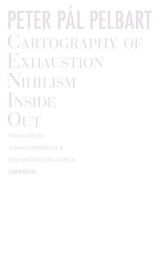
Cartography of Exhaustion
Nihilism Inside OutPeter Pál Pelbart
University of Minnesota Press, 2015
In our current landscape of communicative and connective excess, a very novel contemporary exhaustion exacerbated by our relation to the postdigital terrain is ever present. The Brazilian philosopher and schizoanalyst Peter Pál Pelbart pushes the vital question of our nihililstic age to the limits: how can one learn to be left alone, live alone, and perhaps, by way of a Deleuzian “absolute solitude,” conjure a vitality for living again and, indeed, finding something truly “worthy of saying”? Through various poetic meanderings and meditations and building on the works of Blanchot, Musil, Guattari, and Delingy, among others, Pelbart reestablishes the possibility of fighting off the exhaustion of our current state of affairs. For Pelbart, we must chart the cartography of exhaustion as if it were a sort of molecular symptomology.
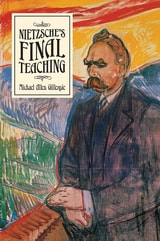
Nietzsche's Final Teaching
Michael Allen Gillespie
University of Chicago Press, 2017
Cutting against the grain of most current Nietzsche scholarship, Michael Allen Gillespie presents the thought of the late Nietzsche as Nietzsche himself intended, drawing not only on his published works but on the plans for the works he was unable to complete, which can be found throughout his notes and correspondence. Gillespie argues that the idea of the eternal recurrence transformed Nietzsche’s thinking from 1881 to 1889. It provided both the basis for his rejection of traditional metaphysics and the grounding for the new logic, ontology, theology, and anthropology he intended to create with the aim of a fundamental transformation of European civilization, a “revaluation of all values.” Nietzsche first broached the idea of the eternal recurrence in Thus Spoke Zarathustra, but its failure to gain attention or public acceptance led him to present the idea again through a series of works intended to culminate in a never-completed magnum opus. Nietzsche believed this idea would enable the redemption of humanity. At the same time, he recognized its terrifying, apocalyptic consequences, since it would also produce wars of unprecedented ferocity and destruction.
Through his careful analysis, Gillespie reveals a more radical and more dangerous Nietzsche than the humanistic or democratic Nietzsche we commonly think of today, but also a Nietzsche who was deeply at odds with the Nietzsche imagined to be the forefather of Fascism. Gillespie’s essays examine Nietzsche’s final teaching—its components and its political, philosophical, and theological significance. The book concludes with a critical examination and a reflection on its meaning for us today.
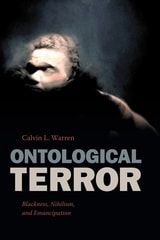
Ontological Terror
Blackness, Nihilism, and EmancipationCalvin L. Warren
Duke University Press, 2018
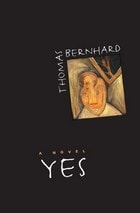
Yes
Thomas Bernhard
University of Chicago Press, 1992
"Thomas Bernhard was one of the few major writers of the second half of this century."—Gabriel Josipovici, Independent
"With his death, European letters lost one of its most perceptive, uncompromising voices since the war."—Spectator
Widely acclaimed as a novelist, playwright, and poet, Thomas Bernhard (1931-89) won many of the most prestigious literary prizes of Europe, including the Austrian State Prize, the Bremen and Brüchner prizes, and Le Prix Séguier.