Results by title
2 books match the query 'Nineveh (Extinct city)'
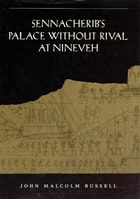
Sennacherib's "Palace without Rival" at Nineveh
John Malcolm Russell
University of Chicago Press, 1991
Best known today from biblical accounts of his exploits and ignominious end, the Assyrian king Sennacherib (704-681 B.C.) was once the ruler of all western Asia. In his capital at Nineveh, in what is now northern Iraq, he built what he called the "Palace without Rival." Though only scattered traces of this magnificent structure are visible today, contemporary written descriptions and surviving wall reliefs permit a remarkably detailed reconstruction of the appearance and significance of the palace.
An art historian trained in ancient Near East philology, archaeology, and history, John Malcolm Russell marshals these resources to investigate the meaning and political function of the palace of Sennacherib. He contends that the meaning of the monument cannot be found in images or texts alone; nor can these be divorced from architectural context. Thus his study combines discussions of the context of inscriptions in Sennacherib's palace with reconstructions of its physical appearance and analyses of the principles by which the subjects of Sennacherib's reliefs were organized to express meaning. Many of the illustrations are published here for the first time, notably drawings of palace reliefs made by nineteenth-century excavators and photographs taken in the course of the author's own excavations at Nineveh.
An art historian trained in ancient Near East philology, archaeology, and history, John Malcolm Russell marshals these resources to investigate the meaning and political function of the palace of Sennacherib. He contends that the meaning of the monument cannot be found in images or texts alone; nor can these be divorced from architectural context. Thus his study combines discussions of the context of inscriptions in Sennacherib's palace with reconstructions of its physical appearance and analyses of the principles by which the subjects of Sennacherib's reliefs were organized to express meaning. Many of the illustrations are published here for the first time, notably drawings of palace reliefs made by nineteenth-century excavators and photographs taken in the course of the author's own excavations at Nineveh.
[more]
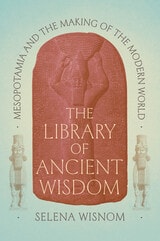
The Library of Ancient Wisdom
Mesopotamia and the Making of the Modern WorldSelena Wisnom
University of Chicago Press, 2025
A tour of an ancient library transports us to Mesopotamia, introducing us to its people, their ideas, and their humanity.
The library of Ashurbanipal, Assyria’s last great king, held an astonishing collection at the forefront of knowledge in its day, from ancient traditions in religion and literature to the latest developments in magic and medicine. When the Assyrian empire fell, the library burned to the ground, and its contents, clay tablets inscribed with cuneiform writing, lay buried for thousands of years until a team of Victorian archaeologists discovered the remnants in modern-day Iraq. The clay had baked and hardened; the very fire that consumed the library had helped its texts to survive for millennia.
In The Library of Ancient Wisdom, scholar Selena Wisnom, one of only a few hundred experts able to read cuneiform script today, guides us inside this important collection and, through its contents, brings ancient Mesopotamia and its people to life. Introducing us to Ashurbanipal and his family, scribes, astrologers, physicians, and more, Wisnom explores the library’s tablets and the details they divulge about how these ancient people thought about the world. Like us, they had concerns about job security, jealous rivalries, and profound friendships, and questions about the meaning of life. Wisnom ushers us into a world where magic was commonplace, where the gods spoke to you in dreams, and where the secrets of the universe were revealed through puns—taking us to the heart of what it means to be human.
Offering a close look at a major historical landmark as well as a readable account of the world’s earliest civilizations, The Library of Ancient Wisdom lays bare the ideas, hopes, fears, and desires that survive on humble clay.
[more]