Results by title
3 books match the query 'Nitecki, Alicia'
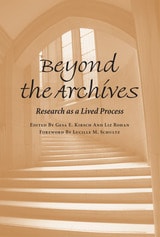
Beyond the Archives
Research as a Lived ProcessEdited by Gesa E. Kirsch and Liz Rohan Foreword by Lucille M. Schultz
Southern Illinois University Press, 2008
This collection of highly readable essays reveals that research is not restricted to library archives. When researchers pursue information and perspectives from sources beyond the archives—from existing people and places— they are often rewarded with unexpected discoveries that enrich their research and their lives.
Beyond the Archives: Research as a Lived Process presents narratives that demystify and illuminate the research process by showing how personal experiences, family history, and scholarly research intersect. Editors Gesa E. Kirsch and Liz Rohan emphasize how important it is for researchers to tap into their passions, pursuing research subjects that attract their attention with creativity and intuition without limiting themselves to traditional archival sources and research methods.
Eighteen contributors from a number of disciplines detail inspiring research opportunities that led to recently published works, while offering insights on such topics as starting and finishing research projects, using a wide range of types of sources and methods, and taking advantage of unexpected leads, chance encounters and simple clues. In addition, the narratives trace the importance of place in archival research, the parallels between the lives of research subjects and researchers, and explore archives as sites that resurrect personal, cultural, and historical memory.
Beyond the Archives sheds light on the creative, joyful, and serendipitous nature of research, addressing what attracts researchers to their subjects, as well as what inspires them to produce the most thorough, complete, and engaged scholarly work. This timely and essential volume supplements traditional-method textbooks and effectively models concrete practices of retrieving and synthesizing information by professional researchers.
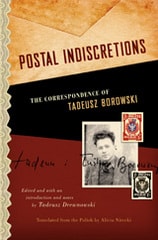
Postal Indiscretions
The Correspondence of Tadeusz BorowskiTadeusz Drewnowski
Northwestern University Press, 2007
This correspondence in this volume expands on the insights of Borowski’s published work and extends to the less-documented aftermath of the Holocaust in postwar Poland and East Germany. The volume opens with Borowski’s letter to his mother from Pawiak Prison the day after his arrest and closes with an unsigned telegram informing his parents of his suicide. The letters to and from family members, friends, and literary figures offer an indispensable picture of the world in the wake of the Nazis—and of the indelible stain that experience left upon the literature, politics, and life of Eastern Europe, in particular upon one gifted and doomed writer.
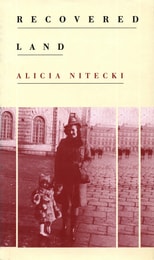
Recovered Land
Alicia Nitecki
University of Massachusetts Press, 1995
Alicia Nitecki was born in Warsaw to a Catholic family that was active in the resistance movement. Following the Nazi conquest of Poland, she and her relatives were dispersed to German prisoner-of-war, labor, and concentration camps. In this book, she revisits the places that have formed her and confronts a past that has haunted her: Warsaw during the 1944 uprising, the Black Forest village where she and the women in her family were taken as slaves in the last months of the war, and Buchenwald and Flossenbürg, the concentration camps where her grandfather was imprisoned.
Nitecki's private odyssey coincided with the collapse of communism in Poland and the reunification of Germany. These essays mark her movement from fear and rage toward fuller knowledge and reconciliation.