Results by title
2 books match the query 'Northern Chile'
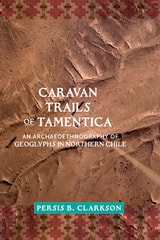
Caravan Trails of Tamentica
An Archaeoethnography of Geoglyphs in Northern ChilePersis B. Clarkson
University of Utah Press, 2025
An anthropological and narrative exploration of ancient llama caravans and their associated geoglyphs in the Chilean Atacama Desert
Caravan Trails of Tamentica is a vivid exploration of ancient Andean llama caravans and their associated geoglyphs—ground drawings—in the Chilean Atacama Desert. In retracing the paths of caravans and documenting the evidence that remains of their journeys, Persis B. Clarkson sheds new light on the possible social, astronomical, and ritual roles of these magnificent drawings.
Focusing on one segment of caravan trails from the Tamentica Oasis in the Guatacondo Quebrada to the Cerros Maní to the south, Clarkson intertwines insights on the environmental, cultural, and archaeological landscapes with narratives of her methods and personal experiences of archaeological fieldwork in the Atacama Desert. Modern and historic accounts of and by Andean caravanners lend depth and significance, while dozens of aerial photographs capture the breadth and scope of the thousands of geoglyphs in this fascinating region.
[more]
Social Media in Northern Chile
Posting the Extraordinarily OrdinaryNell Haynes
University College London, 2016
Based on 15 months of ethnographic research in the city of Alto Hospicio in northern Chile, this book describes how the residents use social media, and the consequences of this use in their daily lives. Nell Haynes argues that social media is a place where Alto Hospicio’s residents – or Hospiceños – express their feelings of marginalisation that result from living in city far from the national capital, and with a notoriously low quality of life compared to other urban areas in Chile. In actively distancing themselves from residents in cities such as Santiago, Hospiceños identify as marginalised citizens, and express a new kind of social norm. Yet Haynes finds that by contrasting their own lived experiences with those of people in metropolitan areas, Hospiceños are strengthening their own sense of community and the sense of normativity that shapes their daily lives. This exciting conclusion is illustrated by the range of social media posts about personal relationships, politics and national citizenship, particularly on Facebook.
[more]