Results by title
7 books match the query 'Nunnally, Tiina'
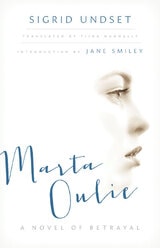
Marta Oulie
A Novel of BetrayalSigrid Undset
University of Minnesota Press, 2014
“I have been unfaithful to my husband.” Marta Oulie’s opening line scandalized Norwegian readers in 1907. And yet, Sigrid Undset had a gift for depicting modern women “sympathetically but with merciless truthfulness,” as the Swedish Academy noted in awarding her the Nobel Prize for Literature in 1928. At the time she was one of the youngest recipients and only the third woman so honored. It was Undset’s honest story of a young woman’s love life—“the immoral kind,” as she herself bluntly put it—that made her first novel an instant sensation in Norway.
Marta Oulie, written in the form of a diary, intimately documents the inner life of a young woman disappointed and constrained by the conventions of marriage as she longs for an all-consuming passion. Set in Kristiania (now Oslo) at the beginning of the twentieth century, Undset’s book is an incomparable psychological portrait of a woman whose destiny is defined by the changing mores of her day—as she descends, inevitably, into an ever-darker reckoning. Remarkably, though Undset’s other works have attracted generations of readers, Marta Oulie has never before appeared in English translation. Tiina Nunnally, whose award-winning translation of Undset’s Kristin Lavransdatter captured the author’s beautifully clear style, conveys the voice of Marta Oulie with all the stark poignancy of the original Norwegian.
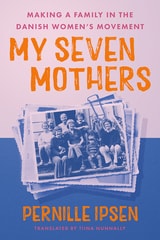
My Seven Mothers
Making a Family in the Danish Women's MovementPernille Ipsen
University of Minnesota Press, 2025
Seven women raise a child together while redefining their place in society at the beginning of the Women’s Movement in Denmark in the 1970s
On New Year’s Eve in Copenhagen in 1972, seven women had a child together: one gave birth and six others attended. They had met a year earlier at a feminist women’s camp on a small island and now, with about twenty other women’s liberationists, they occupied three dilapidated apartment buildings in the center of Copenhagen. One became the country’s first Women’s House, the nerve center of the Women’s Movement in Denmark, and the other two were women-only communal living spaces that were Pernille Ipsen’s first home. In this intimate portrait of life during the exhilarating early days of women’s liberation in Scandinavia and dramatic social change around the globe, she tells the stories of these seven women, her seven mothers.
Recounting her mothers’ history—from the passions and beliefs they shared to the political divisions over sexual identity that ultimately split them apart—Ipsen captures the individuality of each of her mothers as well as the common experiences that drew them together. As she deftly reflects the practical and emotional realities of her mothers’ women-centered life, Ipsen presents an engrossing picture of intersecting lives that, half a century ago, raised questions we still grapple with today: What is a family? Who is a woman? And who gets to decide?
A chronicle of gender, sexuality, and feminism as it was constructed, contested, and lived, My Seven Mothers is an eye-opening account of the challenges and possibilities connected with liberation and radical social change during the 1970s. In this time of fierce struggles over family, sexuality, and child-rearing, it reminds us that new worlds are always possible.
Olav Audunssøn
II. ProvidenceSigrid Undset
University of Minnesota Press, 2021
The second volume in the Nobel Prize–winning writer’s epic of medieval Norway, finely capturing Undset’s fluid, natural style in a new English translation, the first in nearly a century
As Norway moves into the fourteenth century, the kingdom continues to be racked by political turmoil and bloody family vendettas that serve as the backdrop for Sigrid Undset’s masterful story about Olav Audunssøn and Ingunn Steinfinnsdatter. Betrothed as children and raised as foster siblings, their unbridled love for each other sets in motion a series of dire events—with a legacy of betrayal, murder, and disgrace that will echo for generations. In Providence, the second of Olav Audunssøn’s four volumes, Olav settles in at his ancestral estate of Hestviken and soon brings Ingunn home as his wife. Both hope to put their troubles behind them as they start a new life together, but the crimes and shameful secrets of the past have a long reach and a tenacious hold. The consequences of sin, suspicion, and familial obligations may prove a greater threat to the pair’s happiness than even their long years of separation.
Set in a time when royalty and religion vie for power, and bloodlines and loyalties are effectively law, Providence summons a powerful picture of Northern life in the medieval era, as the Swedish Academy noted in awarding Undset the Nobel Prize. Conveying both the intimate drama of Olav and Ingunn’s marriage and the epic sweep of their story, it is at once a moving and vivid recreation of a vanished world tainted by bloodshed and haunted by sin and retribution.
As with her classic Kristin Lavransdatter, Sigrid Undset immersed herself in legal, religious, and historical writings to create in Olav Audunssøn an astoundingly authentic and compelling portrait of Norwegian life in the Middle Ages. And as in her translation of Kristin Lavransdatter, Tiina Nunnally does full justice to Undset’s fluid prose. Undset’s writing style is by turns straightforward and delicately lyrical, conveying the natural world, the complex culture, and the fraught emotional territory against which Olav’s story inexorably unfolds.
Olav Audunssøn
III. CrossroadsSigrid Undset
University of Minnesota Press, 2022
The third volume in the Nobel Prize–winning writer’s epic story of medieval Norway, finely capturing Undset’s fluid, natural style in the first English translation in nearly a century
In the early fourteenth century, Norway is a kingdom in political turmoil, struggling with opposing forces within its own borders and drawn into strife with neighboring Sweden and Denmark. Bloody family vendettas and conflicting loyalties sparked by the irrepressible passion of a boy and his foster sister (also his betrothed) have now set in motion a series of terrible consequences—with a legacy of betrayal, murder, and disgrace that will echo down through the generations. Crossroads, the third of Olav Audunssøn’s four volumes, finds Olav heartbroken by loss and further estranged from his son. To escape his grief, Olav leaves his home estate of Hestviken and agrees to serve as captain on a small merchant ship headed to London. There, separated from everything familiar to him, Olav begins a visionary journey that will send him far into the forest and deep into his soul. Questioning past decisions and future plans, Olav must grapple with his own perceptions of love and guilt, sin and penitence, vengeance and forgiveness.
Set in a time and place where royalty and religion vie for power, and bloodlines and loyalties are law, Crossroads summons a powerful picture of Northern life in medieval times, as the Swedish Academy noted in awarding Sigrid Undset the Nobel Prize in 1928. Conveying both the intimate drama and epic sweep of Olav’s story as grief and guilt drive him to ever more desperate action, Crossroads is a moving and masterly re-creation of a vanished world tainted by bloodshed and haunted by sin and retribution.
As with Kristin Lavransdatter, her earlier medieval epic, Undset immersed herself in the legal, religious, and historical documents of the time while writing Olav Audunssøn to create astoundingly authentic and compelling portraits of Norwegian life in the Middle Ages. And as in her translation of Kristin Lavransdatter, Tiina Nunnally does full justice to Undset’s natural, fluid prose, in a style that delicately and lyrically conveys the natural world, the complex culture, and the fraught emotional territory against which Olav’s story inexorably unfolds.
Olav Audunssøn
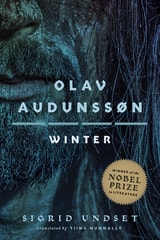
IV. WinterSigrid Undset
University of Minnesota Press, 2023
The fourth and final volume in the Nobel Prize–winning writer’s epic of one man’s fateful life in medieval Norway
Set in thirteenth-century Norway, a land racked by political turmoil, bloody family vendettas, and rising tensions between secular powers and an ascendant church, Sigrid Undset’s spellbinding masterpiece now follows the fortunes of Olav Audunssøn to the final, dramatic chapter of his life as it unfolds in Winter, the last volume of the tetralogy. When the orphaned Olav and his foster sister Ingunn became betrothed in their youth, a chain of events was set in motion that eventually led to violence, banishment, and a family separation lasting years. The consequences fracture their marriage and threaten the lineage for generations. Now, at the end of his life, Olav continues to grapple with the guilt of his sins as he watches his children, especially Eirik, make disastrous choices and struggle to find their rightful place in a family haunted by the past.
With its precise details and sweeping vision, Olav Audunssøn summons a powerful picture of Northern life in medieval times, as noted by the Swedish Academy in awarding Undset the Nobel Prize in 1928. Conveying both the intimate drama and the epic proportions of Olav’s story at its conclusion, Winter is a moving and masterly recreation of a vanished world tainted by bloodshed and haunted by sin and retribution—yet one that might still offer a chance for redemption.
As with Kristin Lavransdatter, her earlier medieval epic, Sigrid Undset wrote Olav Audunssøn after immersive research in the legal, religious, and historical writings of the time to create an astoundingly authentic and compelling portrait of Norwegian life in the Middle Ages. And as in her translation of Kristin Lavransdatter, Tiina Nunnally does full justice to Undset’s natural, fluid prose—in a style by turns plainspoken and delicately lyrical—to convey the natural world, the complex culture, and the fraught emotional territory against which Olav’s story inexorably unfolds.
The Complete and Original Norwegian Folktales of Asbjørnsen and Moe
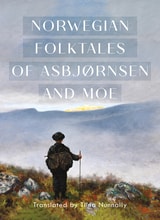
Peter Christen Asbjørnsen
University of Minnesota Press, 2019
The definitive English translation of the celebrated story collection regarded as a landmark of Norwegian literature and culture—now in paperback
The extraordinary folktales collected by Peter Christen Asbjørnsen and Jørgen Moe began appearing in Norway in 1841. Over the next two decades the publication of subsequent editions under the title Norske folkeeventyr made the names Asbjørnsen and Moe synonymous with Norwegian storytelling traditions. Tiina Nunnally’s vivid translation of their monumental collection is the first new English translation in more than 150 years—and the first ever to include all sixty original tales.
Magic and myth inhabit these pages in figures both familiar and strange. Giant trolls and talking animals are everywhere. The winds take human form. A one-eyed old woman might seem reminiscent of the Norse god Odin. We meet sly aunts, resourceful princesses, and devious robbers. The clever and fearless boy Ash Lad often takes center stage as he ingeniously breaks spells and defeats enemies to win half the kingdom. These stories, set in Norway’s majestic landscape of towering mountains and dense forests, are filled with humor, mischief, and sometimes surprisingly cruel twists of fate. All are rendered in the deceptively simple narrative style perfected by Asbjørnsen and Moe—now translated into an English that is as finely tuned to the modern ear as it is true to the original Norwegian.
Included here—for the very first time in English—are Asbjørnsen and Moe’s Forewords and Introductions to the early Norwegian editions of the tales. Asbjørnsen gives us an intriguing glimpse into the actual collection process and describes how the stories were initially received, both in Norway and abroad. Equally fascinating are Moe’s views on how central characters might be interpreted and his notes on the regions where each story was originally collected. Nunnally’s informative Translator’s Note places the tales in a biographical, historical, and literary context for the twenty-first century.
The Norwegian folktales of Asbjørnsen and Moe are timeless stories that will entertain, startle, and enthrall readers of all ages.
The Land of Dreams
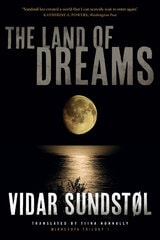
Vidar Sundstøl
University of Minnesota Press, 2014
Winner of the Riverton Prize for best Norwegian crime novel and named by Dagbladet as one of the top twenty-five Norwegian crime novels of all time, The Land of Dreams is the chilling first installment in Vidar Sundstøl’s critically acclaimed Minnesota Trilogy, set on the rugged north shore of Lake Superior and in the region’s small towns and deep forests.
The grandson of Norwegian immigrants, Lance Hansen is a U.S. Forest Service officer and has a nearly all-consuming passion for local genealogy and history. But his quiet routines are shattered one morning when he comes upon a Norwegian tourist brutally murdered near a stone cross on the shore of Lake Superior. Another Norwegian man is nearby; covered in blood and staring out across the lake, he can only utter the word kjærlighet. Love.
FBI agent Bob Lecuyer is assigned to the case, as is Norwegian detective Eirik Nyland, who is immediately flown in from Oslo. As the investigation progresses, Lance begins to make shocking discoveries—including one that involves the murder of an Ojibwe man on the very same site more than one hundred years ago. As Lance digs into two murders separated by a century, he finds the clues may in fact lead toward someone much closer to home than he could have imagined.
The Land of Dreams is the opening chapter in a sweeping chronicle from one of Norway’s leading crime writers—a portrait of an extraordinary landscape, an exploration of hidden traumas and paths of silence that trouble history, and a haunting study in guilt and the bonds of blood.