Results by title

7 books match the query 'O'Connor, Flannery'
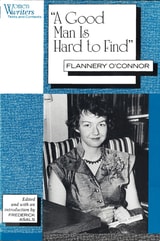
cover of "A Good Man is Hard to Find": Flannery O'Connor

"A Good Man is Hard to Find"

Flannery O'Connor

Asals, Frederick

Rutgers University Press, 1993

"A Good Man Is Hard to Find" is Flannery O'Connor's most famous and most discussed story. O'Connor herself singled it out by making it the title piece of her first collection and the story she most often chose for readings or talks to students. It is an unforgettable tale, both riveting and comic, of the confrontation of a family with violence and sudden death. More than anything else O'Connor ever wrote, this story mixes the comedy, violence, and religious concerns that characterize her fiction.

This casebook for the story includes an introduction by the editor, a chronology of the author's life, the authoritative text of the story itself, comments and letters by O'Connor about the story, critical essays, and a bibliography. The critical essays span more than twenty years of commentary and suggest several approaches to the story--formalistic, thematic, deconstructionist-- all within the grasp of the undergraduate, while the introduction also points interested students toward still other resources. Useful for both beginning and advanced students, this casebook provides an in-depth introduction to one of America's most gifted modern writers.
[more]
cover of Beneath the Veil of the Strange Verses: Reading Scandalous Texts

Beneath the Veil of the Strange Verses

Reading Scandalous Texts

Jeremiah L. Alberg

Michigan State University Press, 2013
Jeremiah Alberg’s fascinating book explores a phenomenon almost every news reader has experienced: the curious tendency to skim over dispatches from war zones, political battlefields, and economic centers, only to be drawn in by headlines announcing a late-breaking scandal. Rationally we would agree that the former are of more significance and importance, but they do not pique our curiosity in quite the same way. The affective reaction to scandal is one both of interest and of embarrassment or anger at the interest. The reader is at the same time attracted to and repulsed by it. Beneath the Veil of the Strange Verses describes the roots out of which this conflicted desire grows, and it explores how this desire mirrors the violence that undergirds the scandal itself. The book shows how readers seem to be confronted with a stark choice: either turn away from scandal completely or become enthralled and thus trapped by it. Using examples from philosophy, literature, and the Bible, Alberg leads the reader on a road out of this false dichotomy. By its nature, the author argues, scandal is the basis of our reading; it is the source of the obstacles that prevent us from understanding what we read, and of the bridges that lead to a deeper grasp of the truth.
[more]
cover of Flannery O'Connor and Blaise Pascal: Recovering the Incarnation for the Modern Mind

Flannery O'Connor and Blaise Pascal

Recovering the Incarnation for the Modern Mind

Ann Hartle

Catholic University of America Press, 2025
Flannery O’Connor is a guide for the Catholic who seeks to gain a deeper understanding of what it means to live the life of faith in the modern world. O’Connor describes herself as a Catholic burdened by the modern consciousness which the psychologist Carl Gustav Jung views as “unhistorical, solitary, and guilty.” Ann Hartle understands O’Connor’s fiction as her confrontation with this specifically modern form of consciousness. The seventeenth-century philosopher Blaise Pascal helps us to experience the meaning of O’Connor’s fiction because Pascal confronted that same consciousness in its origins in Montaigne’s philosophy. O’Connor recognizes in Pascal a truly Catholic modern philosopher who speaks to the experience of the searching mind of modern man. Flannery O'Connor and Blaise Pascal approaches O’Connor’s fiction from a philosophical perspective rather than the perspective of a literary critic. The goal of this volume is to deepen the experience of the meaning of her stories insofar as they are addressed to a specifically modern audience burdened with the form of consciousness that is highly skeptical of the historical reality of the Christian mystery. Hartle's argument is that modern consciousness rests on the “spiritualization” of the Incarnation. Both Montaigne and Jung abstract a purely human meaning from the historical embodied reality of the Incarnation and place that meaning in the service of modern man’s attempt at self-creation and self-redemption. O’Connor presents us with an especially vivid picture of Jung’s truly modern individual in Hazel Motes, Hulga Hopewell, George Rayber, and The Misfit. In her comic art, O’Connor brings out the possibility of grace against the background of the pervasive psychological attitude toward human conduct. She shows us how the modern distortions of the human personality can be addressed in a specifically Catholic way, that is, through the meaning of the Catholic sacramental view of life and the Catholic principle of mutual interdependence.
[more]
cover of Flannery O'Connor, Walker Percy, and the Aesthetic of Revelation

Flannery O'Connor, Walker Percy, and the Aesthetic of Revelation

John D. Sykes, Jr.

University of Missouri Press, 2007

With his mastery of modernist technique and his depictions of characters obsessed with the past, Nobel laureate William Faulkner raised the bar for southern fiction writers. But the work of two later authors shows that the aesthetic of memory is not enough: Confederate thunder fades as they turn to an explicitly religious source of meaning.

            According to John Sykes, the fiction of Flannery O’Connor and Walker Percy provides occasions for divine revelation. He traces their work from its common roots in midcentury southern and Catholic intellectual life to show how the two adopted different theological emphases and rhetorical strategies—O’Connor building to climactic images, Percy striving for dialogue with the reader—as a means of uncovering the sacramental foundation of the created order.

            Sykes sets O’Connor and Percy against the background of the Southern Renaissance from which they emerged, showing not only how they shared a distinctly Christian notion of art that led them to see fiction as revelatory but also how their methods of revelation took them in different directions. Yet, despite their differences in strategy and emphasis, he argues that the two are united in their conception of the artist as “God’s sharp-eyed witness,” and he connects them with the philosophers and critics, both Christian and non-Christian, who had a meaningful influence on their work.

            Through sustained readings of key texts—particularly such O’Connor stories as “The Artificial Nigger” and “The Geranium” and Percy’s novels Love in the Ruins and The Second Coming—Sykes focuses on the intertwined themes of revelation, sacrament, and community. He views their work in relation to the theological difficulties that they were not able to overcome concerning community. For both writers, the question of community is further complicated by the changing nature of the South as the Lost Cause and segregation lose their holds and a new form of prosperity arises.

            By disclosing how O’Connor and Percy made aesthetic choices based on their Catholicism and their belief that fiction by its very nature is revelatory, Sykes demonstrates that their work cannot be seen as merely a continuation of the historical aesthetic that dominated southern literature for so long. Flannery O’Connor, Walker Percy, and the Aesthetic of Revelation is theoretically sophisticated without being esoteric and is accessible to any reader with a serious interest in these writers, brimming with fresh insights about both that clarify their approaches to art and enrich our understanding of their work.
[more]
cover of Hard Sayings: The Rhetoric of Christian Orthodoxy in Late Modern Fiction

Hard Sayings

The Rhetoric of Christian Orthodoxy in Late Modern Fiction

Thomas F. Haddox

The Ohio State University Press, 2013
Hard Sayings: The Rhetoric of Christian Orthodoxy in Late Modern Fiction by Thomas F. Haddox examines the work of six avowedly Christian writers of fiction in the period from World War II to the present. This period is often characterized in western societies by such catchphrases as “postmodernism” and “secularization,” with the frequent implication that orthodox belief in the dogmas of Christianity has become untenable among educated readers. How, then, do we account for the continued existence of writers of self-consciously literary fiction who attempt to persuade readers of the truth, desirability, and utility of the dogmas of Christianity? Is it possible to take these writers’ efforts on their own terms and to understand and evaluate the rhetorical strategies that this kind of persuasion might entail?
 
Informed by the school of rhetorical narratology that includes such critics as Wayne Booth, James Phelan, and Richard Walsh, Hard Sayings offers fresh new readings of fictive works by Flannery O’Connor, Muriel Spark, John Updike, Walker Percy, Mary Gordon, and Marilynne Robinson. In its argument that orthodox Christianity, as represented in fiction, still has the power to persuade and to trouble, it contributes to ongoing debates about the nature and scope of modernity, postmodernity, and secularization.
[more]
cover of Revelation and Convergence

Revelation and Convergence

Mark Bosco

Catholic University of America Press, 2017
Revelation & Convergence brings together professors of literature, theology, and history to help both critics and readers better understand Flannery O’Connor’s religious imagination.
[more]
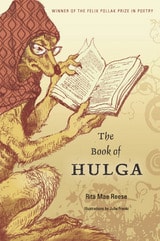
cover of The Book of Hulga

The Book of Hulga

Rita Mae Reese, Illustrations by Julie Franki

University of Wisconsin Press, 2016

The Book of Hulga speculates—with humor, tenderness, and a brutal precision—on a character that Flannery O’Connor envisioned but did not live long enough to write: “the angular intellectual proud woman approaching God inch by inch with ground teeth.” These striking poems look to the same sources that O’Connor sought out, from Gerard Manley Hopkins to Edgar Allan Poe to Simone Weil. Original illustrations by Julie Franki further illuminate Reese’s imaginative verse biography of a modern-day hillbilly saint.
[more]