Results by title
8 books match the query 'O'Neill, Eugene'
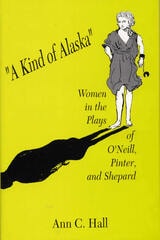
A Kind of Alaska
Women in the Plays of O'Neill, Pinter, and ShepardAnn C. Hall
Southern Illinois University Press, 1993
In an effort to define what constitutes a feminist reading of literary works, Ann C. Hall offers an analytic technique that is both a feminist and a psychoanalytic approach, applying this technique to her study of women characters in the modern dramatic texts of Eugene O’Neill, Harold Pinter, and Sam Shepard.
This is the first study to treat these three writers in tandem, and while Hall uses the work of Jacques Lacan, Luce Irigaray, and other psychoanalytic feminist critics in her close readings of specific dramatic texts, she also brings in commentaries by critics, directors, performers, and historians. Her technique thereby provides us with a new and significant method for addressing female characters as written by male playwrights, a task that she argues is not only a valid and necessary part of feminist dramatic criticism but a part of theatrical production as well.
From Pinter’s play A Kind of Alaska, Hall extracts a metaphor for the patriarchal oppression of women, contextualizing such oppression through an examination of O’Neill’s madonnas, Pinter’s whores, and Shepard’s female saviors as they are represented in O’Neill’s Iceman Cometh, Long Day’s Journey into Night, and A Moon for theMisbegotten; Pinter’s Homecoming, No Man’s Land, Betrayal, and A Kind of Alaska; and Shepard’s Buried Child, True West, and A LieoftheMind.
Since the works of O’Neill, Pinter, and Shepard continue to be performed to popular acclaim, Hall hopes that a better understanding of the female characters in these plays will influence the performances themselves.
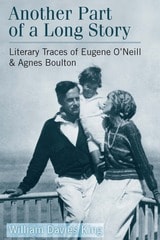
Another Part of a Long Story
Literary Traces of Eugene O'Neill and Agnes BoultonWilliam Davies King
University of Michigan Press, 2010
---Stephen Wilmer, Trinity College, Dublin
Biographers of American playwright Eugene O'Neill have been quick to label his marriage to actress Carlotta Monterey as the defining relationship of his illustrious career. But in doing so, they overlook the woman whom Monterey replaced---Agnes Boulton, O'Neill's wife of over a decade and mother to two of his children. O'Neill and Boulton were wed in 1918---a time when she was a successful pulp novelist and he was still a little-known writer of one-act plays. During the decade of their marriage, he gained fame as a Broadway dramatist who rejected commercial compromise, while she mapped that contentious territory known as the literary marriage. His writing reflected her, and hers reflected him, as they tried to realize progressive ideas about what a marriage should be. But after O'Neill left the marriage, he and new love Carlotta Monterey worked diligently to put Boulton out of sight and mind---and most O'Neill biographers have been quick to follow suit.
William Davies King has brought Agnes Boulton to light again, providing new perspectives on America's foremost dramatist, the dynamics of a literary marriage, and the story of a woman struggling to define herself in the early twentieth century. King shows how the configuration of O'Neill and Boulton's marriage helps unlock many of O'Neill's plays. Drawing on more than sixty of Boulton's published and unpublished writings, including her 1958 memoir, Part of a Long Story, and an extensive correspondence, King rescues Boulton from literary oblivion while offering the most radical revisionary reading of the work of Eugene O'Neill in a generation.
William Davies King is Professor of Theater at the University of California, Santa Barbara, and author of several books, most recently Collections of Nothing, chosen by Amazon.com as one of the Best Books of 2008.
Illustration: Eugene O'Neill, Shane O'Neill, and Agnes Boulton ca. 1923. Eugene O'Neill Collection, Beinecke Rare Book and Manuscript Library, Yale University.
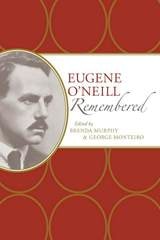
Eugene O'Neill Remembered
Edited by Brenda Murphy and George Monteiro
University of Alabama Press, 2017
A primary-source portrait of Eugene O’Neill through the voices that knew him.
Known principally as the author of some of the most significant plays in the American dramatic canon and as one of America’s Nobel Laureates in literature, O'Neill rarely gave interviews and offered few details about himself. As a consequence, his life has long been shrouded in myth. He also abetted some of the misconceptions about his youth by, for example, advocating the story that he was expelled from Princeton for throwing a rock through Woodrow Wilson's window or by exaggerating the amount of time he had spent at sea. The legend of the hard-drinking, tormented playwright with a grim view of life was further reinforced when Long Day's Journey into Night was produced in 1956, three years after his death instead of the twenty-five years he had insisted on.
The portrayal of O’Neill as a tragic figure has been solidified in a number of biographies. The purpose of this collection, however, is to present O'Neill as others saw him and described him in their first-person accounts. In the course of these reminiscences, many of the vast and various narrators conflict with and contradict each other. Unlike other accounts of O’Neill’s life, much of the focus is on impressions instead of facts. The result is a revealing composite portrait of a key figure in twentieth-century American literary history.
This extensive collection offers insights unavailable in any other book and will hold massive appeal for scholars and students interested in American literature, Eugene O’Neill, and theater history, as well as anyone keen to uncover intimate details of the life of one of America’s greatest writers.
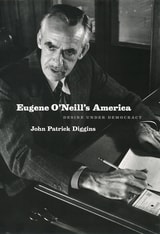
Eugene O'Neill's America
Desire Under DemocracyJohn Patrick Diggins
University of Chicago Press, 2007
In the face of seemingly relentless American optimism, Eugene O’Neill's plays reveal an America many would like to ignore, a place of seething resentments, aching desires, and family tragedy, where failure and disappointment are the norm and the American dream a chimera. Though derided by critics during his lifetime, his works resonated with audiences, won him the Nobel Prize and four Pulitzer, and continue to grip theatergoers today. Now noted historian John Patrick Diggins offers a masterly biography that both traces O’Neill’s tumultuous life and explains the forceful ideas that form the heart of his unflinching works.
Diggins paints a richly detailed portrait of the playwright’s life, from his Irish roots and his early years at sea to his relationships with his troubled mother and brother. Here we see O’Neill as a young Greenwich Village radical, a ravenous autodidact who attempted to understand the disjunction between the sunny public face of American life and the rage that he knew was simmering beneath. According to Diggins, O’Neill mined this disjunction like no other American writer. His characters burn with longing for an idealized future composed of equal parts material success and individual freedom, but repeatedly they fall back to earth, pulled by the tendrils of family and the insatiability of desire. Drawing on thinkers from Emerson to Nietzsche, O’Neill viewed this endlessly frustrated desire as the problematic core of American democracy, simultaneously driving and undermining American ideals of progress, success, and individual freedom.
Melding a penetrating assessment of O’Neill’s works and thought with a sensitive re-creation of his life, Eugene O’Neill’s America offers a striking new view of America’s greatest playwright—and a new picture of American democracy itself.
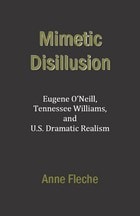
Mimetic Disillusion
Eugene O'Neill, Tennessee Williams, and U.S. Dramatic RealismAnne Fleche
University of Alabama Press, 1997
Reimagining American dramatic realism through the lenses of mimesis, theory, and theatrical innovation.
This volume focuses on two major writers of the 1930s and 1940s—Eugene O'Neill and Tennessee Williams—one whose writing career was just ending and the other whose career was just beginning. In new readings of their major works from this period, Long Day's Journey into Night, The Iceman Cometh, The Glass Menagerie, and A Streetcar Named Desire, Fleche develops connections to the writings of Jacques Derrida, Paul de Man, and Michel Foucault, among others, and discusses poststructuralism in the light of modern writers such as Bertolt Brecht, Antonin Artaud, and Walter Benjamin. Fleche also extends this discussion to the work of two contemporary playwrights, Adrienne Kennedy and Tony Kushner. The aim of Mimetic Disillusion is not to reject "mimetic" and "realistic" readings but to explore the rich complexities of these two ideas and the fruit of their ongoing relevance to U.S. theatre.
O'Neill's Shakespeare
Normand Berlin
University of Michigan Press, 1993
In O'Neill's Shakespeare , Normand Berlin explores the relationship of William Shakespeare and Eugene O'Neill through detailed, often surprising, intertextual readings of the two great playwrights' work. "Of course, it would have been impossible for O'Neill not to have been influenced by Shakespeare," acknowledges Berlin. But this is an influence of an unusual and extraordinary sort, "a family romance" that transcends their obvious differences—a romance that "takes in all O'Neill's life and art."
In the first book-length study of this crucial literary and dramatic relationship, Berlin probes far beyond the usual listing of allusions and references. This is the exploration of an "essential, basic, even natural" connection, in which Shakespeare is shown to have fundamentally shaped O'Neill's creative imagination. Following O'Neill's career chronologically, Berlin divides his study into two parts. The "first career" (culminating in Mourning Becomes Electra) is explored through recurring themes that evoke Shakespeare: the sea, black and white, and the family. O'Neill's "second career" (from Ah! Wilderness until the last plays) is examined through Shakespearean genre classifications: comedy, history, tragedy, and tragicomedy. Though always grounded in close textual readings, Berlin's analysis spirals outward to encompass O'Neill's artistic and psychological development and touches on the questions of tradition, transcendence, and human nature inevitably raised when such literary connections across history are drawn.
O'Neill's Shakespeare is more than a reminder that Shakespeare continues to haunt Western culture; it is a careful and fascinating analysis of a particular legacy in American drama. The book has insights to offer to specialists in Shakespeare and O'Neill, and to any reader interested in the transmission of ideas through Western culture. Berlin's study of the unconscious and conscious uses of Shakespeare by O'Neill provide a valuable new understanding of O'Neill's artistry. It is also an eloquent, thoughtful account that blends the transcendence of Shakespeare's influence with the particular ways in which every era must refashion Shakespeare so that "the past becomes the present."
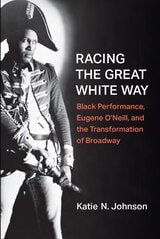
Racing the Great White Way
Black Performance, Eugene O’Neill, and the Transformation of BroadwayKatie N. Johnson
University of Michigan Press, 2023
Finalist: 2023 Theatre Library Association George Freedley Memorial Award
The early drama of Eugene O’Neill, with its emphasis on racial themes and conflicts, opened up extraordinary opportunities for Black performers to challenge racist structures in modern theater and cinema. By adapting O’Neill’s dramatic writing—changing scripts to omit offensive epithets, inserting African American music and dance, or including citations of Black internationalism--theater artists of color have used O’Neill’s texts to raze barriers in American and transatlantic theater.
Challenging the widely accepted idea that Broadway was the white-hot creative engine of U.S. theater during the early 20th century, author Katie N. Johnson reveals a far more complex system of exchanges between the Broadway establishment and a vibrant Black theater scene in New York and beyond to chart a new history of American and transnational theater. In spite of their dichotomous (and at times problematic) representation of Blackness, O’Neill’s plays such as The Emperor Jones and All God’s Chillun Got Wings make ideal case studies because of the way these works stimulated traffic between Broadway and Harlem—and between white and Black America. These investigations of O’Neill and Broadway productions are enriched by the vibrant transnational exchange found in early to mid-20th century artistic production. Anchored in archival research, Racing the Great White Way recovers not only vital lost performance histories, but also the layered contexts for performing bodies across the Black Atlantic and the Circum-Atlantic.
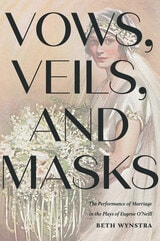
Vows, Veils, and Masks
The Performance of Marriage in the Plays of Eugene O'NeillBeth Wynstra
University of Iowa Press, 2023
Weaving in artifacts like advice columns, advertisements, theatrical reviews, and even the lived experiences of the actors who brought O’Neill’s wife characters to life, Beth Wynstra points to new ways of seeing and empathizing with those who are betrothed and new possibilities for reading marriage in literary and dramatic works. She suggests that the various ways women were, and still are, expected to divert from their true ambitions, desires, and selves in the service of appropriate wifely behavior is a detrimental performance and one at the crux of O’Neill’s marital tragedies. This book invites more inclusive and nuanced ways of thinking about the choices married characters must make and the roles they play, both on and off the stage.