Results by title
4 books match the query 'Obscenity'
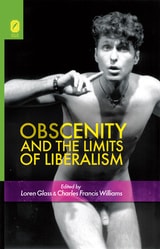
Obscenity and the Limits of Liberalism
Edited by Loren Glass and Charles Francis Williams
The Ohio State University Press, 2011
Over the course of the nineteenth century in both Europe and the United States, the state usurped the traditional authority of the church in regulating sexual expression and behavior. In the same century philosophers of classical liberalism identified that state function as a threat to individual liberty. Since then, liberalism has provided the framework for debates over obscenity around the globe.
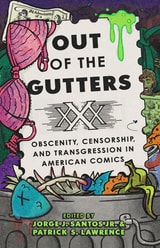
Out of the Gutters
Obscenity, Censorship, and Transgression in American ComicsEdited by Jorge J. Santos Jr. and Patrick S. Lawrence
University of Texas Press, 2025
Comics have long been a subject of moral panics, no doubt thanks to their in-your-face illustrations and their association with young readers. Indeed, the politicians and parents behind today’s book-banning campaigns reserve special ire for graphic novels. What makes today’s controversies different is the content of the alleged obscenity. Instead of targeting sex as such, censors now focus on affirmations of nonheteronormative identity, as in Maia Kobabe’s Gender Queer. And while violence is a constant in comics, stories that acknowledge nationalist oppression and violence, such as Art Spiegelman’s Maus, are also being blacklisted.
Out of the Gutters assembles scholars from diverse disciplines to examine US comics, graphic novels, and cartooning that have been challenged as obscene or transgressive. Covering well-known underground figures like Robert Crumb and Charles Burns, newcomers such as C. Spike Trotman and Emil Ferris, and mainstream creators including Chris Claremont and Archie Goodwin, the collection explores the market economics of transgression, historical representations of graphic violence, the ever-changing meaning of pornography, sex-positive comics by BIPOC authors, and queerness in pop-culture mega-properties like X-Men and The Walking Dead.
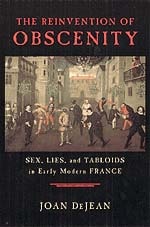
The Reinvention of Obscenity
Sex, Lies, and Tabloids in Early Modern FranceJoan DeJean
University of Chicago Press, 2002
The Reinvention of Obscenity casts a fresh light on the mythical link between sexual impropriety and things French. Exploring the complicity between censorship, print culture, and obscenity, DeJean argues that mass market printing and the first modern censorial machinery came into being at the very moment that obscenity was being reinvented—that is, transformed from a minor literary phenomenon into a threat to society. DeJean's principal case in this study is the career of Moliére, who cannily exploited the new link between indecency and female genitalia to found his career as a print author; the enormous scandal which followed his play L'école des femmes made him the first modern writer to have his sex life dissected in the press.
Keenly alert to parallels with the currency of obscenity in contemporary America, The Reinvention of Obscenity will concern not only scholars of French history, but anyone interested in the intertwined histories of sex, publishing, and censorship.
Violence As Obscenity
Limiting the Media's First Amendment ProtectionKevin W. Saunders
Duke University Press, 1996
Saunders examines the public debate on media violence, the arguments of professional and public interest groups urging governmental action, and the media and the ACLU’s desire for self-regulation. Citing research that links violence in the media to actual violence, Saunders argues that a present danger to public safety may be reduced by invoking the existing law on obscenity. Reviewing the justifications of that law, he finds that not only is the legal history relied on by the Supreme Court inadequate to distinguish violence from sex, but also many of the justifications apply more forcefully to instances of violence than to sexually explicit material that has been ruled obscene. Saunders also examines the actions that Congress, states, and municipalities have taken to regulate media violence as well as the legal limitations imposed on such regulations by the First Amendment protections given to speech and the press. In discussing the current operation of the obscenity exception and confronting the issue of censorship, he advocates adapting to the regulation of violent material the doctrine of variable obscenity, which applies a different standard for material aimed at youth, and the doctrine of indecency, which allows for federal regulation of broadcast material.
Cogently and passionately argued, Violence as Obscenity will attract scholars of American constitutional law and mass communication, and general readers moved by current debates about media violence, regulation, and censorship.